Routine isn't your team's job anymore.
Ticketing, automation, and AI in one service desk, simple enough your team never has to think about the system, just the work that matters.
30,000+ teams already turning conversations into revenue







































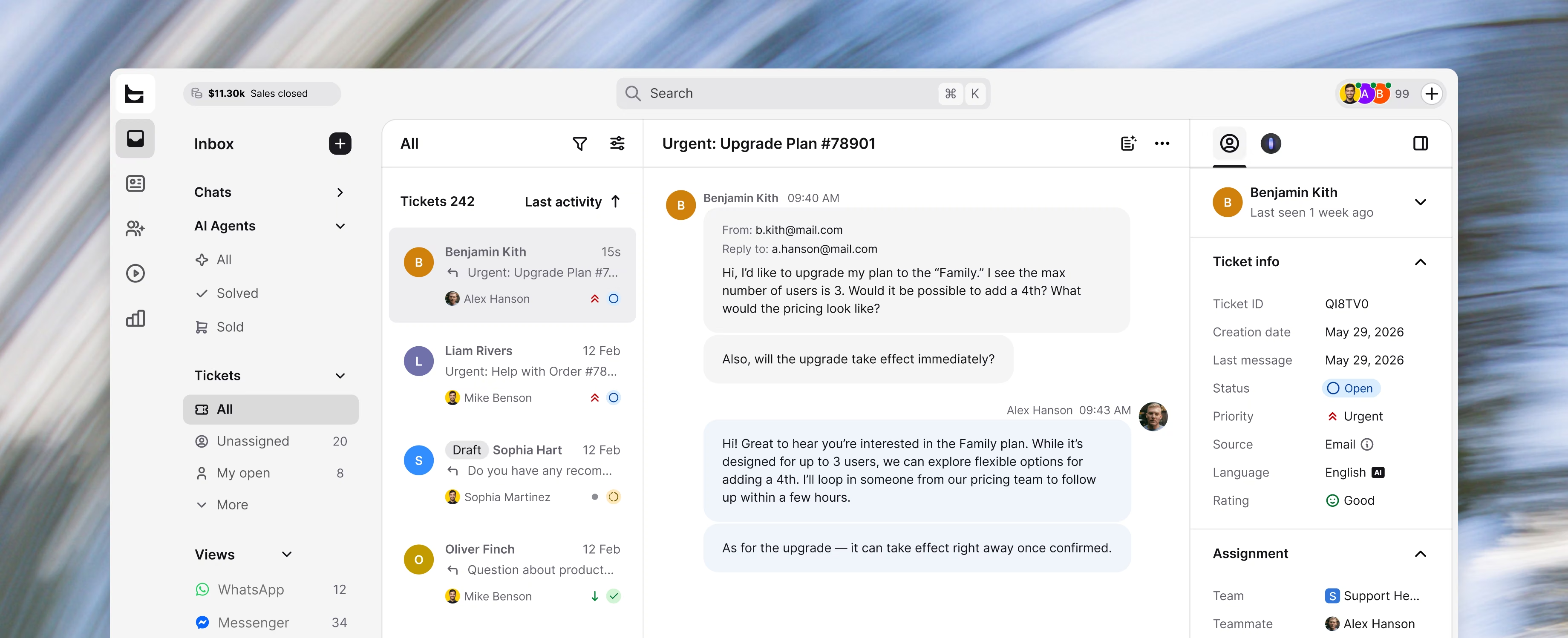
Service desk software, with AI doing the legwork.
Your team works the queue instead of sorting it. Every conversation worth closing gets closed.
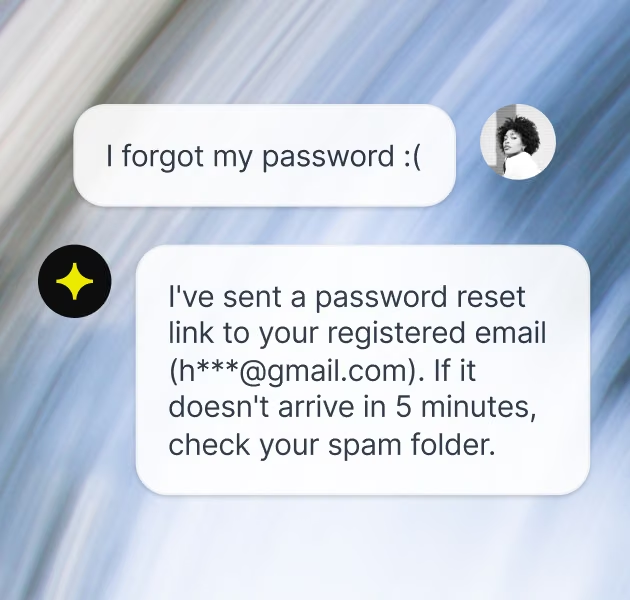
Stop answering the same question twice
Connect your knowledge sources, and AI Agent resolves common questions before a ticket is even created. The rest reach a human, with context attached.
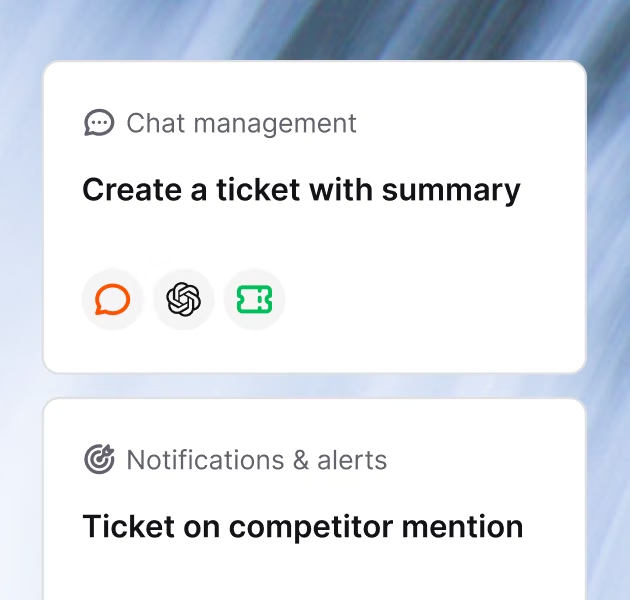
Automate the part of the job nobody enjoys
Ticket routing, tagging, assignment, escalation, and follow-ups, handled automatically. Start from a ready-made template or build your own without writing code.
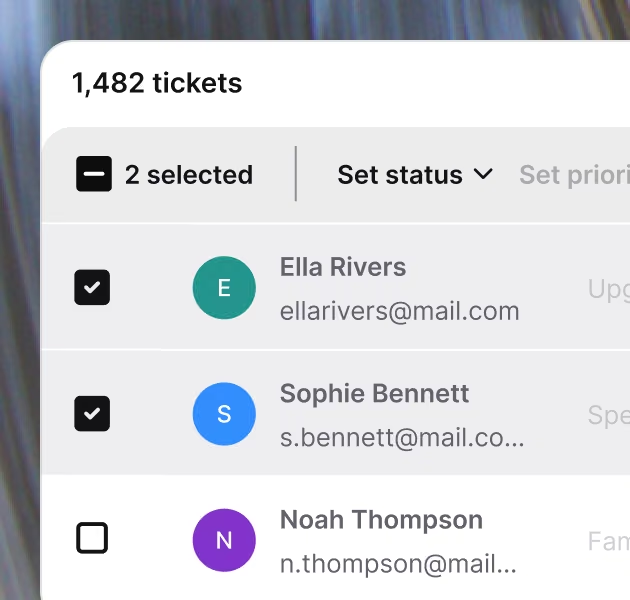
Tools that help you clear the queue
Every request becomes a tracked ticket with status, priority, owner, and history attached. When volume spikes, bulk-edit dozens of tickets in a single move.
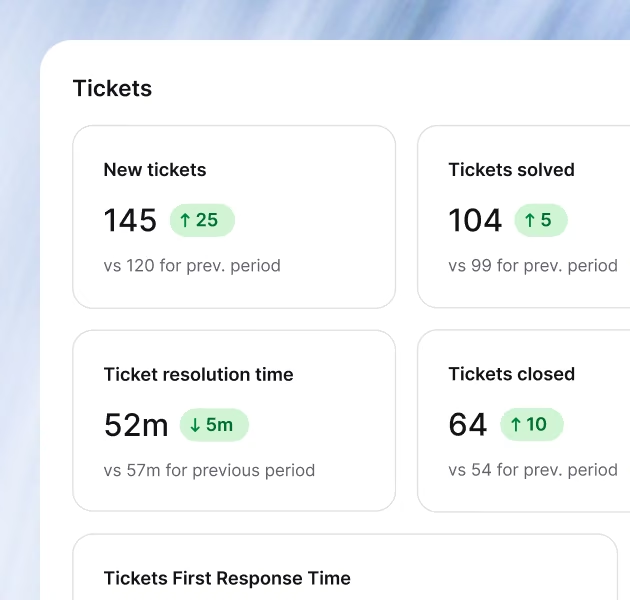
See where tickets pile up
Reports surface trends and spikes in your ticket data — what's coming in, what's stuck, what's getting faster or slower. Managers act on the change while it's still small enough to fix.
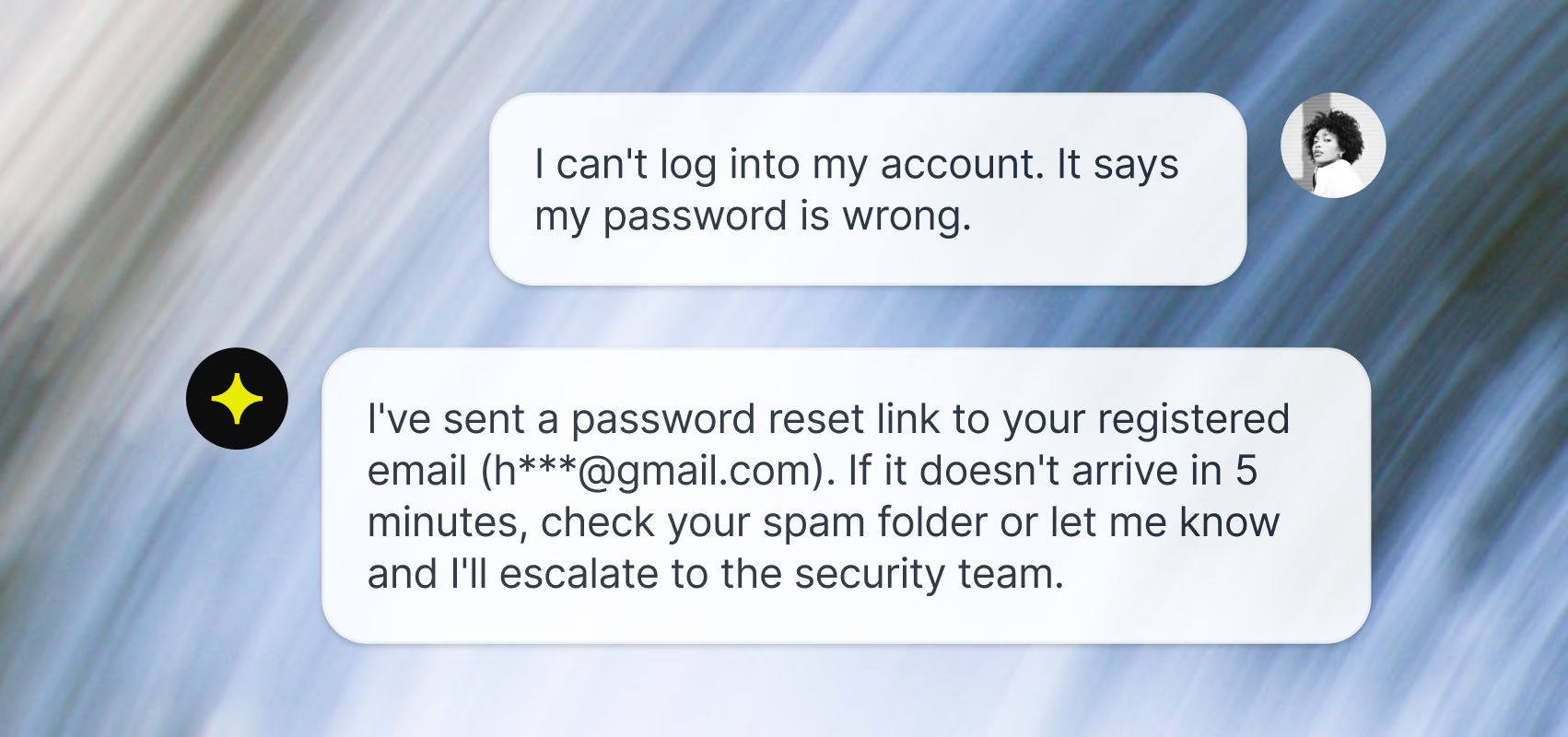
Stop answering the same question twice
Connect your knowledge sources, and AI Agent resolves common questions before a ticket is even created. The rest reach a human, with context attached.
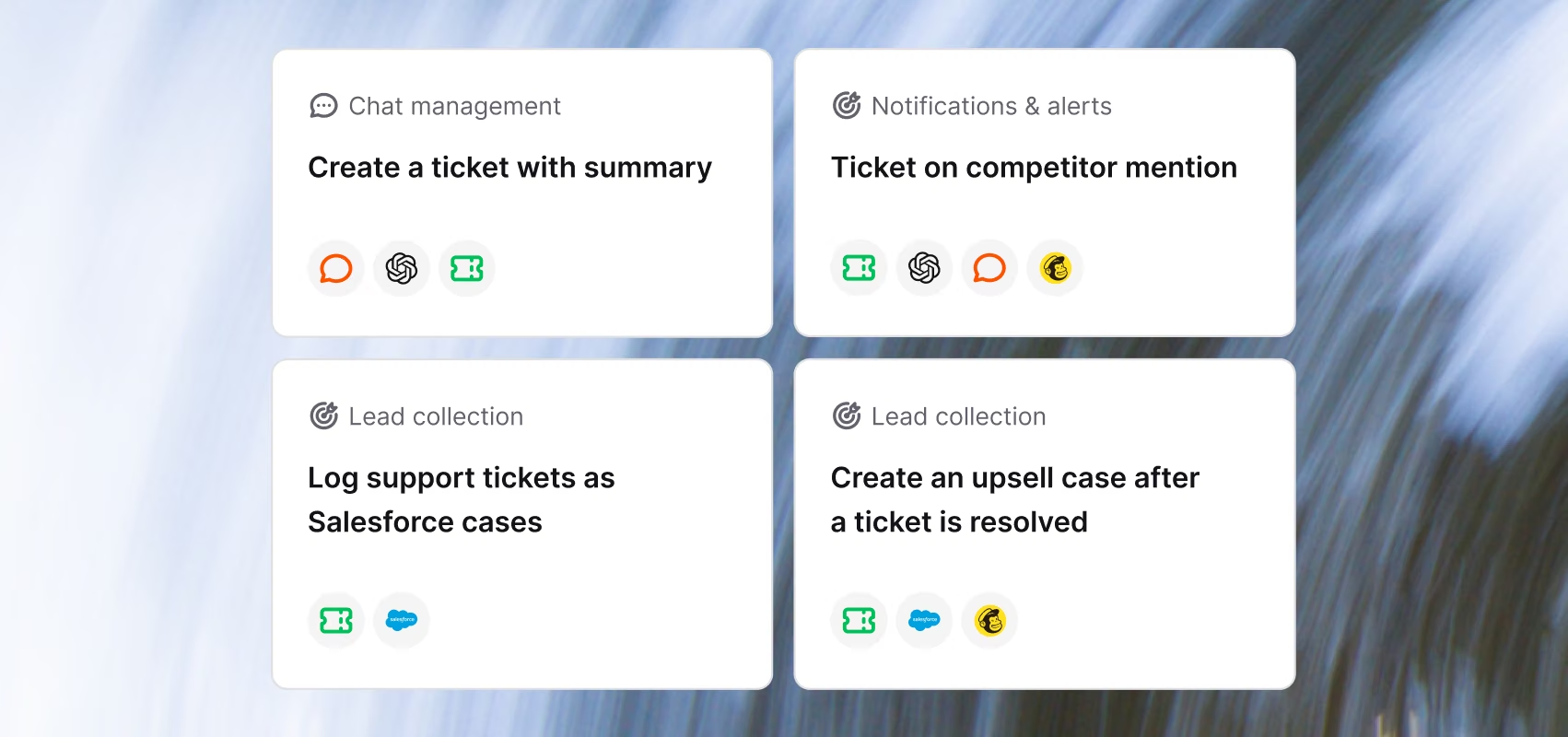
Automate the part of the job nobody enjoys
Ticket routing, tagging, assignment, escalation, and follow-ups, handled automatically. Start from a ready-made template or build your own without writing code.
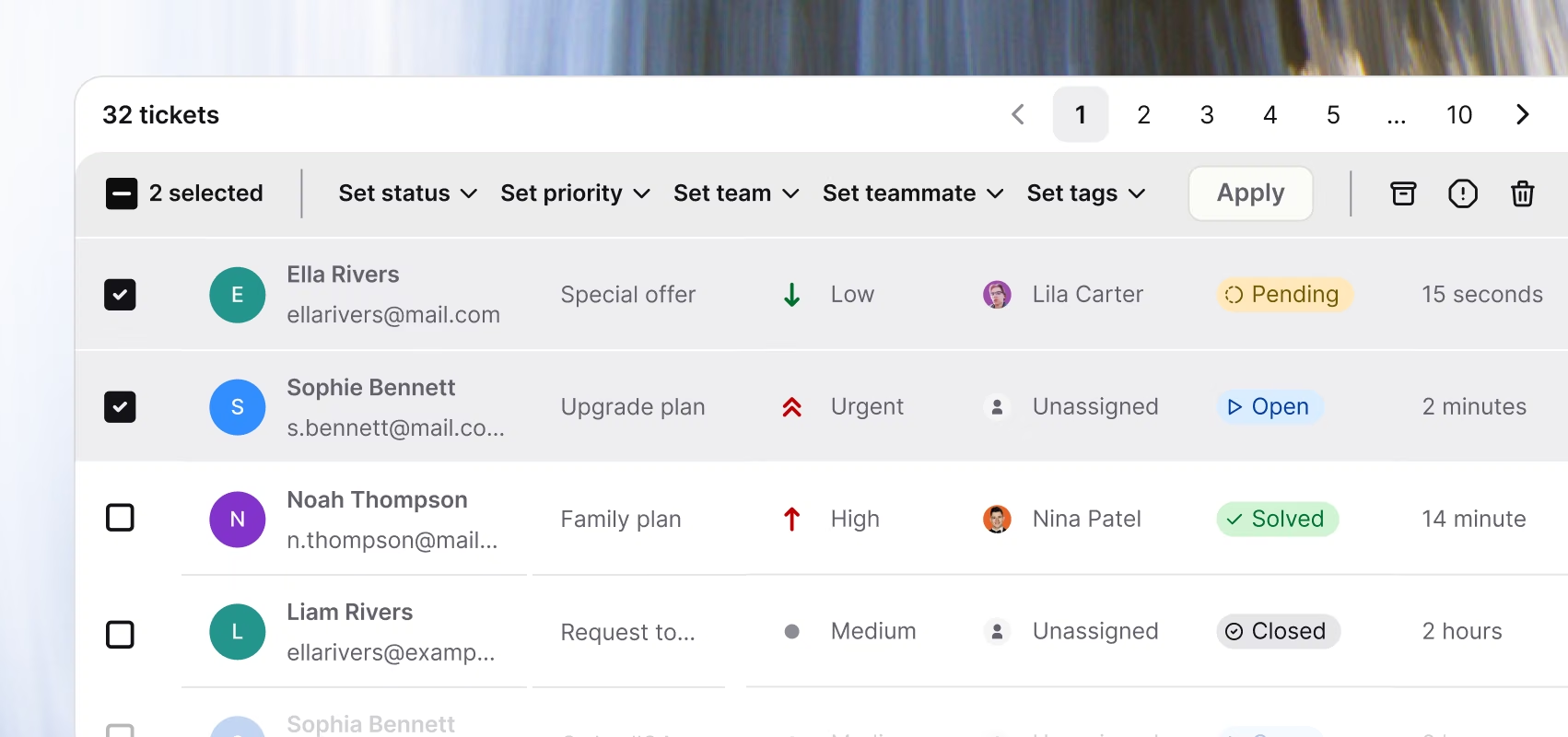
Tools that help you clear the queue
Every request becomes a tracked ticket with status, priority, owner, and history attached. When volume spikes, bulk-edit dozens of tickets in a single move.
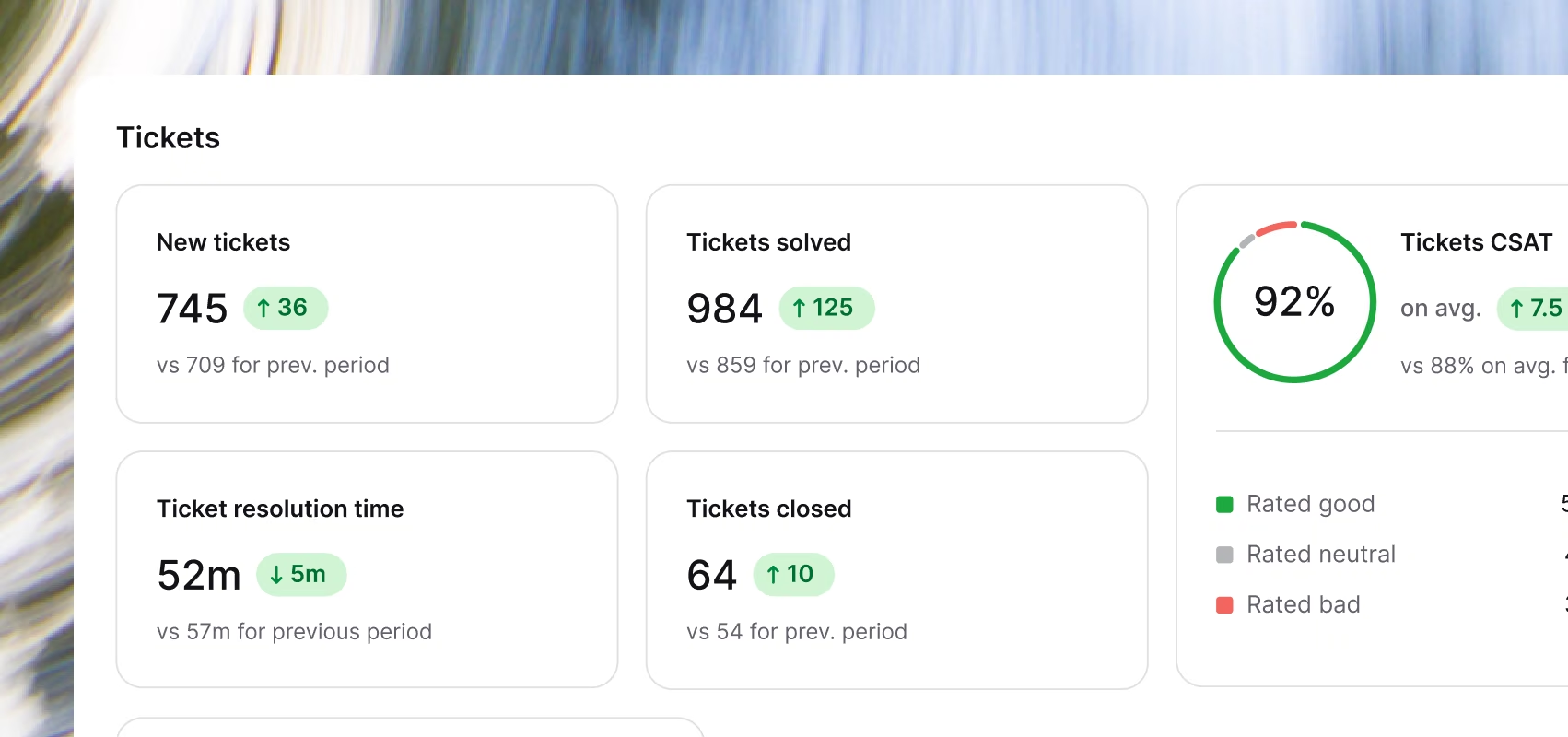
See where tickets pile up
Reports surface trends and spikes in your ticket data — what's coming in, what's stuck, what's getting faster or slower. Managers act on the change while it's still small enough to fix.

Extremely well made application for customer service & sales with nice price point.
432%
growth in AI Agent sales
70%
of all chat sales driven through AI Agent
98%
AI Agent resolution rate
Start free for 14 days.
Continue with transparent pricing.
Every feature your support team needs to resolve fast.
AI Agent
AI AgentLive chat
Live chatHelp desk
Help deskInbox
InboxCopilot
CopilotTicketing system
Ticketing systemChat widget
Chat widgetCustomer list
Customer listKnowledge base
Knowledge baseCustomer analytics
Customer analyticsMCP
MCPCustomer service management
Customer service management
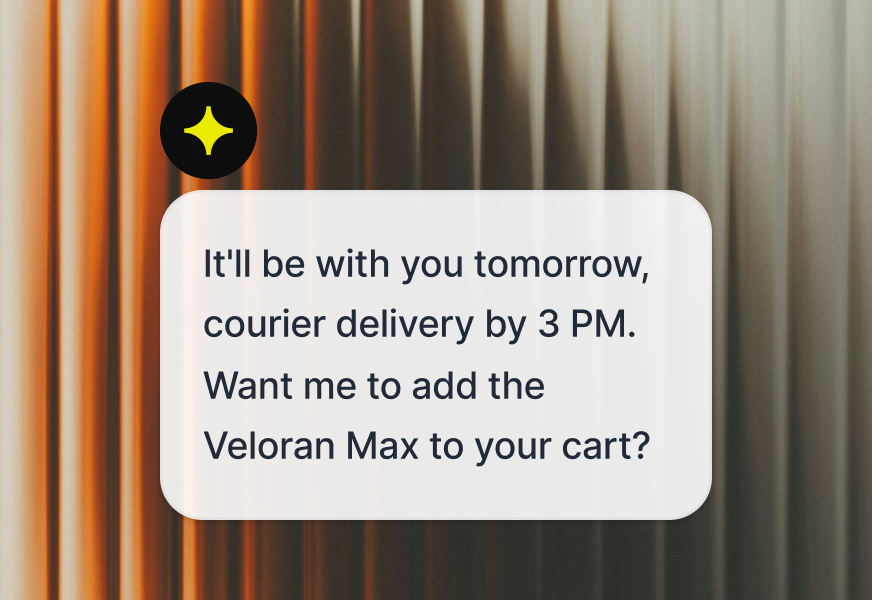
AI Agent
AI Agent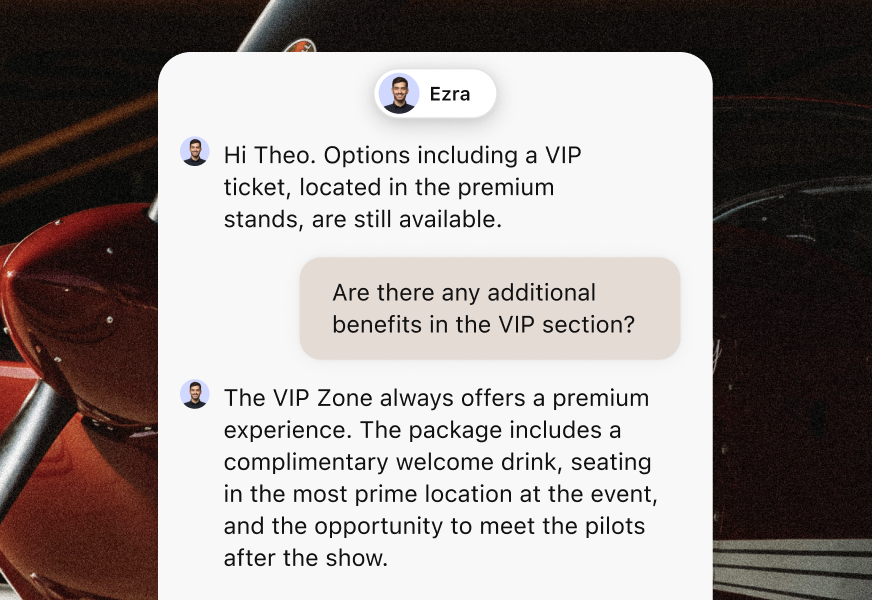
Live chat
Live chat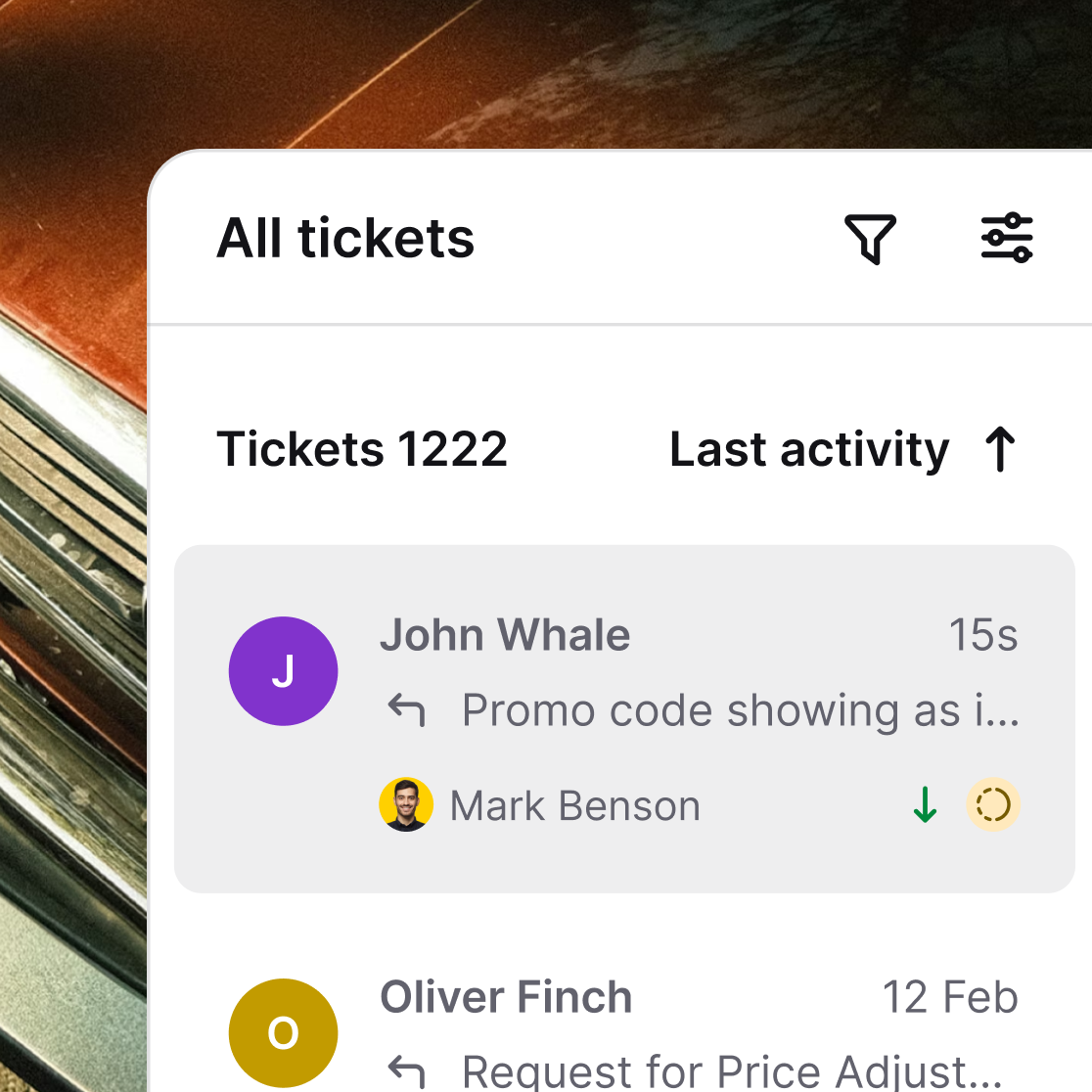
Help desk
Help desk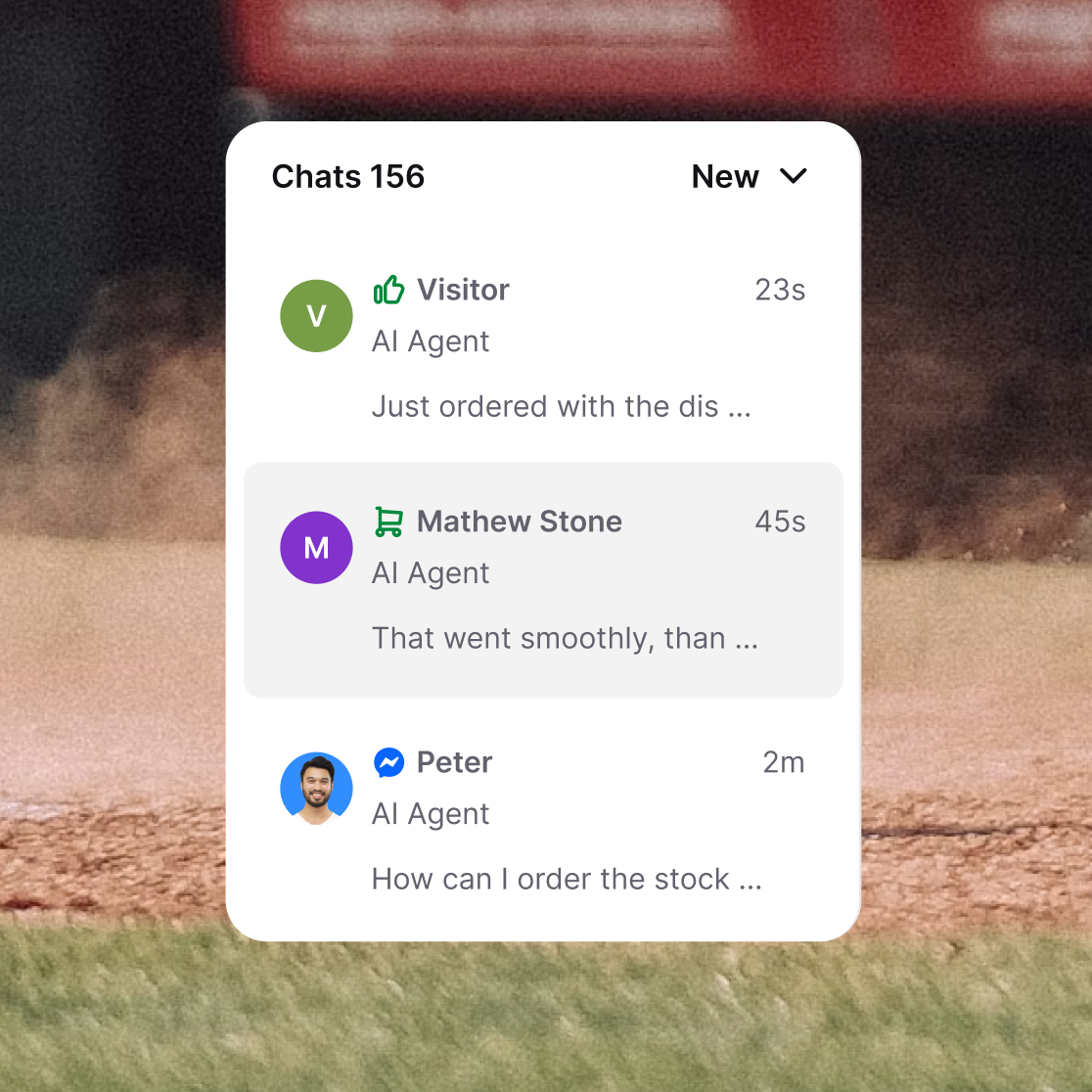
Inbox
Inbox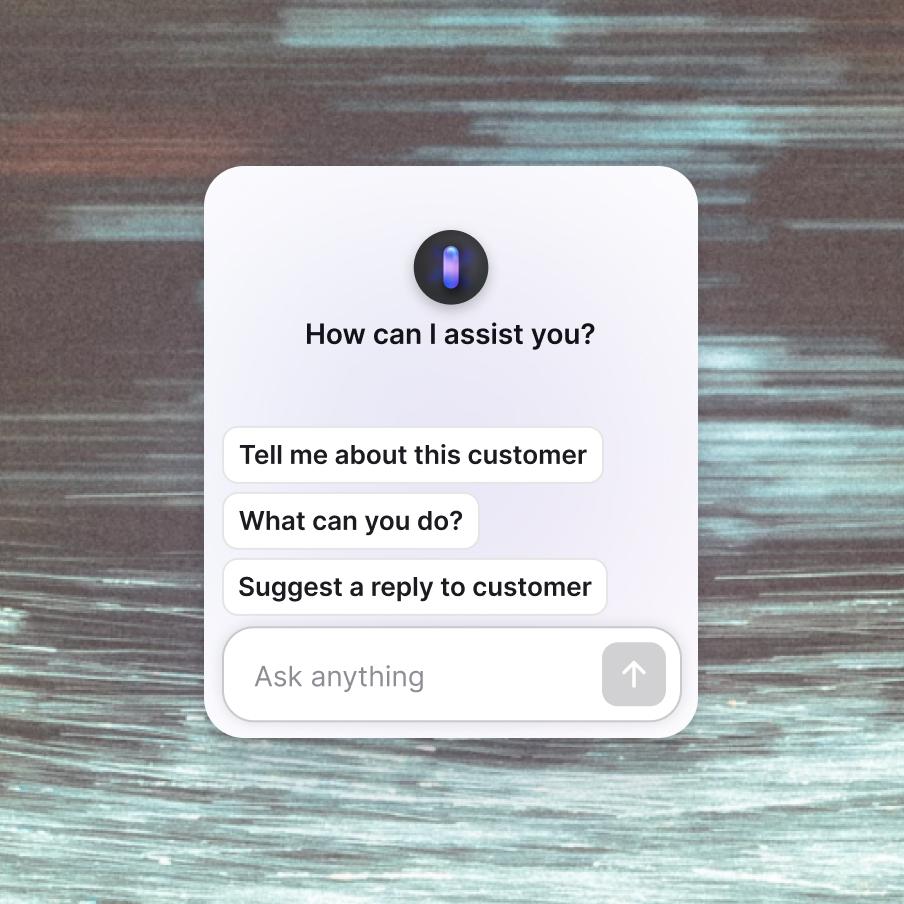
Copilot
Copilot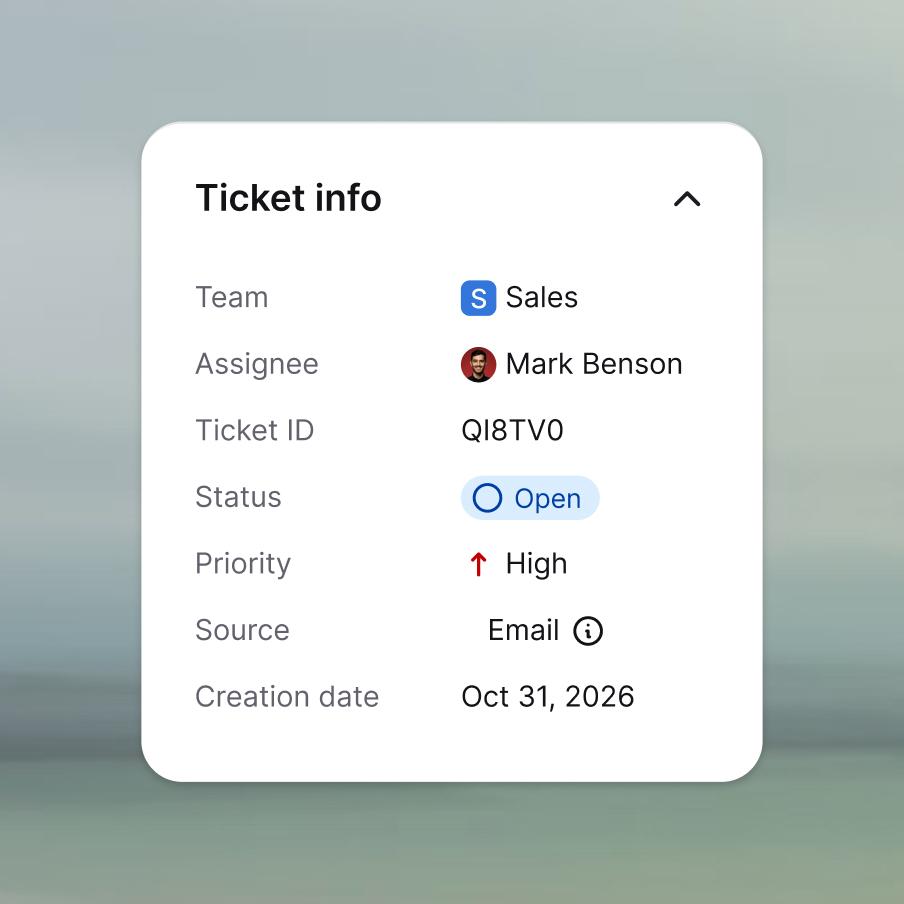
Ticketing system
Ticketing system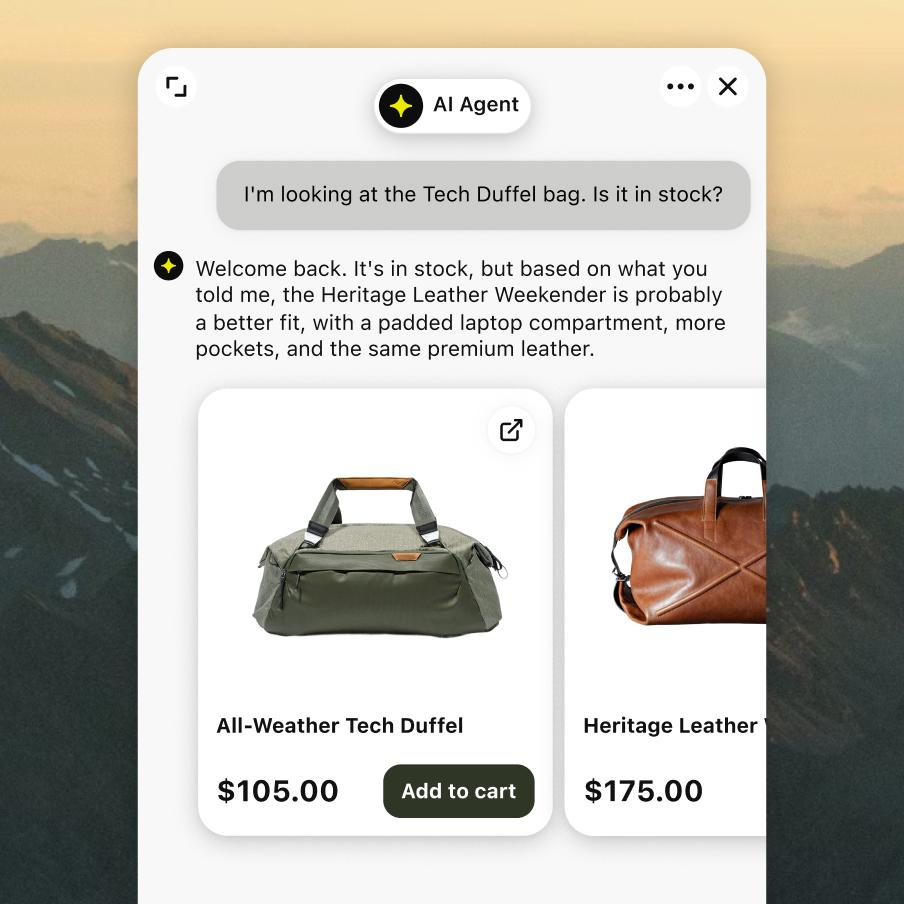
Chat widget
Chat widget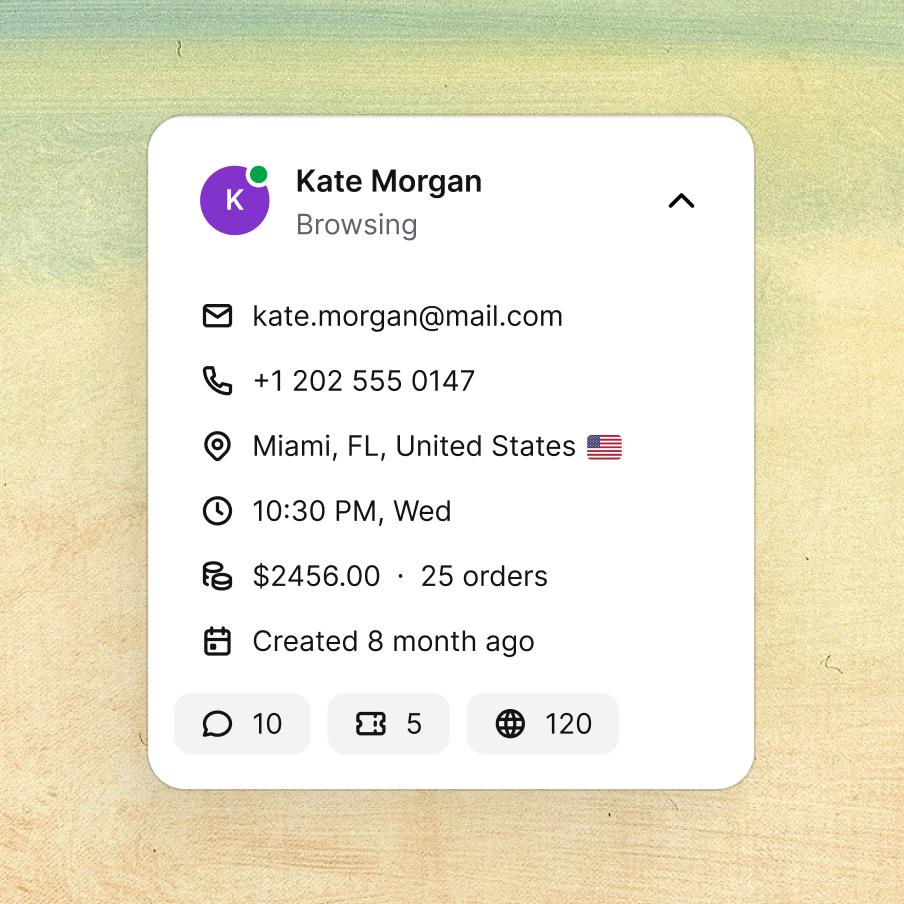
Customer list
Customer list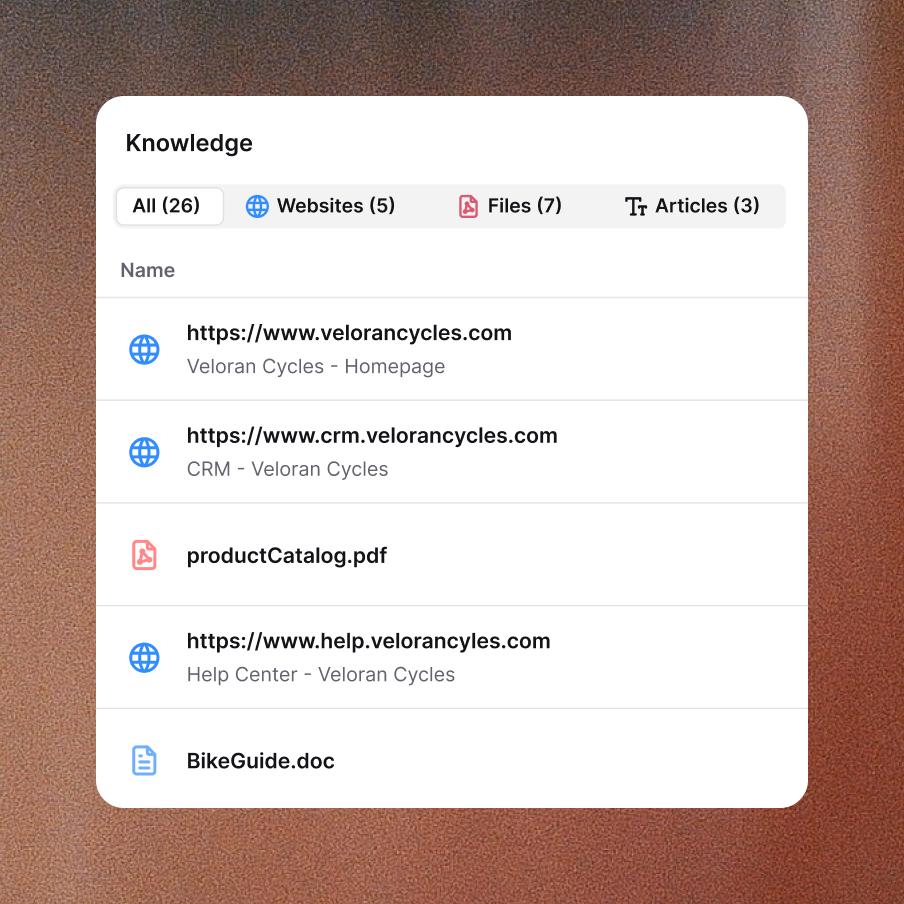
Knowledge base
Knowledge base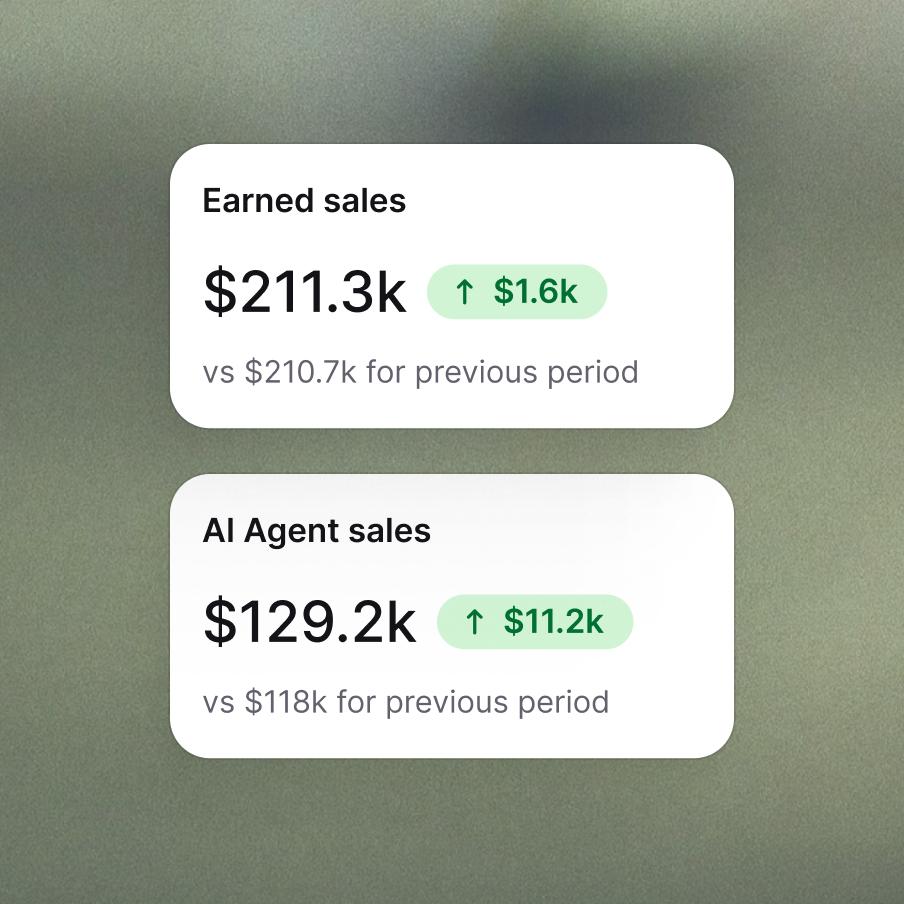
Customer analytics
Customer analytics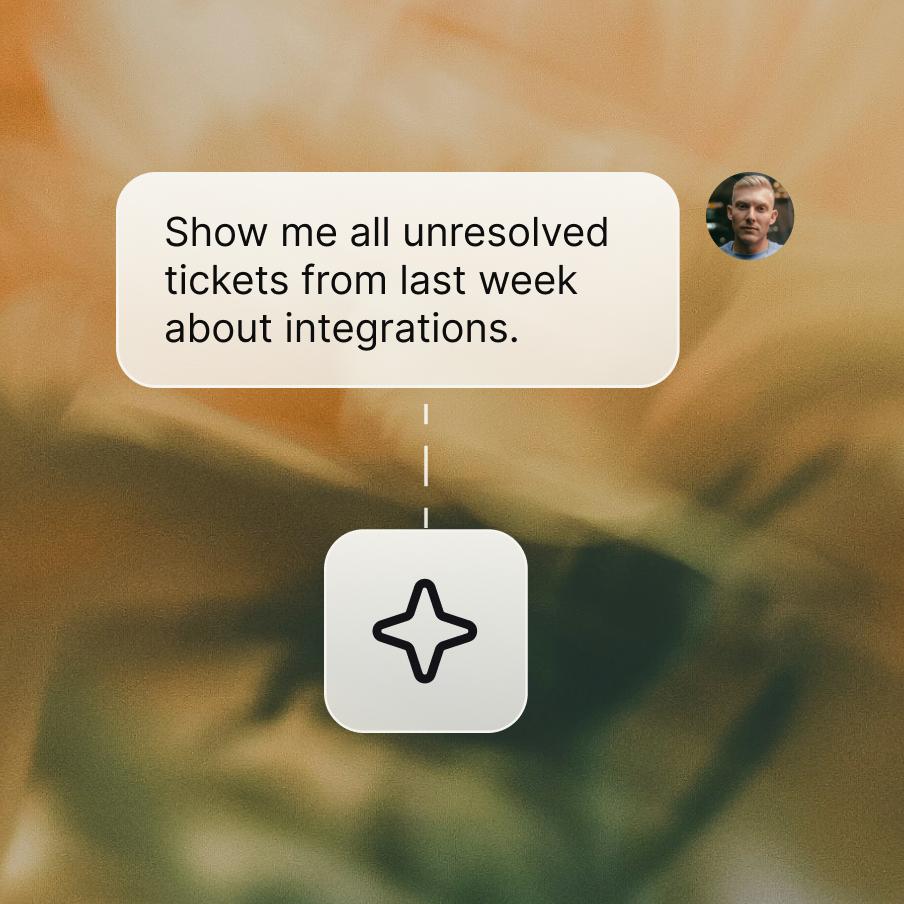
MCP
MCP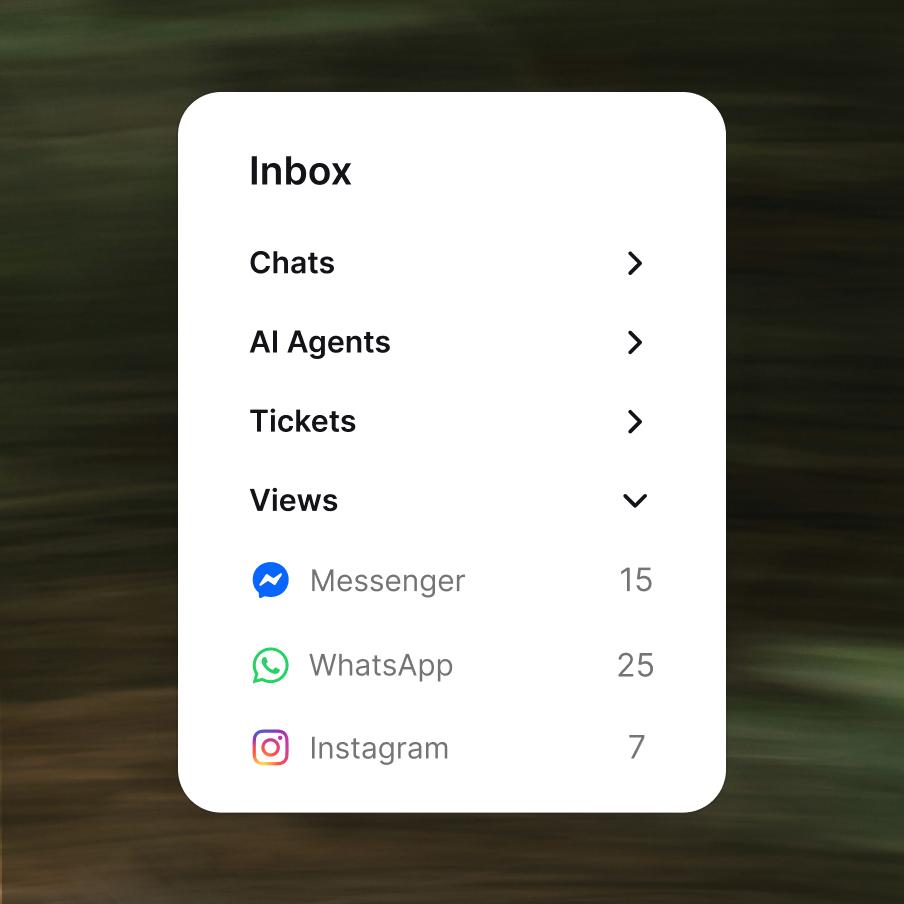
Customer service management
Customer service management
Enterprise-grade security & compliance



Service desk software, sized for your team.
Frequently asked questions
What is a service desk?
A service desk is a centralized function (typically within IT) that serves as the single point of contact between an organization and its employees for service requests, incident reports, and access to information. The service desk definition comes from ITIL (IT Infrastructure Library), where it's defined as the operational arm of IT service management. The meaning of "service desk" in practice has stayed close to its ITIL roots: in B2B contexts, "service desk" almost always means an internal IT function, with broader scope than a help desk. It covers request fulfillment, asset management, and change management alongside incident handling. Service desk software is the platform that runs this operation.
What's the difference between a help desk and a service desk?
The help desk vs service desk question comes up constantly, and most people use the terms interchangeably. But there's a real distinction:
- A help desk is reactive and tactical. It handles incoming questions and incidents, focused on resolving what's broken. Originally an IT concept, but the term is now broadly used for any team handling support requests, including customer-facing support teams.
- A service desk is strategic and broader in scope. It manages service requests, incidents, problems, changes, and assets across an organization, usually following ITIL or another ITSM (IT Service Management) framework. It's almost always internal IT.
The service desk vs help desk distinction matters most inside IT: a help desk fixes problems, a service desk manages services. Outside of IT, "help desk" usually refers to a customer support tool. For example, Text's AI Help desk is a customer-facing help desk, not an IT service desk. If you're choosing tools for customer support, you're looking for a help desk, not a service desk.
What is an IT service desk?
An IT service desk is the team and software that handles service requests from employees inside an organization: password resets, software access, hardware issues, new user onboarding, incident reports. It's the operational face of IT to the rest of the business. Common IT service desk software includes ServiceNow, Jira Service Management, Freshservice, and Zendesk's ITSM products. These tools provide service desk support specifically tuned for IT workflows: ticket categories aligned with ITIL, asset tracking, change management, and integration with monitoring and identity systems. IT service desk software is a distinct category from customer support tools, with different users, different processes, and different requirements.
What is service desk management?
Service desk management is the discipline of running a service desk effectively: staffing, processes, metrics, tooling, and continuous improvement. It covers setting service-level agreements (SLAs), defining escalation paths, tracking key metrics like mean time to resolution and first-call resolution, and refining categorization and routing as request patterns change over time. Service desk management is its own role within IT. A service desk manager owns day-to-day operations and ensures the team meets its commitments to the rest of the business.
What is service desk automation?
Service desk automation uses rules, triggers, and increasingly AI to handle repetitive parts of the workflow: routing tickets by category, assigning by team, escalating by SLA, sending status updates, fulfilling common requests (password resets, access provisioning) without human intervention. Modern service desk automation goes further with AI: chatbots that resolve common requests, suggested responses for agents, automated categorization.
In Text, you build these automations with Workflows: pick a trigger (a new ticket, a request rated badly, a tag added), chain actions (create a ticket, wait, send a message, fetch context), and let the system run. For teams running a service desk without a full ITSM platform (typical for small and mid-size IT teams, or internal service functions outside IT) this gives you the automation backbone of a service desk without the complexity of ServiceNow or Jira Service Management.
What are service desk best practices?
The most commonly cited service desk best practices:
- Define SLAs explicitly: response and resolution targets per priority level, communicated to both the team and the business.
- Use consistent ticket categorization so reporting actually means something quarter over quarter.
- Build a knowledge base for self-service and for keeping agent responses consistent.
- Automate the predictable: routing, tagging, escalation, status updates, common request fulfillment.
- Track meaningful metrics: first-response time, time to resolution, CSAT, backlog by category. Act on what they show.
- Invest in agent training: both technical skills and communication.
- Review and improve continuously: retire outdated categories, refine routing rules, adjust SLAs as the business changes.
These principles apply equally to internal IT service desks and customer-facing help desks. The underlying operational discipline doesn't change with the audience.
What is ITIL and how does it relate to a service desk?
ITIL (Information Technology Infrastructure Library) is the most widely adopted framework for IT service management. It defines how an organization should structure, run, and improve IT services, including the role of the service desk. An ITIL service desk follows specific processes: incident management (handling unplanned interruptions), service request management (handling routine requests), problem management (addressing root causes), and change management (controlling changes to services). ITIL is the reason most IT service desk software has those specific ticket types and workflows built in. For customer support outside of IT, ITIL is usually overkill. Customer-facing teams generally adopt lighter frameworks focused on response time and CSAT rather than full ITSM discipline.
What features make a good service desk system?
A solid service desk system (also called service desk software) typically includes:
- Ticket management: intake, categorization, prioritization, assignment, status tracking.
- Self-service portal, so employees can submit requests and find answers without contacting an agent.
- Knowledge base for both agent reference and end-user self-service.
- Workflow automation: routing, escalation, approvals, status notifications.
- SLA management with alerts when commitments are at risk.
- Asset and configuration management, tracking what's deployed and how systems are connected (for ITSM use cases).
- Reporting and dashboards for service desk managers to monitor performance and spot trends.
- Integration with the broader stack: identity, monitoring, internal communication tools.
For IT-specific use cases, ServiceNow, Jira Service Management, and Freshservice are the established choices. For customer-facing support, the equivalent category is help desk software, with different requirements (chat, email, social, customer portals) and different vendors.
When should you use a service desk vs a help desk?
The decision usually comes down to who you're serving and how much process you need:
- Use a full ITSM service desk if you're a large IT organization, you follow ITIL strictly, and you need formal incident/problem/change/asset management with approval chains and CMDB. ServiceNow, Jira Service Management, and Freshservice are built for this.
- Use a help desk platform as your service desk if you're a small or mid-size IT team (or internal service function) that needs structured ticketing, automation, and self-service, but doesn't need the overhead of full ITIL. Tools like Text's AI Help desk work well here, with omnichannel intake, workflow automation, and AI-assisted resolution.
- Use a help desk for customer support if your "users" are external customers, not internal employees. That's a different job entirely.
A useful shortcut: full ITSM is for IT organizations big enough to need a dedicated ITIL practice. For everyone else (including most internal IT teams under 50 people) a modern help desk platform like Text can serve as your service desk without the ITSM tax.
Does Text offer a service desk?
Text isn't a traditional ITSM platform. We don't compete with ServiceNow on incident-problem-change-asset management or full ITIL compliance. But Text can serve as a service desk for teams that don't need that level of formality:
- Structured ticketing for service requests and incidents, via AI Help desk.
- Workflow automation for routing, tagging, escalation, and SLA enforcement, via Workflows.
- Omnichannel intake (chat, email, forms) so employees can submit requests however they want.
- Self-service and knowledge base so common questions don't reach an agent at all.
- AI-assisted resolution that drafts replies, suggests answers, and can resolve full request categories end-to-end.
For small and mid-size IT teams, internal HR/Ops service functions, and any team that needs a service desk without a full ITSM overhead, Text is a practical fit. For large IT organizations with strict ITIL requirements, ServiceNow or Jira Service Management are the right tools, and we'll say so.