text|Tools

LLMs.text generator for search engines and language models

Create optimized llms.txt files from your website content effortlessly. Our free generator helps AI systems and search engines discover and understand your most valuable content.

Example: example.com, docs.mysite.com, or any public URL

Why choose Text's LLMs.txt generator?

Our AI tool simplifies the process of converting complex HTML pages into structured markdown files for artificial intelligence applications. It's fast, efficient, and free.

Magic wand icon

Instant file generation

Using AI and our custom techniques, transform website content into LLMs.txt files.

Brain icon

Structured content

Convert pages into precise format markdown files optimized to help you sell more through LLMs.

Target icon

Free and accessible

Available to all users looking to enhance their AI accessibility.

How does our LLMs.txt generator work?

Create structured text files in just four simple steps.
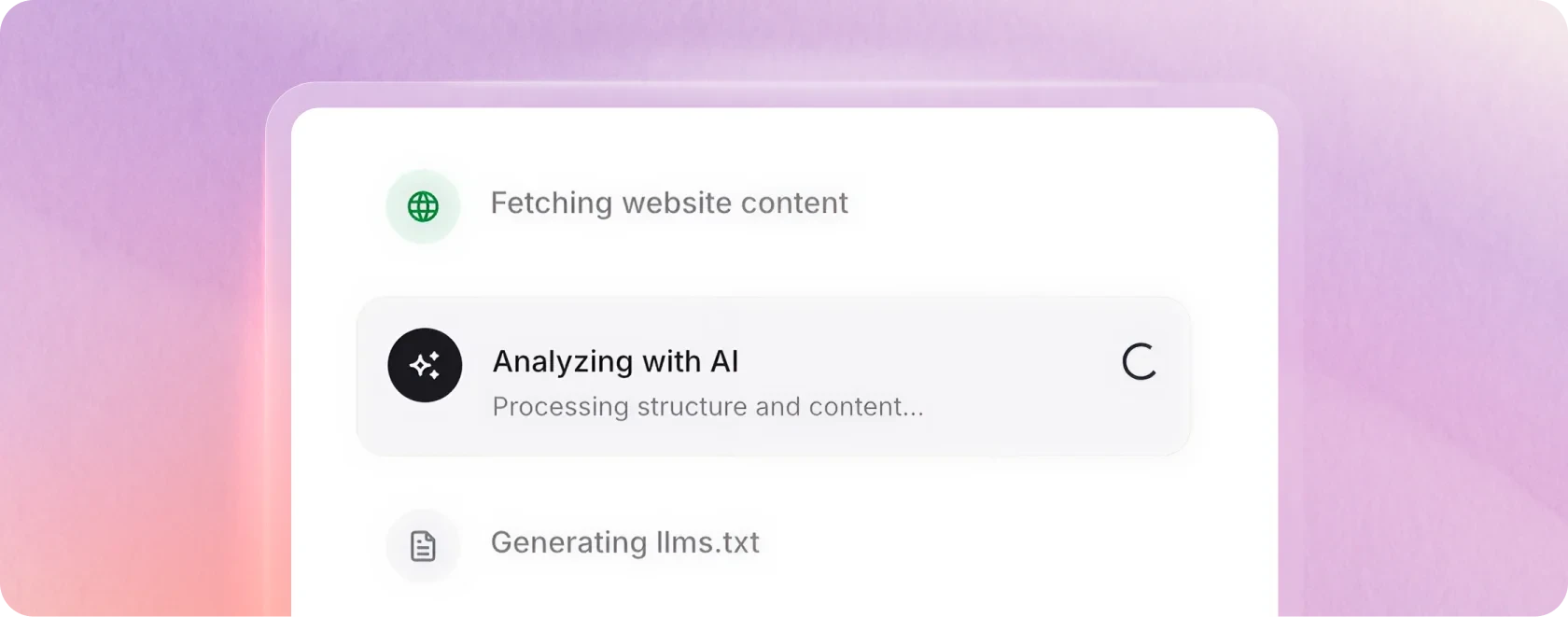
Process visualization showing three steps: Fetching website content, Analyzing with AI, and Generating llms.txt

1. Enter the website URL

Paste the URL you want to convert into an llms.txt file for AI models.

2. Generate the result

Click 'Generate' to process your web content into LLM-friendly content.

3. Copy and share the result

Click 'Copy' to save your llms.txt file to your website's root directory.

Use cases of LLMs.txt file generator

AI-powered search icon

AI-powered search optimization

Structure your website content for better visibility in AI-generated responses and generative engine optimization.

Content accessibility icon

Content accessibility

Transform complex HTML into llms full text files that AI systems can easily process, improving your entire site's discoverability.

Developer documentation icon

Developer documentation

Convert programming documentation and API reference pages into markdown format for context windows.
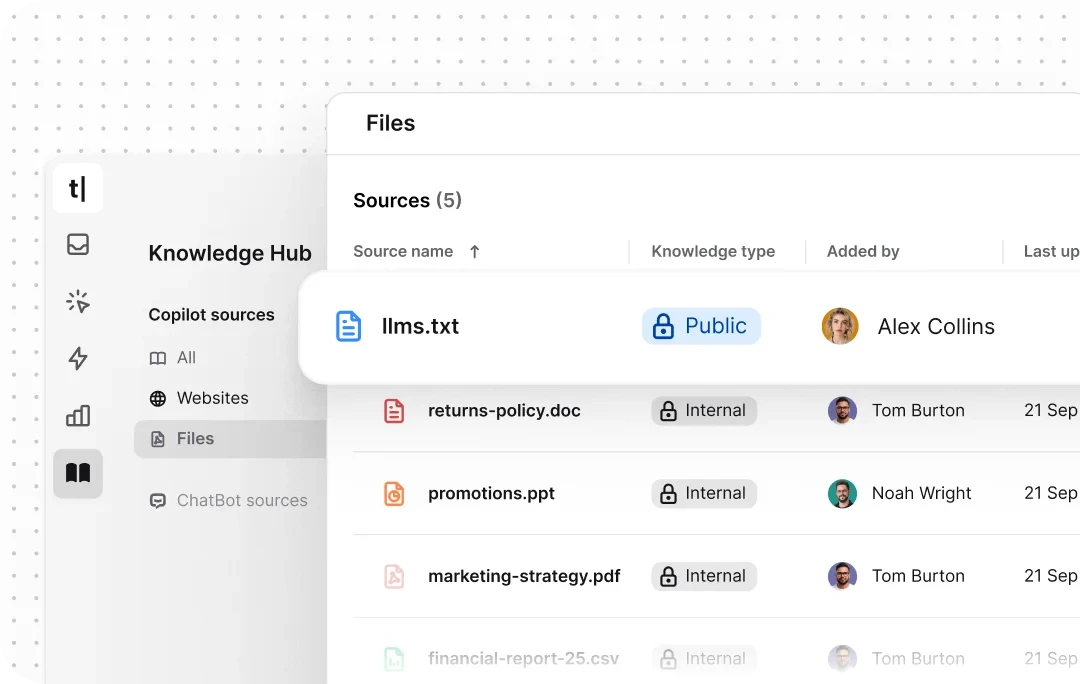
Knowledge Hub interface showing file management

Customer support optimization

Once your content is AI-ready, power your customer support with Text's AI chatbot that understands your entire knowledge base through llms.txt files.

Try Text App now

Other free AI tools from Text

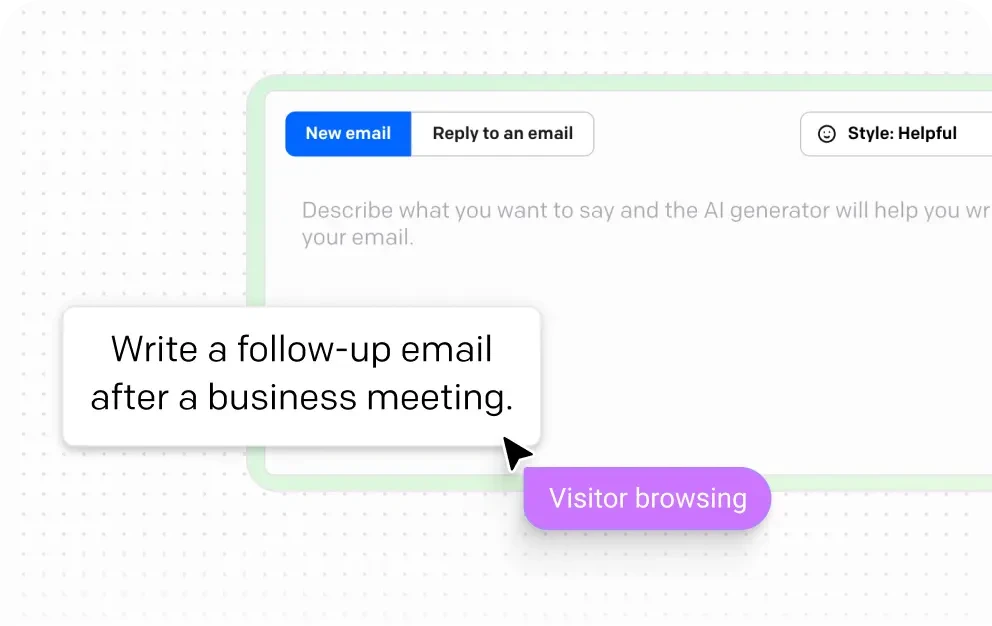
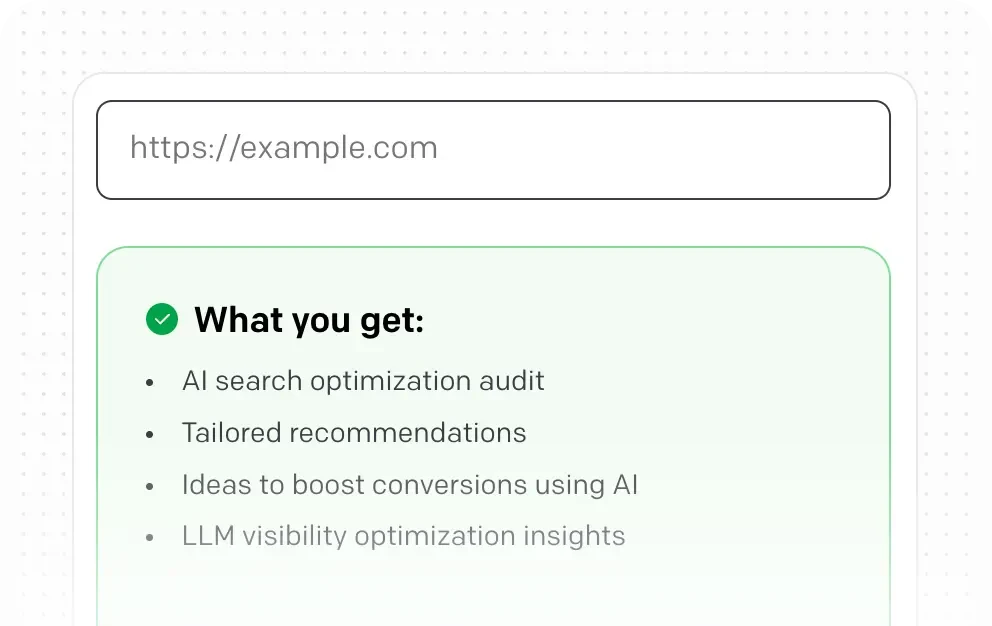
Beyond the free LLMs.txt generator, we've built a handful of other free AI tools to help you get more out of your website and support operations. Need to write better emails, get found online, or take some load off your support team? We've got something for that.
Frequently asked questions

The LLMs.txt Generator is an AI tool that creates llms.txt files - a proposed standard text file format that helps search engines and AI models better understand your web content. By placing this file in your website's root directory, you make it easier for AI systems to parse your most important web content, similar to how an XML sitemap works for traditional search engine crawlers. This simple file improves your SEO strategy for AI-powered search engines.
Yes, our LLMs.txt Generator is completely free and provides an accessible location for creating large language models-friendly content. You can generate multiple files daily and track performance through Google Search Console and server logs to see how AI bots interact with your optimized content.
While robots.txt tells search engine crawlers which pages to avoid, llms.txt does the opposite - it highlights your most important content for AI bots and language models. The robots.txt file is used to let automated tools know what access to a site is considered acceptable, while llms.txt provides context for allowed content for large language models. Both llms.txt and robots.txt are located in the root directory of a website and have a machine-readable structure, but they serve different purposes. The purpose of llms.txt is to optimize websites for large language models, while robots.txt is focused on optimizing for search engine bots. The llms.txt file is intended to complement existing web standards like robots.txt and sitemap.xml.
To check your llms.txt file, simply visit yourwebsite.com/llms.txt in a browser. You can also verify it using Google Search Console under the crawl stats or server logs to see if AI bots are accessing it. Review the markdown format to ensure your optional link titles, optional details, and secondary content follow the correct directory structure with proper formatting for language models. Monitoring requests from AI-powered systems after implementing the llms.txt file is critical to assess its impact and effectiveness on your website's visibility in AI-generated responses.
While not required, llms.txt is increasingly important for generative engine optimization as AI-powered search engines become more prevalent. Without this file, AI systems may struggle with converting complex HTML pages, miss your indexable pages, or provide inaccurate information about your offerings. As Search Engine Land and Google's John Mueller have noted, structured approaches to AI accessibility are becoming critical for organic traffic from artificial intelligence sources. There is speculation that implementing llms.txt could increase visibility in AI-generated responses and drive more referral traffic to your site.
The llms.txt file is used to optimize how AI models, AI bots, and search engine crawlers discover and understand your website content. It's particularly valuable for sites with developer docs, programming documentation, API references, or technical content where accurate AI-generated responses matter. It helps with generative engine optimization, improves AI accessibility, and ensures human readers get correct information when AI tools reference your site. LLMs are utilized in creating content for emails, blog posts, articles, and social media updates, and can generate diverse and contextually appropriate content such as poems, emails, and code - all of which benefit from accurate website information provided through llms.txt files.
While sitemap.xml is a list of all the indexable human-readable information available on a site, llms.txt offers a curated overview for large language models with only the most important pages and documents. The llms.txt file is formatted in Markdown, making it easy for models to scan and understand key pages, whereas sitemap.xml uses XML format designed for search engine crawlers. Both llms.txt and sitemap.xml are designed to coexist with current web standards like robots.txt, but llms.txt is specifically designed for AI models that might use website content to answer questions or generate responses for users. The llms.txt file provides a simple, machine-readable path to a website's most relevant pages with context and descriptions.
The llms.txt standard is still in the early speculation phase, with many companies experimenting with its implementation. The adoption of llms.txt is currently niche, with only a small number of domains implementing it as of mid-2025. However, many LLMs have voiced support for the llms.txt standard, indicating a potential for broader adoption in the future. The future of llms.txt depends on industry support, website owner support, regulatory developments, and AI companies' willingness to comply. As AI-powered search engines and automated customer service chatbots powered by LLMs provide round-the-clock support across industries, the need for structured content formats like llms.txt will likely increase, making it an essential part of modern SEO strategy.
Our generator automatically extracts valuable content from your own website and converts complex HTML pages into a structured markdown format. It creates two files optimized for language models: the main llms.txt file with your site's basic structure, and detailed information about your most relevant content. The tool processes your website information and outputs a text file you can edit in any text editor before uploading to your correct directory.
An llms.txt file is a text file that lives in your website's root directory and provides a structured overview of your site content for large language models and AI-powered search engines. It uses markdown format to organize key information about your most valuable content, making it easier for AI systems to understand and reference your website information when responding to user queries. The llms.txt standard is designed to help large language models better understand and use content from websites by providing clear and organized content that eliminates the complexity of HTML structures.
The llm.txt file should be placed in the root directory of a website for optimal accessibility by AI systems at the top level of your domain (example.com/llms.txt). This accessible location allows search crawlers and AI bots to easily discover and read your structured content. Most websites serve this file alongside their XML sitemap and robots.txt for optimal AI accessibility.
The llms.txt file helps AI systems and search engines quickly locate and understand your most relevant content without parsing complex HTML or navigating your entire site. It improves your website's visibility in AI-driven search results and ensures AI tools can accurately reference your programming documentation, API reference materials, and other technical content when answering user queries. The llms.txt file is designed to help AI models prioritize which pages of a website are most important and is intended to improve how AI models interact with website content, potentially enhancing the accuracy of AI-generated answers.
An llms.txt file follows a precise format using markdown files structure. It starts with your site name and optional description, followed by sections organized by topic. Each entry includes a link title (the page name), the URL, and an optional short description. You can mark secondary content separately from your primary pages. The basic structure uses simple headings, bullet points, and clean formatting that language models can easily parse. The llms.txt file should be structured and formatted in Markdown with clear and organized content to allow large language models to easily understand the information. The llms.txt file can include links to additional resources or documentation to provide context for AI models.
The llms.txt file is important because it bridges the gap between how most websites structure content (complex HTML pages) and what AI systems need (clean, structured text files). As artificial intelligence becomes more integrated into search engines, having an llms.txt file in your root directory ensures your valuable content appears in AI-generated responses, maintains your website's visibility, and provides accurate information to users interacting with AI tools. The llms.txt file allows website owners to control how their content is accessed and used by AI models. Regularly updating the llms.txt file is important to ensure it remains accurate and relevant, reflecting the current structure and content of your website. It's becoming a proposed standard for modern SEO strategy as the adoption of llms.txt grows beyond its currently niche implementation.
Best practices for creating and maintaining an effective llms.txt file include: regularly updating the file to ensure accuracy, including the most important information and pages of your website, using Markdown formatting to enhance readability for both humans and AI, structuring content with clear link titles and optional descriptions, and placing the file in your website's root directory for optimal accessibility. The content of the llms.txt file should focus on high value content like developer docs, API references, and programming documentation. Include links to additional resources to provide more context for AI models, and organize secondary content separately from primary pages to help AI systems prioritize the most important information.
LLMs use llms.txt files as a curated guide to website content, allowing them to quickly identify and access the most important pages without processing complex HTML structures. When generating responses to user queries, AI models can reference the structured information in llms.txt files to provide accurate, contextually relevant answers. This is particularly valuable for automated customer service chatbots and AI systems that need to reference programming documentation, API references, or technical content. The llms.txt file is designed to improve the efficiency of how large language models access and interpret web content, providing AI models with simple, clear, and processable data from websites that helps overcome the limitations traditional methods face when dealing with complex web structures.

TEXT APP

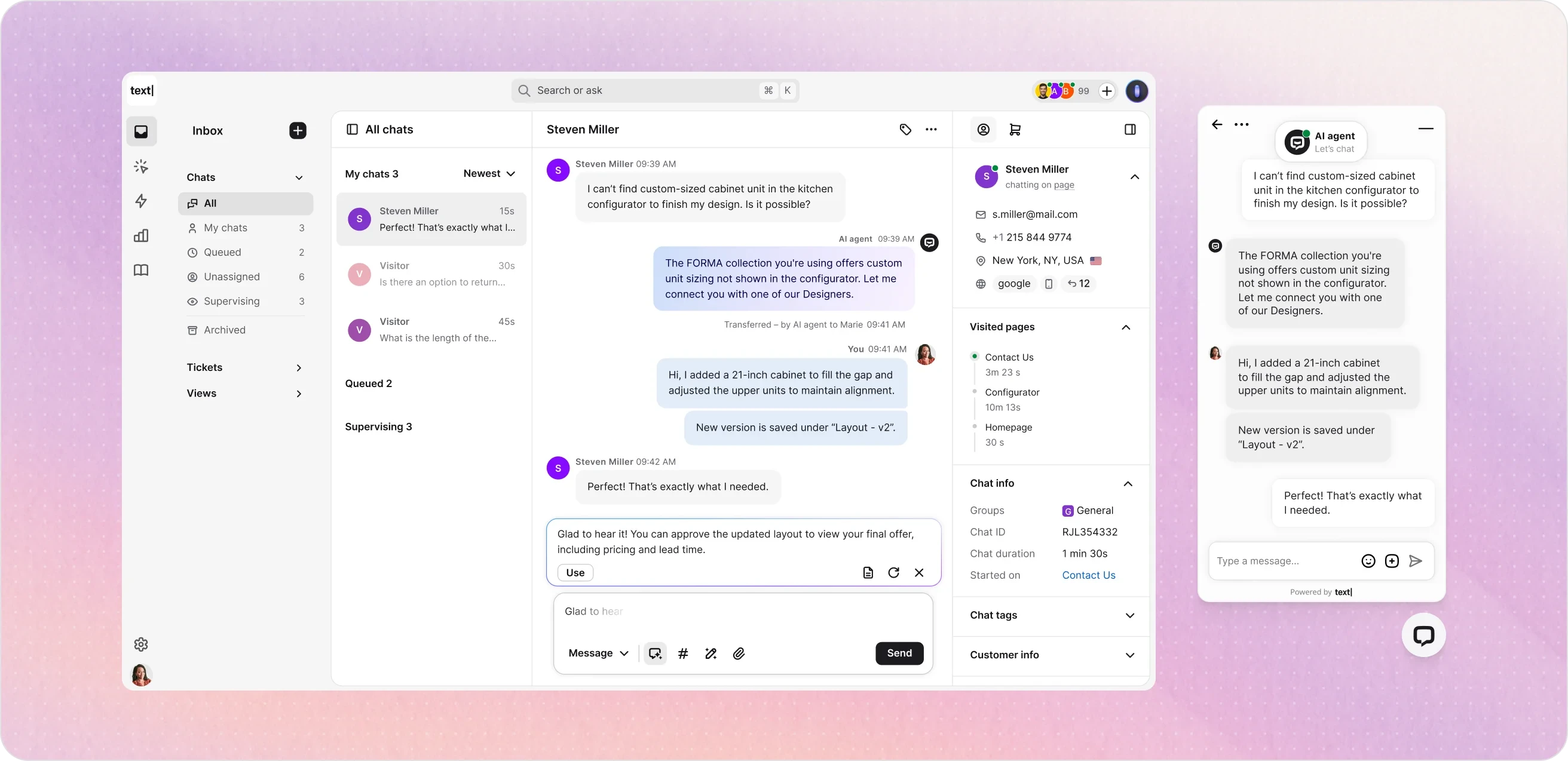
Transform your content into intelligent customer support

It is your own AI system, trained on your business knowledge and customer data. It autonomously delivers support, completes tasks, and drives sales conversions.

Try Text App now
Resolve up to 60% of customer service cases
Deliver precise responses to user queries 24/7
Boost customer satisfaction rate
Dashboard showing ongoing campaigns