Customer story
How Fuse grew into new cities without growing its support team.
More tickets, a bigger footprint, the same small team — and support got faster. Here's how.
- 63%
- Faster resolution
- 66%
- More tickets, same headcount
- +20pt
- Higher satisfaction

Fuse gives students across Europe a furnished home and a community to belong to, with every property held to the same standard no matter who owns it.

- Student Housing
- 11-50 employees
- Central Europe
- Automate support
- fusestays.com
The customer
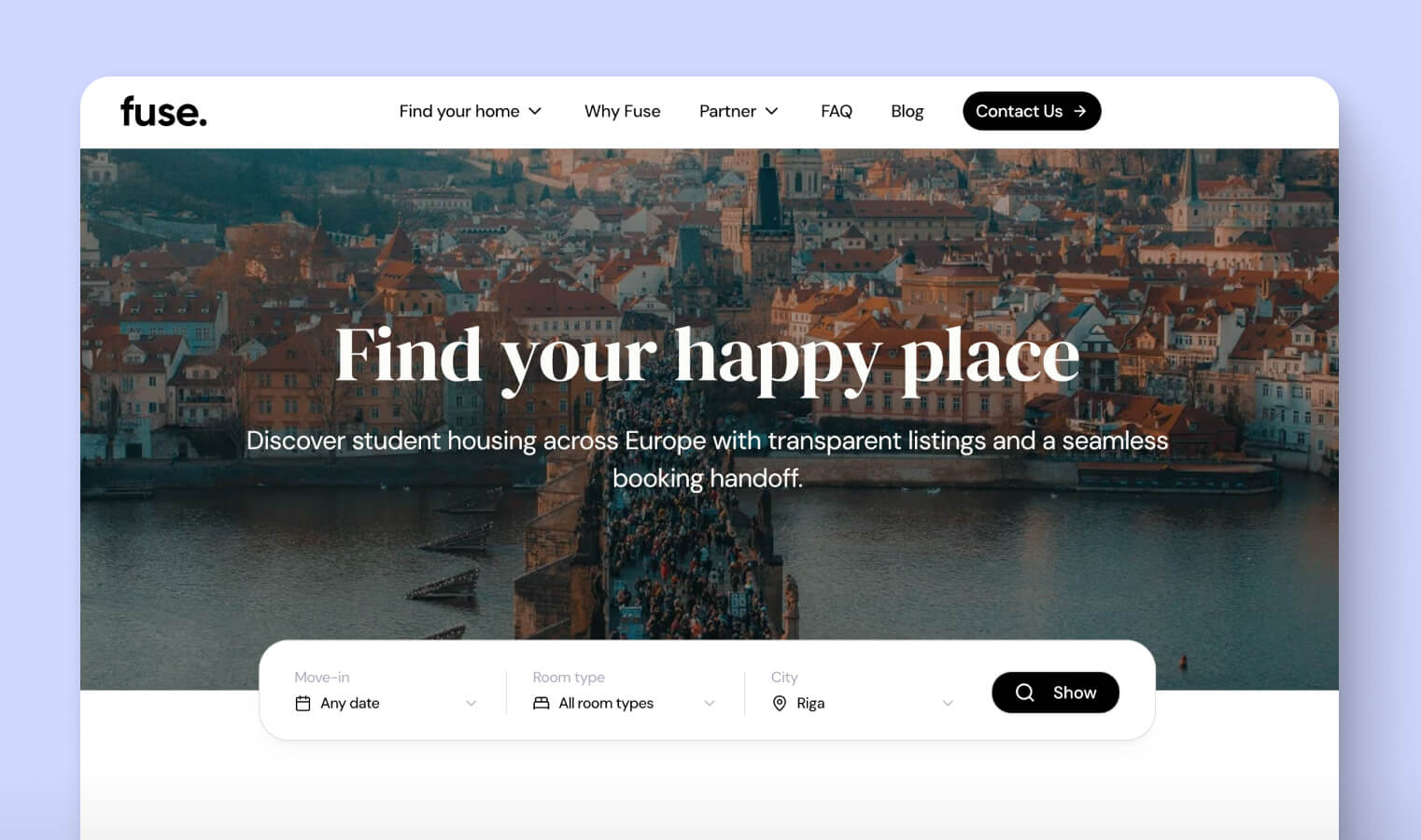
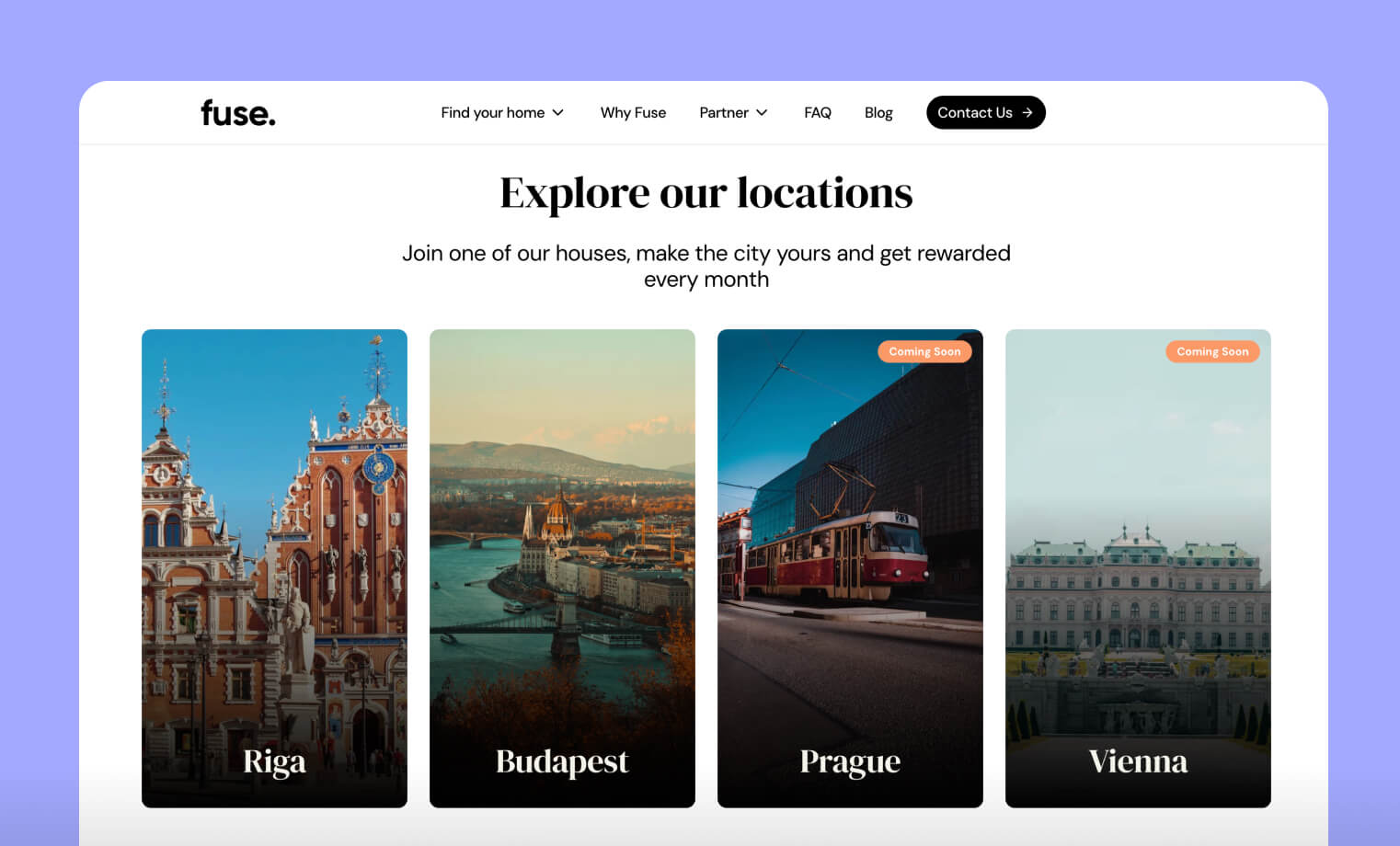
Fuse is a student housing provider across Eastern and Central Europe. They own and run co-living homes: private rooms and studios with shared kitchens and common spaces, for students and young professionals under 35.
Most of them international, many living abroad for the first time. When something goes wrong, a slow answer isn't an inconvenience — it's a scare.
Nobody wants to stay in the dark when they have a maintenance issue. We need to react as quickly as possible.
The challenge
When Kamelia Kasakova joined Fuse as Head of Operations, support was whoever had a spare minute. There was no dedicated team nor system or process, just Gmail and WhatsApp. Nothing was tracked but more importantly, tickets fell through the gaps, and tenants paid for it in silence.
Unfortunately, I don't think back then our tenants were receiving the customer support they deserved and they needed.
That silence costs money. Tenants left without hot water, or without an answer, don't renew. Kamelia knew slow support was quietly draining FuseStays revenue.
The audit
Kamelia had years in customer support, so she knew what she was looking at. Her first two weeks, she ran support herself to learn where things broke. Then she went tool-hunting: something she could set up with no code, that pulled every channel into one place, and fit a startup budget without looking like one.
Text kept coming up. It had an AI agent she could drop onto the website, it sat inside the budget, and (the part that mattered most to someone handling tenant data) it felt secure and reliable.
The clear goal was to dramatically decrease first response time, increase customer satisfaction, and reduce the time our team spends resolving a ticket — so they have capacity for other work. Save time and make people happy. That was it.
The solution
Setup took a day, most of it under an hour. Kamelia loaded the knowledge base herself, without a developer, and the team picked up the rest on its own. After the Gmail chaos, the structure alone was a relief.
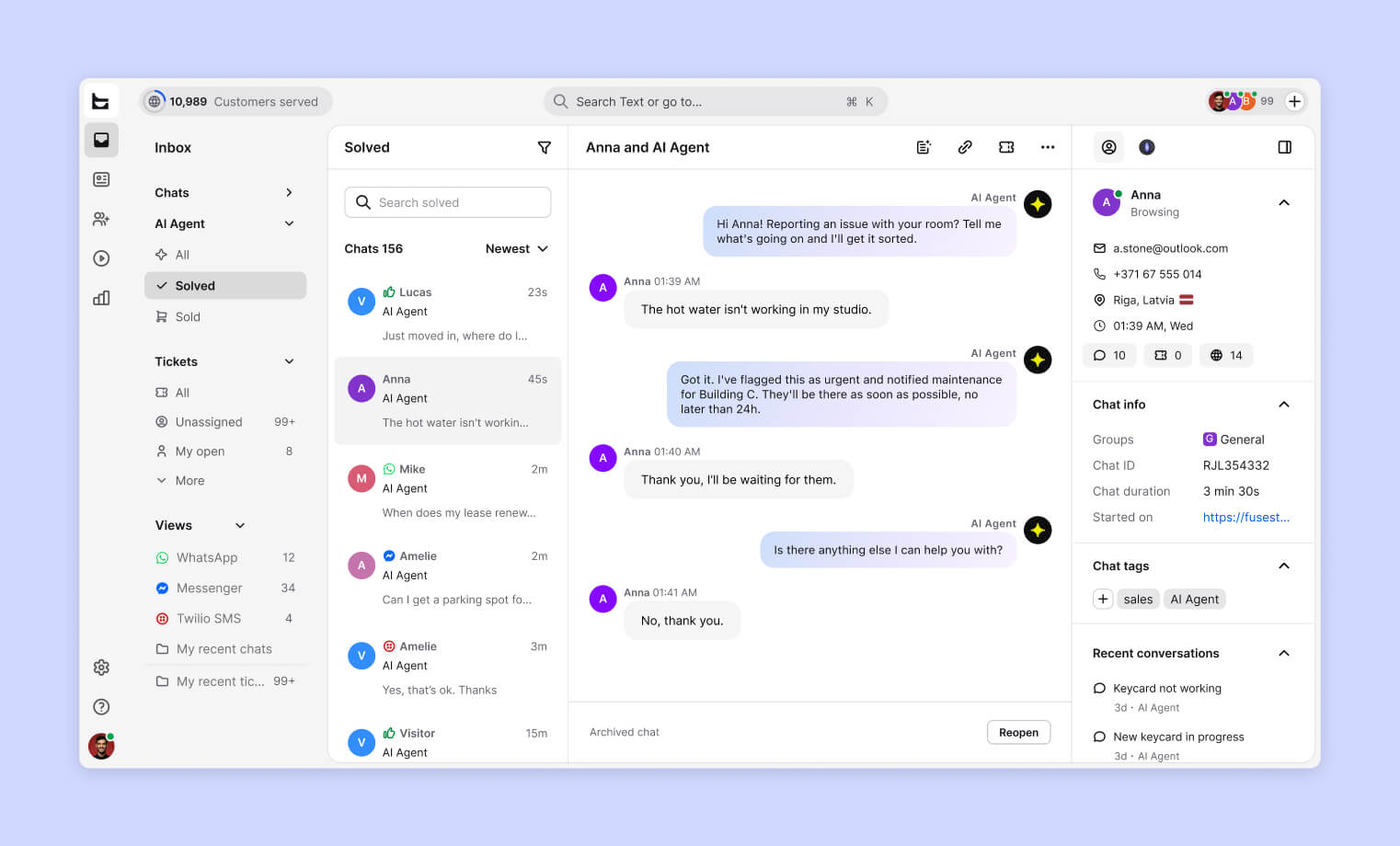
With everything in one inbox, Fuse could finally split the work that had been crammed into single channels. Booking questions went one way. Maintenance and support tickets, the operational core, were routed through email and handled in Text, where they could be tracked, owned, and closed.
And once setup stopped eating the team's time, Kamelia could work on what sat underneath: how the team replied, and the standardized processes that hold up across different countries and laws.
It gave us the freedom to start thinking ahead, rather than just staying behind and putting out fires.
The result
The portfolio grew. More tenants, more tickets, all handled by a team that stayed the same size. The numbers moved the right way anyway.
Ticket volume climbed roughly two-thirds. And instead of slowing the team down, resolution time dropped from almost five days to under two. The wait that once stretched to weeks now closes inside a day. Satisfaction followed: the share of tenants rating their support positively climbed from under a third to more than half.
For a company moving into new cities, that's what counts most. The business kept growing, and the support team didn't have to grow with it.
When I started at Fuse, a tenant with a serious issue could wait weeks for a response. After onboarding Text, even as ticket volume grew, we got that down to a day. In our line of business, that's huge.
Talk to our Product Experts
