

Lead generation is the lifeblood of every business, but in 2026, it’s no longer just about collecting contact details. The best-performing teams are using AI-powered lead generation software to find, score, and nurture prospects faster than ever.
Instead of relying on manual prospecting or cold outreach, modern tools analyze customer behavior, intent signals, and real-time interactions to identify who’s most likely to buy, and when.
AI does the heavy lifting: capturing leads from your website, enriching contact data, qualifying opportunities automatically, and even sending personalized follow-ups that feel human, not robotic.
The result is a leaner, smarter sales pipeline where marketing and sales work in sync, and where every message counts. With automation reducing manual work, teams can focus on what truly matters: building relationships and completing deals.
In this article, you’ll learn:
- What makes AI tools essential for modern lead generation
- Key features that separate the best lead generation software from the rest
- Which tools perform best for inbound, outbound, and B2B prospecting
- How automation transforms lead capture, scoring, and nurturing
Let’s explore how the smartest tools of 2026 turn data into deals, and how your team can do the same.
Many platforms offer free trials for their lead generation tools to test usability and features, making it easier to find the right fit for your business.
Why is the best lead generation software AI-powered?
Traditional lead generation often relies on guesswork, cold emails, endless follow-ups, and spreadsheets full of half-qualified contacts. It works, but it’s slow, expensive, and nearly impossible to scale.
That’s where AI-powered lead generation changes everything. The best lead generation software is often tailored to fit businesses’ specific lead generation strategies, ensuring a more targeted and effective approach.
AI doesn’t just automate repetitive work. It makes your entire funnel smarter. Automation eliminates repetitive tasks such as manual prospecting, follow-ups, and CRM updates, freeing up your team to focus on higher-value activities. When analyzing behavioral signals, engagement patterns, and data from multiple channels, AI identifies the leads most likely to convert before your sales team ever reaches out.
Instead of spending hours sifting through lists, your team gets actionable insights:
- Which prospects are ready to buy now
- What content or campaign attracted them
- When and how to follow up for the best response
Lead generation tools provide sales teams with a steady stream of qualified leads, complete with contact information and behavioral insights, enabling more efficient and targeted outreach.
That precision helps marketing teams focus budgets on what’s working and gives sales teams a prioritized list of leads worth their time. Automation allows sales teams to focus more on relationship-building and closing deals with prospects. The result is higher conversion rates, lower acquisition costs, and shorter sales cycles, all powered by data, not intuition.
Higher conversion rates are achieved through personalized engagement and faster response times enabled by lead generation tools.
Another major benefit is consistency. AI tools never forget to send a follow-up, lose a contact, or skip a lead due to workload. They keep the pipeline full 24/7, ensuring every opportunity is captured and nurtured.
Best lead generation software like Text® App takes this further by combining AI with omnichannel communication. Our built-in AI agents automatically qualify leads via chat, email, or social channels, while keeping every interaction logged in a single unified dashboard. Effective lead generation software includes Apollo.io, Pipedrive, and Lusha, which are known for their robust B2B databases and sales-focused features.
In short, AI isn’t replacing your sales team; it’s supercharging them.
The smartest companies in 2026 are those using AI to work faster, convert smarter, and grow sustainably.
Key features to look for in the best lead generation tools
Not all lead generation software is created equal. Some tools promise automation but only handle basic data capture. Others add layers of complexity without improving what really matters: finding and converting the right prospects.
If you’ve ever asked, “Why is lead generation so hard to scale?” The answer often comes down to the wrong setup. Businesses rely on disconnected marketing tools or outdated systems that can’t follow the full sales process from lead capture forms to conversion.
That’s where the best lead generation software makes a difference. It unites your marketing strategies, sales funnel, and customer insights into one intelligent platform. Integration capabilities are crucial; your lead generation software should fit seamlessly into your existing tech stack, connecting with other tools to streamline and optimize your processes.
Modern AI-powered tools can now automatically generate leads, gather accurate company details, and personalize every touchpoint using insights from your CRM or email marketing platform. They also integrate with automated referral programs to attract new prospects through word-of-mouth campaigns, turning your happiest customers into your most effective marketers.
Choosing the right solution means selecting a system that can do more than just collect names. You want a platform that supports the entire sales funnel, automates nurturing, and continuously learns from your data to improve outcomes.
Here’s what truly matters when choosing your next tool: the best lead generation tools offer features such as lead-capture forms, CRM integration, email marketing, analytics, automation, data enrichment, and seamless integrations to optimize your sales funnel.
1. Smarter lead capture
Gone are the days of generic forms. The best lead generation software uses dynamic landing pages and AI-driven forms that adapt to visitor behavior. A robust form builder allows businesses to create customized, integrated forms that streamline lead capture and automation. It recognizes repeat visitors, prefills known details, and asks the right follow-up questions, keeping friction low and conversions high.
2. Predictive lead scoring
AI doesn’t just collect leads; it learns from them. Predictive scoring systems analyze demographics, engagement patterns, and purchase intent to automatically rank leads. That means your sales team focuses on the ones most likely to close, not just those who fill out a form.
3. CRM integration that actually works
Seamless data flow is the backbone of every successful funnel. The best lead generation software integrates directly with your CRM, syncing every conversation, campaign, and update. There is no exporting, no spreadsheets, just context at your fingertips. A robust sales CRM is essential for improving customer relationships, automating outreach, and supporting lead nurturing and deal management.
4. Automated nurturing sequences
Once a lead enters your system, timing is everything. AI-powered nurturing tools send personalized messages, recommend products, or trigger follow-ups when prospects show interest, even while your team sleeps. Automated lead nurturing sequences streamline the process of engaging and tracking potential customers through the sales funnel. Many lead generation tools integrate with marketing automation platforms to automate lead nurturing workflows, sending personalized content to prospects based on their engagement.
5. Insightful analytics of lead data
Numbers tell stories. Advanced analytics dashboards show which campaigns drive conversions, which messages resonate, and where potential customers drop off. With these insights, marketing becomes measurable and repeatable.
If you’re looking for an example that combines all these capabilities, the Text App delivers them in one clean workspace. It connects live chat, email, and automation tools so your team can capture, qualify, and convert leads without switching tabs.
The role of landing pages in lead generation
Landing pages are the unsung heroes of any successful lead generation strategy. Whether your approach is inbound lead generation, attracting potential customers with valuable content, or outbound lead generation, driving targeted website traffic through outreach efforts, landing pages are where interest turns into action.
The best lead generation tools and software make it easy for sales and marketing teams to create high-converting landing pages without needing a developer. With intuitive drag-and-drop editors, customizable templates, and powerful analytics, these platforms empower teams to capture leads efficiently and optimize every campaign for better results.
A well-crafted landing page is more than just a digital form. It’s a focused environment designed to guide visitors toward a single goal: sharing their contact details in exchange for something valuable. This could be a lead magnet, such as an e-book, webinar, or free trial. anything that provides immediate value and encourages sign-ups. By using lead capture forms and predictive lead scoring, businesses can quickly identify high-value prospects and move them into the sales funnel.
Integration is key. Leading generation software connects landing pages with your CRM solution, email marketing platform, and marketing automation tools. This seamless flow of lead data ensures that every new lead is automatically added to your lead management system, triggering personalized follow-up emails, nurturing sequences, and even automated referral programs. The result? You save time, reduce manual effort, and ensure no potential leads slip through the cracks.
For outbound lead generation, landing pages act as the destination for your outreach efforts, whether from cold email, paid ads, or social campaigns. Advanced search filters and custom forms help you segment and qualify leads as they arrive, so your sales team can focus on the most promising opportunities. For inbound lead generation, landing pages are optimized to convert existing website traffic by leveraging compelling copy, clear calls to action, and a user-friendly design to maximize conversions.
When evaluating different lead generation software, consider the features that matter most for your business. Some platforms offer robust landing page builders with A/B testing, multi-channel integration, and detailed analytics, while others focus on simplicity and speed, ideal for small businesses looking to generate leads without complexity. Paid plans often start at a few hundred dollars per month and may include advanced features like custom forms, multiple channels, and enhanced outreach capabilities.
Don’t forget the power of lead magnets and automated referral programs. By offering valuable resources or incentives, you can encourage more leads to share their contact data and even turn your existing customers into advocates who help generate new leads.
Ultimately, the right landing page, backed by the best lead-generation software, can transform your lead-generation efforts. Capturing high-quality leads, nurturing them through the sales funnel, and integrating with your broader marketing strategies sets your business up for sustainable growth.
Best lead generation software for 2026
AI has reshaped how teams find and convert leads, but with dozens of platforms claiming to be “the best,” choosing the right one can be overwhelming. Staying aware of market trends is crucial for selecting the best lead generation software and remaining competitive.
Below, you’ll find ten standout tools that actually deliver results in 2026, from all-in-one systems to niche specialists built for outbound prospecting or ecommerce growth.
1. Text App
The Text App blends lead generation, live chat, CRM, and automation into a single platform. Instead of juggling multiple tools, your marketing and sales teams get one shared workspace where every customer interaction, chat, email, or form submission is tracked in real time.
Our AI agents automatically qualify leads, trigger personalized follow-ups, and escalate promising prospects to your sales reps. Because everything happens inside one dashboard, your data stays connected and your communication consistent across channels.
Key benefits:
- Unified chat, email, and CRM integration
- Identifies high-intent visitors and auto-follow-ups
- Omnichannel engagement (web, social, and email)
- Actionable analytics to refine conversion strategy
Perfect for: Businesses that want to generate, qualify, and nurture leads without switching between multiple tools.
2. HubSpot
HubSpot remains a powerhouse in inbound lead gen. It combines CRM, email automation, and content tools to attract and convert leads through value-driven marketing. Its AI features simplify segmentation and workflow automation, helping teams nurture leads at scale. Small companies might find HubSpot’s free plan adequate for basic lead capture and customer engagement needs.
Best for: Businesses focused on inbound marketing and long-term engagement.
3. Apollo.io
Apollo.io offers access to a massive B2B database with over 200 million contacts. Its AI engine recommends prospects, automates outreach, and enriches contact details through advanced data enrichment, helping sales teams improve lead quality and prioritize high-value prospects. With its Chrome extension, you can capture leads directly from LinkedIn and sync them with your CRM instantly.
While Apollo.io focuses on enriching contact data for better lead quality, Clay is another AI-powered tool that enriches lead data by pulling information from multiple sources and automating workflows.
Apollo.io offers an extensive B2B database with over 210 million contacts and features like a Chrome extension for data extraction and sales intelligence.
4. Lusha
Lusha combines machine learning and human verification to ensure accurate B2B contact information. It’s lightweight, fast, and integrates well with LinkedIn, Salesforce, and HubSpot. Additionally, Lusha provides B2B contact information through a browser extension, ensuring data accuracy by combining machine learning with human verification.
Best for: Outbound teams who prioritize verified email and phone data.
5. Leadfeeder
Leadfeeder identifies and tracks website visitors, turning them into actionable leads by showing which companies visit your site and what they’re viewing. Integration with CRMs makes follow-up seamless.
Best for: B2B companies relying on web traffic as a primary lead source.
6. OptinMonster
OptinMonster specializes in exit-intent campaigns and customizable pop-ups that capture leads before they leave your site. Advanced targeting and A/B testing help optimize conversions. OptinMonster also specializes in high-converting pop-ups using exit-intent technology to capture leads effectively.
Best for: Content-driven brands and ecommerce stores.
7. Pipedrive
Pipedrive’s visual pipeline makes tracking deals easy. Add the LeadBooster extension, and you’ll gain web forms, chatbot automation, and prospector tools.
Best for: Small and mid-sized businesses seeking simplicity and visibility. Testing software usability and customer support through free trials is recommended before committing to a lead generation tool.
8. Zoho CRM
Zoho’s AI assistant, Zia, predicts deal outcomes, scores leads, and automates follow-ups. Its modular pricing makes it a flexible fit for startups and SMBs.
Best for: Growing businesses needing advanced automation without a high price tag.
9. Hunter.io
Hunter.io finds and verifies professional email addresses in seconds. It’s perfect for building cold outreach lists and connecting with decision-makers quickly.
Best for: Outbound marketers and recruiters.
10. Omnisend
Omnisend automates email, SMS, and push notifications with AI-personalized timing and content. It integrates smoothly with Shopify and WooCommerce, making it a go-to for online retailers.
Best for: Ecommerce teams wanting consistent cross-channel engagement.
| Tool | Best for | AI features | CRM integration | Standout benefit | Pricing tier |
|---|---|---|---|---|---|
| Text App | Unified AI workspace | AI agents, omnichannel chat | ✅ Integrations available | One workspace for chat and tickets, plus integrations | Mid-tier |
| HubSpot | Inbound marketing | Workflow automation, analytics | ✅ Native | All-in-one inbound platform | Premium |
| Apollo.io | B2B data intelligence | Smart prospecting, enrichment | ✅ API | Massive verified contact base | Mid-tier |
| Lusha | Contact accuracy | Machine learning verification | ✅ Chrome plugin | Real-time data accuracy | Mid-tier |
| Leadfeeder | Website visitor tracking | Lead intent analytics | ✅ Native | Identify anonymous traffic | Mid-tier |
| OptinMonster | Pop-ups and campaigns | Behavioral targeting | ✅ via Zapier | Exit-intent conversion | Low-tier |
| Pipedrive | Simple CRM | AI forecasting | ✅ Native | Visual pipeline and automation add-ons | Mid-tier |
| Zoho CRM | SMB automation | AI assistant (Zia) | ✅ Native | Affordable AI features | Low-tier |
| Hunter.io | Cold outreach | Email verification | ✅ API | Verified contact accuracy | Low-tier |
| Omnisend | Ecommerce engagement | AI content and timing | ✅ Shopify, WooCommerce | Multi-channel automation | Mid-tier |
Inbound vs. outbound strategies
Lead generation isn’t one-size-fits-all. Some leads find you naturally; others need an invitation.
The real power comes from knowing when to pull and when to push and from understanding how AI can make both sides smarter.
The inbound lead generation perspective
Inbound marketing is all about attraction. You draw people in through helpful content, organic search, and valuable experiences. Inbound lead generation focuses on drawing people in through helpful content, social media, or website forms.
Imagine a customer browsing your site, reading a blog, or downloading a free guide. They’re curious, but not ready to buy, yet. AI tools pick up subtle intent signals: which pages they linger on, what topics they revisit, and how often they return.
That’s when the magic happens. AI-powered systems automatically score the lead, tailor follow-up content, and send personalized nudges, an email, a chatbot suggestion, or a relevant demo invitation. The process feels natural, not pushy.
Best lead generation software, like Text App, HubSpot, and OptinMonster, make this seamless. The Text App, for instance, turns a casual website chat into a qualified conversation by using AI agents to ask context-aware questions and offer the next best step, all without human intervention.
Inbound works because it builds trust. Your content does the talking; your AI listens carefully and responds at the perfect moment.
The outbound lead gen perspective
Outbound, on the other hand, is the art of reaching out before prospects reach you. It’s proactive, direct, and data-driven. Cold email outreach and direct mail campaigns are common methodologies for outbound lead generation.
Think of it as the digital equivalent of a confident handshake. Tools like Apollo.io, Lusha, and Hunter.io automate outreach by finding verified contact details, crafting personalized messages, and sending them at the right time for each lead.
AI algorithms now analyze patterns from thousands of campaigns to predict what works best, subject lines that get opened, times that get replies, and tones that convert. The days of blind mass emailing are long gone.
Even outbound can feel human when done right. With Text App, AI automates follow-ups for leads who engage via chat or email, while human agents jump in when nuance matters. That balance keeps outreach consistent without ever being robotic.
Two paths, one goal
Inbound builds relationships; outbound starts conversations.
Inbound earns trust; outbound creates opportunity.
AI connects them both, turning discovery into dialogue and interest into intent.
In 2026, the smartest businesses will not choose sides. They will let automation power both inbound that attracts, outbound that converts, and a unified system that keeps every lead moving forward.
Best practices for smarter lead generation
The best lead generation software can do a lot for you, but it can’t fix poor strategy. These best practices help you connect your tools, data, and teams into one coherent system that attracts, qualifies, and converts leads more efficiently.
When evaluating software, keep in mind that paid plans start at different price points and often include advanced features for scaling lead generation as your business grows. Improving lead quality and optimizing outreach efforts can save time and money in the lead generation process.
It is advisable to categorize leads by their current lifecycle stage or by the method by which you qualified them. Collecting feedback through surveys and interviews also helps refine and improve your lead generation tactics.
Align sales and marketing teams around shared goals
One of the biggest reasons lead generation fails is misalignment. Marketing might celebrate a high number of leads, while sales complain that those leads aren’t qualified. The fix is simple but crucial: both teams need the same definition of a qualified lead and the same success metrics.
Start by holding regular syncs to review conversion data and campaign results. Build a shared lead scoring framework that prioritizes engagement and intent over volume. When sales and marketing speak the same language, AI-driven insights become far more accurate, and the customer journey becomes seamless from the first click to the close.
Use data to drive every decision
AI is only as good as the data it learns from. Feed your tools with clean, accurate, and regularly updated data from your CRM, website analytics, and campaign tracking. Then let predictive analytics highlight patterns that humans might overlook.
For example, if engagement data shows that visitors who interact with your pricing page are twice as likely to buy, you can trigger personalized chat prompts or email sequences right at that moment. Over time, these data-driven optimizations create a self-improving system that continuously refines your targeting and outreach.
Personalize at scale
Personalization turns attention into action, but doing it manually doesn’t scale. That’s where AI excels: it allows your business to deliver tailored experiences across thousands of interactions without losing the human touch.
Use AI-driven segmentation to match leads with relevant messages, offers, or content. For example, someone who downloads a case study should receive a different follow-up than someone browsing pricing.
The Text App takes this even further by adjusting conversations in real time, analyzing visitor intent during chat sessions, and adapting questions to guide prospects naturally toward conversion.
Automate, but keep the human connection
Automation speeds up your funnel, but relationships still close deals. The key is to know where to draw the line between what AI handles and what your team should own.
Let automation handle repetitive tasks like data entry, scheduling demos, and sending reminders. Then let humans step in for moments that require empathy or complex problem-solving.
AI agents are designed for exactly this: they qualify leads, respond instantly, and hand over warm prospects to your sales team with full context, so no opportunity slips through the cracks.
Test, learn, and improve continuously
Even the most sophisticated AI needs guidance. A/B testing keeps your system sharp and your results measurable. Experiment with different headlines, form designs, chatbot greetings, and call-to-action buttons to see which perform best.
The insights you gather from these experiments feed directly back into your AI models, improving future recommendations. Think of it as teaching your system; every experiment is a lesson that moves your lead generation strategy closer to perfection.
Measure what truly matters
It’s easy to focus on vanity metrics like impressions or clicks. But true success in lead generation comes from tracking metrics that align with revenue goals: lead quality, engagement rate, conversion velocity, and customer lifetime value.
Use your AI dashboard to visualize where leads drop off and why. Tools like Text App provide real-time analytics that highlight which campaigns bring in the best-qualified prospects, not just the most traffic. This lets you double down on what’s working and refine what isn’t.
Make speed your competitive edge
Timing can make or break a deal. When a prospect shows interest, waiting hours (or days) to respond can lose them to a faster competitor. With AI automation, response time becomes instant.
AI-powered chatbots and email sequences can engage prospects immediately, answering questions, offering product demos, or booking calls while your team focuses on strategic work. The faster you respond, the higher your conversion rates climb.
Keep refining your funnel
Lead generation isn’t a one-time setup; it’s an ongoing process of optimization. Review your funnel regularly to identify leaks or bottlenecks. Track how leads move from capture to qualification to conversion, and look for where they slow down or drop off.
Use this data to adjust your campaigns, messages, and triggers. AI can help automate parts of this analysis, enabling it to spot weak points faster than manual review. The goal isn’t just to get more leads; it’s to ensure that each one has a clear, smooth path to becoming a customer.
When AI, data, and human insight work together, your lead generation system becomes more than a process; it becomes an engine for growth. Every interaction adds value, every step brings you closer to the sale, and every automation frees your team to do what they do best: connect. Building relationships and delivering real value is important to effectively turning leads into buying customers.
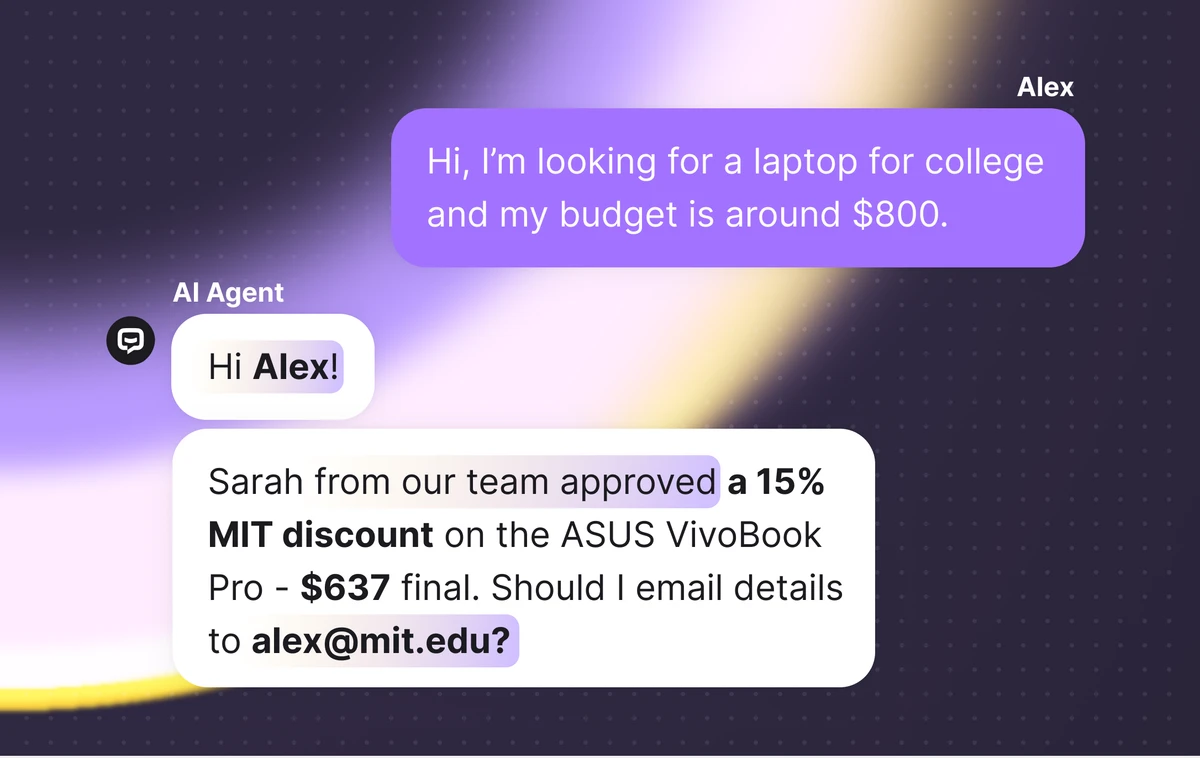
High-quality leads start with the right tool
When AI handles the heavy lifting, collecting data, scoring leads, and sending timely messages, your team is free to focus on what humans do best: building trust, creating relationships, and finalizing deals that last.
The future of customer acquisition depends on using the best lead generation software, solutions designed to simplify lead management and help businesses act on data in real time. While there are many different lead generation software options available, not all offer the same level of integration, insight, or automation.
That’s where Text App stands apart. Built as an all-in-one lead-generation software, it brings together chat, email, CRM integration, and AI automation into a single, connected workspace.
Your team can manage every conversation and campaign from one place, while AI agents qualify prospects, trigger personalized follow-ups, and seamlessly pass high-intent leads to your sales team for faster conversions.
If you’re ready to scale smarter and simplify every step of your funnel, start your free trial now!
FAQ
Is AI lead generation software worth it?
Yes. AI tools automate data collection, scoring, and outreach, helping teams identify high-value prospects faster.
Which AI tool is best for small businesses?
Text App and Zoho CRM are great fits. Both offer automation and scalability at accessible prices.
How does Text App improve lead generation?
It unifies chat, email, and automation. AI agents qualify leads, follow up automatically, and hand off high-intent prospects to your team in real time.
What role does email marketing play in AI-driven lead generation?
Email remains one of the most effective nurturing tools. AI enhances it by sending the right message at the right moment, based on user behavior or engagement patterns.
What’s the biggest benefit of automation in lead generation?
Time savings, automation reduces manual work, improves consistency, and lets teams focus on completing deals.
Get a summary with