

Artificial intelligence is quietly becoming the new basis of education. It’s no longer just about automating tasks; it’s about reimagining how teachers teach, students learn, and schools operate. From creating personalized lesson plans to grading assignments in seconds, AI tools are changing the classroom dynamic faster than ever before.
Teachers can now use AI to analyze student performance, identify learning gaps, and design adaptive exercises tailored to each learner’s pace.
Students, in turn, gain access to virtual tutors who explain complex concepts step by step, interactive quizzes that make learning fun, and writing assistants who offer real-time feedback. What once took hours of preparation now happens in minutes without losing the human touch.
Even communication between teachers, students, and parents is being transformed. In this article, you’ll learn:
- How AI tools improve engagement and efficiency in education
- Why personalization and automation matter for teachers and students
- Which AI tools stand out in 2026 for teaching, tutoring, and administration
- The key trends shaping the next generation of AI-driven classrooms
Let’s examine how artificial intelligence is turning learning into a smarter, more personal experience for everyone.
What is artificial intelligence in education?
Artificial intelligence in education is more than a digital upgrade; it’s a complete rethink of how learning happens. At its core, AI utilizes algorithms and machine learning to analyze data, identify patterns, and make informed decisions that enhance the learning process.
Instead of treating every student the same, it adapts, responds, and personalizes lesson planning.
In a traditional classroom, one teacher might oversee 20 or even 100 students across different subjects and skill levels. AI steps in to bridge that gap, acting like a tireless teaching assistant that learns what each student needs and when.
It doesn’t just deliver information; it interprets performance data, predicts where a student might struggle, and recommends the next step before frustration sets in.
Here’s how it works in practice:
1. Adaptive learning systems
Tools like DreamBox and eSpark continuously monitor how students respond to problems, adjusting the next question or activity based on accuracy, speed, and confidence. For example, if a student solves a math problem too quickly, the system raises the difficulty; if they hesitate or make repeated mistakes, it shifts focus to simpler exercises or additional explanations.
Additionally, tools like Microsoft Immersive Reader enhance reading comprehension by reading text aloud and highlighting parts of speech, making learning more inclusive.
2. Automated grading and feedback
AI-powered platforms, such as Gradescope and MagicSchool, automate repetitive grading tasks, ranging from essays to multiple-choice exams. They don’t just assign scores; they highlight strengths, pinpoint weaknesses, and even suggest personalized study tips.
Tools like Turnitin go a step further by flagging AI-generated content and providing feedback during the writing process, ensuring academic integrity and improving writing quality. This gives teachers back hours they can spend on mentoring or lesson planning rather than on paperwork.
3. Intelligent tutoring and content creation
Apps like Socratic (by Google) and Duolingo Max transform how students learn independently. Socratic helps students solve homework problems by breaking them down step by step and includes videos for subjects like math and science, making complex topics more accessible.
Meanwhile, Duolingo Max uses conversational AI to simulate real-life language exchanges. Creative tools like Brisk Teaching and Canva Magic Write help teachers design quizzes, lesson plans, and even interactive presentations with a single prompt.
4. Real-time analytics and insights
One of AI’s most powerful contributions is visibility. Educators can now track student engagement, attendance, and comprehension across digital platforms in real-time. These insights make it easier to identify at-risk students early and tailor instruction to keep them on track.
Artificial intelligence in education doesn’t replace teachers; it enhances them. It gives educators data they can act on, tools that automate routine work, and opportunities to focus on creativity, empathy, and human connection.
And when AI integrates with communication platforms like Text® App, its impact extends even further. Teachers and administrators can manage all conversations, from student questions to parent updates, in one place, supported by automation that ensures every message gets a timely, personalized response.
In essence, AI in education learns from every interaction.
The more it’s used, the smarter it gets, making the classroom more adaptive, inclusive, and engaging for everyone.
Benefits of AI tools for educators and students
The beauty of AI in education is that it doesn’t just make classrooms smarter; it makes them more human. By handling repetitive, time-consuming work, AI tools allow teachers to focus on empathy, creativity, and deeper learning experiences.
At the same time, students gain a personalized path that moves at their pace, adjusts to their strengths, and supports their challenges.
Let’s break down how both sides benefit.
For educators:
AI transforms teaching into a data-informed, insight-driven process. Instead of juggling grading, attendance, and reports, teachers can rely on systems like MagicSchool and Gradescope to automate assessments and track student performance.
These platforms evaluate essays, tests, and homework instantly, often highlighting where groups of students share the same learning gap. Writing assistants like Grammarly further support educators by offering suggestions for grammar, tone, and style, helping them refine communication and instructional materials.
That insight gives teachers something automation alone never could: the ability to step in precisely when a student needs help most. It also reduces burnout by eliminating low-value tasks, such as sorting assignments or manually calculating scores.
Some schools are even using AI-powered chat systems, such as the Text App, to manage classroom communication. It organizes student questions, parent messages, and administrative requests in a single workspace, while AI handles repetitive replies and automatically schedules reminders. The result? Fewer missed messages, faster responses, and better parent engagement.
For students:
AI opens the door to truly individualized learning. Platforms like Duolingo Max, DreamBox, and eSpark adjust difficulty levels based on performance and behavior. A student who needs extra time on fractions can revisit interactive lessons with new examples, while another who masters the concept quickly moves forward.
These systems also make learning more engaging. Instead of static homework, AI-powered tools create dynamic challenges, instant feedback loops, and even game-based rewards. Students get the satisfaction of progress without waiting days for grades or guidance.
For institutions:
School administrators benefit too. AI tools compile data across classrooms, producing clear overviews of academic progress and attendance trends. They can quickly identify where resources should be allocated or where intervention is most needed. AI also enhances universal access to education by addressing a broad range of factors that affect student learning, such as language barriers, disabilities, and resource limitations, ensuring that no student is left behind.
Ultimately, AI turns data into insight, insight into action, and action into better outcomes. When used thoughtfully, it helps teachers teach better, students learn faster, and schools run smoothly, not by adding more technology, but by making it invisible in the moments that matter.
Personalized learning: AI assistants
No two students learn the same way, and that’s where AI-powered tools make all the difference. Artificial intelligence transforms one-size-fits-all education into a personalized journey, tailoring lesson plans, feedback, and pacing to each learner’s strengths and struggles.
Many AI tools today combine adaptive learning with AI-powered features, such as instant grading, real-time analytics, and smart content generation. Some platforms even integrate directly with Google Workspace and Google Docs, helping teachers collaborate and create lessons without switching apps.
Imagine a classroom where every student gets one-on-one attention. The system remembers what you mastered yesterday, spots what confuses you today, and reshapes tomorrow’s lesson to fill the gap. That’s exactly what adaptive AI-powered platforms such as DreamBox, Smart Sparrow, and eSpark are doing right now.
Key features of personalized AI learning tools include:
- Ability to create interactive quizzes that adapt to each student’s progress
- Automated personalized feedback based on performance and learning style
- Smart recommendations for practice activities and multimedia materials
- Seamless integration with tools like Google Workspace for resource creation
- Flexible pricing options, with a free version or completely free access for educators in some apps
AI tools use quiz scores, completion times, click patterns, and even the tone of written answers to understand how each student learns best. If a learner breezes through geometry but struggles with algebraic reasoning, the system adjusts automatically, offering simpler examples, alternative explanations, or new visual aids until the concept clicks.
Language learners benefit too. With Duolingo Max, an AI-powered tool, students get real-time pronunciation guidance and “Explain My Answer” feedback. It’s like having a patient tutor who never tires of repeating lessons until mastery is achieved.
Teachers also gain an edge. Platforms such as Canva, Magic Write, and Brisk Teaching help educators generate lesson plans, design activities, and create educational content in seconds. By entering a goal like “photosynthesis for visual learners,” teachers instantly receive quizzes, worksheets, and presentations ready to share.
The data advantage of generative AI
Behind the scenes, generative AI doesn’t just react; it predicts. By analyzing thousands of interactions, it can forecast where a student might struggle next. That insight helps teachers intervene early, before small misunderstandings become learning barriers.
Beyond academics
Personalization extends far beyond grades. Advanced systems consider motivation, engagement, and even emotional tone in chat-based responses. When paired with communication tools like the Text App, educators can carry that personalized connection beyond class hours, sending automated reminders, supportive messages, or quick check-ins that sound human, not robotic.
In short, AI-powered education doesn’t just teach, it adapts. With key features like smart feedback loops, lesson generation, and AI-powered features that fit naturally into Google Workspace, today’s best AI tools give every learner the experience of having a private tutor by their side, anytime, anywhere.
Top AI tools for education [2026]
Educational technology is brimming with innovation, but a few platforms stand out for their seamless blend of intelligence and usability. These AI-powered tools are designed to help teachers track student progress, deliver personalized learning experiences, and create more effective, efficient ways to manage classrooms.
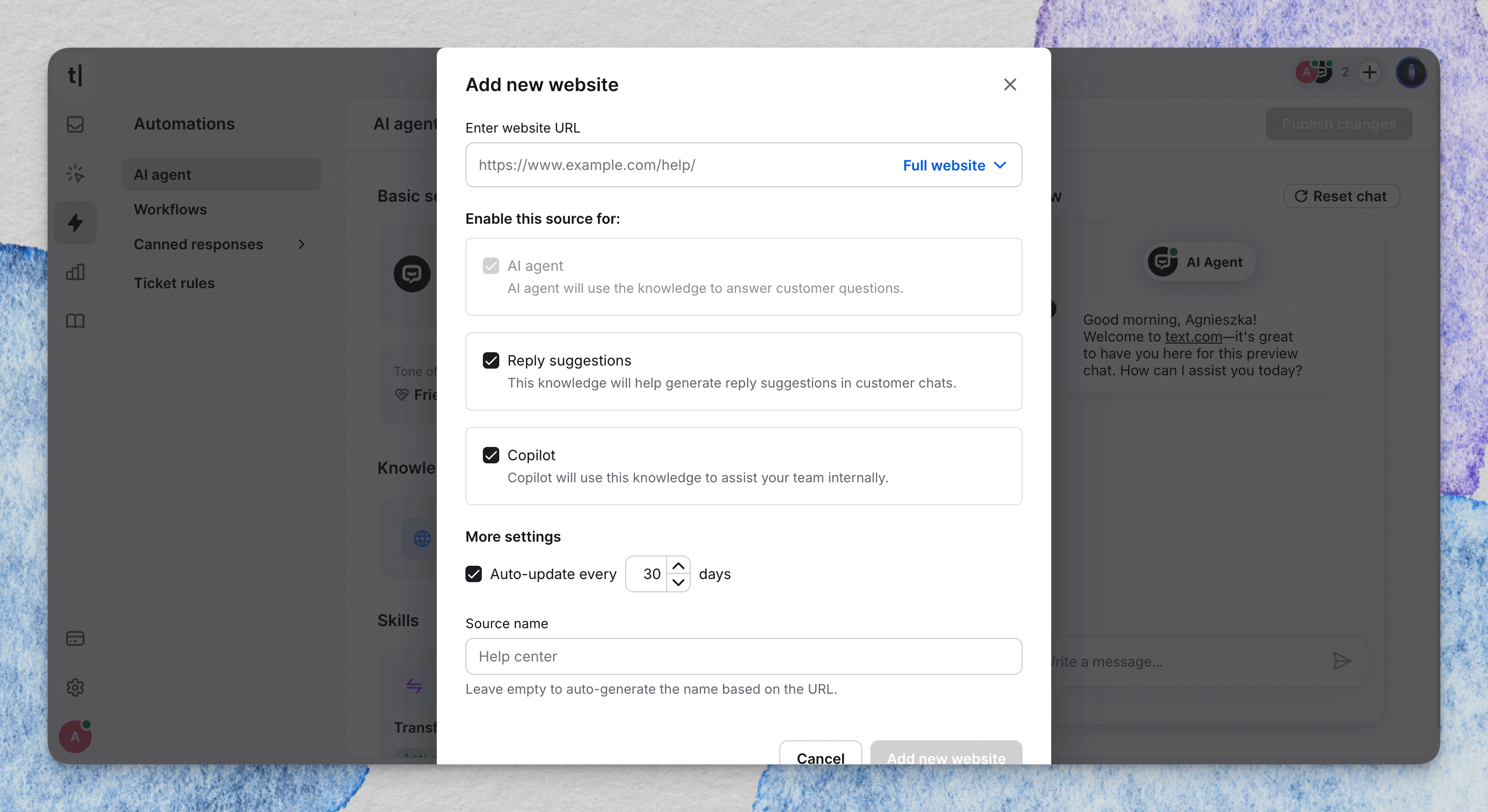
Among them, the Text App leads the charge not as a learning management system but as the communication foundation that effortlessly connects educators, students, and parents. The platform can act as an AI assistant for education, helping teachers manage student support, automate feedback, and integrate with various tools.
When combining basic features, such as chat automation, with advanced features like intelligent message routing and analytics, it saves teachers hours every week while maintaining human and effective communication.
Other advanced tools like Gamma help teachers create visually stunning presentations from simple prompts, complete with AI-generated layouts and design suggestions. This not only saves preparation time but also helps educators explain concepts more clearly and keep students engaged through dynamic visuals.
Educators can also use AI-powered platforms to:
- Create assessments tailored to different learning styles
- Use assessment tools that automatically grade and analyze performance
- Get help providing personalized feedback on student writing or projects
- Track student progress across assignments, quizzes, and participation
- Leverage AI-integrated systems that sync with Google Workspace for real-time collaboration and document sharing
From basic tools that simplify daily tasks to advanced tools that use predictive analytics and generative AI, 2026 is shaping up to be the year when artificial intelligence becomes an indispensable classroom companion.
Below are the top 10 AI tools transforming education, spanning communication and collaboration, evaluation, creativity, and adaptive learning.
| AI Tool | Key features | Best for | Free version |
|---|---|---|---|
| Text App | Unified communication for students, teachers, and parents; AI-powered chat automation; analytics dashboard | Academic communication and admin management | ✅ |
| Otter.ai | Converts lectures and meetings into searchable notes | Accessibility and note-taking | ✅ |
| Socratic (by Google) | Step-by-step explanations for math, science, and writing | Homework help for K–12 | ✅ |
| Quizizz | Turns quizzes into games with instant feedback | Student engagement and assessment | ✅ |
| Gradescope | Automates grading for assignments and exams | Teachers and professors | ✅ (limited) |
| Brisk Teaching | Generates quizzes, lesson planning, and writing feedback | Lesson planning and evaluation | ✅ |
| MagicSchool | AI lesson planning, grading, and report generation | Teachers and schools | ✅ |
| Nolej | Converts PDFs and documents into interactive learning modules | Course creation and e-learning | ✅ |
| Duolingo Max | AI-driven language practice with “Explain My Answer” feature | Language learning | ❌ (premium) |
| Microsoft Immersive Reader | Enhances reading comprehension and accessibility | Literacy and inclusion support | ✅ |
Each of these AI tools serves a unique purpose, from transforming dull assessments into engaging games (Quizizz) to generating instant feedback (Gradescope) or streamlining communication (Text App). Together, they redefine what a connected, intelligent classroom looks like.
AI-powered tools for administrative tasks
Behind every great classroom is an overwhelmed teacher juggling grading, scheduling, emails, and parent communication. Administrative work often consumes more time than actual teaching, and this is exactly where AI delivers some of its most meaningful impact.
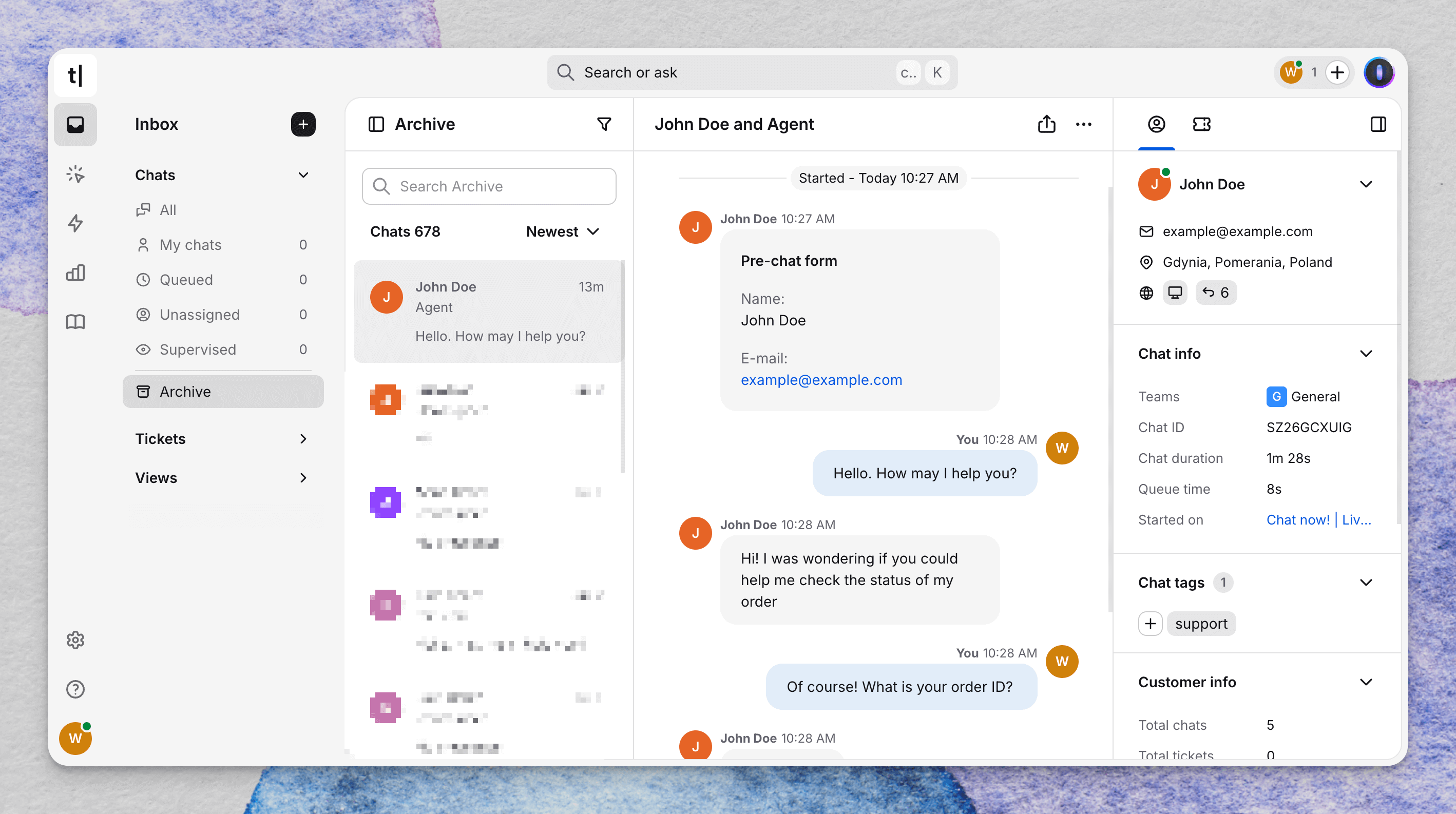
The Text App is reshaping this space by centralizing all communication channels into a single intuitive dashboard. Teachers no longer have to jump between email threads, chat platforms, or parent portals. Instead, they can:
- Automate routine replies to student or parent questions
- Send class-wide reminders about homework or events
- Schedule parent updates and feedback messages automatically
- Track message history across chat, email, and social channels
- Access quick insights into response times and engagement
This automation saves time and restores focus. Every repetitive task the AI handles gives teachers more time to focus on lesson planning or spend with students who need extra attention.
AI automation tools, such as MagicSchool and Gradescope, further reduce the burden by handling grading, progress reports, and class analytics. With these platforms, teachers can upload hundreds of papers or digital assignments, receive consistent and objective grading, and quickly identify patterns in student performance. The result: faster turnaround, fewer errors, and better insights into learning outcomes.
Administrative efficiency extends beyond grading, too. AI tools like ClassDojo and Snorkl simplify attendance tracking and feedback collection, while AI scheduling systems allocate classroom resources and timetables with precision. These automations not only improve accuracy but also give educators more breathing room to focus on creative teaching instead of clerical work.
School administrators also benefit from AI’s data-driven approach. Instead of manually compiling performance metrics or attendance sheets, AI software generates visual dashboards that highlight trends and areas for improvement. Early alerts can even flag at-risk students based on participation data or communication patterns, insights that would take hours to find manually.
In essence, AI doesn’t just make education smarter; it makes it smoother. Every automated report, graded test, or scheduled message brings educators closer to what they do best: teaching, mentoring, and inspiring.
Interactive and gamified learning AI tools
Learning becomes powerful when it feels like play. That’s why interactive and gamified AI tools are transforming classrooms into spaces where curiosity thrives. Instead of memorizing facts or filling out worksheets, students engage in active discovery, answering questions, earning rewards, and seeing their progress unfold in real time.
The Text App helps educators bring this interactivity to life by acting as the communication hub behind these experiences. Teachers can use it to send quiz reminders, share real-time updates from learning apps, or even automate motivational messages, such as “Great job completing today’s challenge!” It connects classroom activities with immediate and encouraging communication.
Several standout AI-powered tools are redefining what “engaged learning” looks like:
- Quizizz turns quizzes into multiplayer games where students compete and learn simultaneously. Each correct answer unlocks points, streaks, or power-ups, transforming assessments into friendly competition.
- Curipod enables teachers to create interactive slides and polls that students can respond to from their devices, fostering real-time collaboration.
- Classcraft gamifies classroom management. Students earn rewards for positive behavior, teamwork, or academic effort, turning participation into progress.
- Nolej converts static documents into dynamic lessons filled with videos, questions, and interactive summaries.
These tools don’t just entertain; they teach through engagement. When students play their way through content, they’re not just memorizing; they’re experiencing the material, building confidence, and retaining knowledge longer.
AI’s role in gamified learning goes beyond design. It constantly measures engagement, challenge levels, and emotional cues, adjusting activities to keep motivation high without overwhelming students. That’s something even the best human-designed curriculum struggles to achieve at scale.
Gamified AI tools remind us of something timeless: when learning feels joyful, effort follows naturally. And with intelligent technology making that joy accessible, education no longer feels like work; it feels like progress.
The future of AI in the classroom
The classroom of tomorrow won’t just use AI; it will collaborate with it. Artificial intelligence is evolving from a background assistant into an active teaching partner, transforming the way educators teach, students learn, and schools operate.
We’re already seeing hints of this transformation. Picture a digital co-teacher that helps design lessons, create interactive quizzes, track comprehension, and nudge students toward deeper understanding, all in real time. That’s not science fiction; it’s the next phase of educational technology, powered by the best AI tools on the market.
AI will continue to expand its reach across key areas of education, offering both basic features for everyday tasks and premium features for schools that need scalable automation. Here are a few key features shaping the classrooms of the future:
- Intelligent teaching assistants that manage grading, communication, and classroom organization, allowing teachers to focus on creativity and connection.
- Predictive analytics that identify learning gaps early and recommend personalized strategies for intervention.
- Collaborative AI platforms that enable global group projects, bridging students from different schools, languages, and cultures.
- Emotion-aware systems that detect confusion or frustration and adjust lessons instantly, providing motivation and clarity when it’s needed most.
These AI-powered tools won’t just help with management, they’ll drive personalized learning at scale. Students will receive personalized learning materials and educational content generated dynamically based on performance, interests, and preferred learning styles. Tools like MagicSchool and Brisk Teaching will refine lesson planning and resource creation, while adaptive platforms such as DreamBox and eSpark will personalize every exercise to maintain student engagement.
AI will also assist teachers in creating educational content, from presentations to video lessons, and offer paid plans with advanced features for institutions seeking deeper analytics or cross-platform integrations. Many systems will remain accessible through free versions, keeping innovation open to educators everywhere.
As AI integrates further into classrooms, the most interesting tools will be those that go beyond automation, helping teachers explain complex ideas, improve comprehension, and keep every student connected to the learning process.
Yet, amid this progress, balance remains key. Technology must enhance, not replace, human connection. That’s where modern platforms like Text App come in. They ensure that every message, feedback note, or student check-in feels authentic, even when powered by AI.
In the years ahead, AI will evolve from solving problems to anticipating them. From designing lessons to monitoring student wellness, it will quietly work behind the scenes, empowering teachers to do what they do best: inspire curiosity, confidence, and a lifelong love of learning.
Technology alone won’t define education’s future; it will be defined by how we use it to build smarter, kinder, and more connected classrooms.
Smart learning is smart communication
Artificial intelligence is no longer just a classroom add-on; it’s the engine driving a new era of learning. From adaptive tutoring to automated grading and real-time feedback, AI is helping teachers do more with less effort while giving students a learning experience that feels personal, dynamic, and rewarding.
But as powerful as these AI tools are, their true impact depends on how well communication flows between everyone involved: teachers, students, and parents.
If your school or institution is exploring how to bring AI into everyday learning, start with the foundation that makes it all work: communication.
Try the Text App today and see how smarter conversations can make your classrooms and teaching more effective, connected, and human.
Because when education and communication work hand in hand, learning doesn’t just improve, it thrives.
FAQ
Is AI replacing teachers?
No. AI supports teachers by automating repetitive work, not replacing the human connection in classrooms.
Can AI handle complex tasks in education?
Yes. Advanced AI platforms can tackle complex tasks such as generating adaptive lesson plans, analyzing student performance patterns, and offering predictive insights.
Which AI tool is best for teachers?
MagicSchool and Brisk Teaching are top picks for automating lesson planning and feedback.
Can AI improve student performance?
Yes. Adaptive learning platforms like DreamBox adjust content difficulty and pacing to each learner, helping them improve faster.
How can AI reduce teacher workload?
Tools such as Gradescope automate grading, while Text App centralizes student communication and feedback.
Are AI education tools safe to use?
Most reputable tools follow strict privacy standards. Always check compliance with regulations like COPPA and FERPA.
Get a summary with