

The customer journey isn’t a funnel anymore. It’s a series of moments shaped by expectations, context, and trust, often long before someone clicks “Buy” or opens a support chat.
In 2026, customers move fluidly between discovery, comparison, decision, and support. They read AI-generated answers, scan reviews, switch devices, abandon flows, return days later, and expect brands to remember them every step of the way. When the journey feels disjointed, customers notice. When it feels seamless, they reward it with loyalty.
That’s why understanding the customer journey matters more than ever. Not as a diagram for presentations, but as a practical way to see your business from the customer’s perspective. When you map the journey using real data and real behavior, you uncover friction that metrics alone won’t show, and opportunities competitors often miss.
This guide breaks the customer journey into clear stages, shows how to map it without overengineering, and explains how modern tools and AI are reshaping customers' experiences with brands today.
In this article, you’ll learn:
- What a customer journey really is in 2026, and why it’s no longer linear
- How the five core stages of the customer journey shape buying, retention, and loyalty
- How to create a customer journey map based on real behavior, not assumptions
- How to use a simple journey map template to turn insights into better customer experiences
Let’s get started and break down the customer journey step by step.
What is a customer journey (and why it’s not a funnel)
A customer journey is the full experience someone has with your brand over time. It includes every interaction, decision, emotion, and expectation that shapes how they move from first awareness to long-term loyalty.
The initial awareness phase is especially important, as it marks the moment a customer first becomes aware of your brand and sets the tone for the rest of their experience. Some of those moments are obvious, like visiting your website or contacting support. Others happen quietly, in a browser tab left open, a review read late at night, or a moment of doubt before clicking “Buy.”
That’s what makes the customer journey different from a funnel. Funnels describe what businesses want customers to do. Journeys describe what customers actually experience. Mapping the full journey is crucial for understanding and improving the customer experience throughout the lifecycle, not just the steps in a funnel.
Customer journey mapping can set businesses apart from their competition by improving customer satisfaction and reducing churn. A clear understanding of the customer journey can also lead to better business outcomes, including increased revenue.
A simple definition of the customer journey
At its core, the customer journey is the path a person takes as they try to solve a problem with your help. It starts when they realize a need and continues through research, evaluation, purchase, usage, support, and beyond. Importantly, it doesn’t end at conversion.
Post-purchase experiences, support interactions, and follow-up communication often matter more for retention than the initial sale. The buying journey encompasses all these stages, from the initial need through post-purchase engagement.
The journey is shaped by context. What the customer knows. What they expect. How much effort are they willing to invest? And how confident they feel at each step.
By understanding the customer journey, businesses can implement proactive customer service strategies.
Why customer journeys are non-linear in 2026
In 2026, customers rarely move through the stages of awareness to decision in a single, clean path. They jump around. They revisit steps. They pause and resume. A customer might discover your product through search, compare alternatives a week later, abandon the process, then return after seeing a recommendation or an AI-generated answer that reframes the problem.
The concept of customer journey stages, such as awareness, consideration, evaluation, decision, retention, and advocacy, helps teams understand and map these non-linear paths, making it easier to identify customer motivations and touchpoints.
Technology has accelerated this behavior. AI search, self-service content, and instant support mean customers can gather information without ever speaking to a human. At the same time, expectations for speed and continuity are higher than ever. If a brand doesn’t recognize where someone is in their journey, the experience feels disconnected.
That’s why thinking in straight lines no longer works. Journeys loop, stall, and restart based on confidence, trust, and timing. Improving the customer journey can increase customer retention.
Visible and invisible steps in the journey
Some parts of the customer journey are easy to see. Page views. Clicks. Form submissions. Support tickets. These are the visible steps teams usually optimize.
But just as important are the invisible ones:
- Reading reviews without clicking through
- Comparing options in private spreadsheets
- Hesitating because something feels unclear
- Looking for reassurance after a purchase
These moments don’t always show up in dashboards, yet they heavily influence outcomes. A customer who contacts support is often not asking their first question. They’re asking the final one before deciding whether to trust you.
Understanding the journey means accounting for both what you can track and what customers experience internally. Walking in the customer's shoes helps you build empathy, identify pain points, and see the journey from the customer's perspective. Streamlining processes also helps reduce customer effort during checkout, returns, and self-service tasks.
This is where tools like Text® App become especially useful in practice. When visible and invisible steps overlap, teams need more than surface-level metrics. They need context. Text App brings conversations, history, and intent into a single shared workspace, so support teams see not just what a customer is asking, but also where they are in their journey.
Instead of treating a chat, an email, or a follow-up question as an isolated event, Text App connects interactions across channels and time. A customer who hesitated, left, and came back days later doesn’t start from zero. Their previous questions, uncertainty, and signals of doubt are already there. That continuity helps teams respond with reassurance instead of repetition.
AI-assisted conversations also play a role here. Many invisible moments never turn into tickets because customers resolve them quietly through self-service or quick clarification. Text App supports that shift by using AI to handle early reassurance and common questions, while escalating to humans when confidence, nuance, or trust is at stake. The result is fewer dead ends in the journey and fewer moments where customers feel unsure but unsupported.
How expectations shape the journey as much as touchpoints
Touchpoints matter, but expectations often matter more. Customers don’t judge experiences in isolation. They compare them to what they believe should happen.
If someone expects instant answers and gets delayed responses, the journey feels broken. If they expect to repeat themselves and don’t have to, the experience feels surprisingly good. Expectations are shaped by past experiences, industry norms, and even competitors they interacted with minutes earlier.
That’s why modern customer journeys are as much about perception as process. Consistency, clarity, and context shape how customers feel as they move through the journey. When those elements align, the experience feels effortless. When they don’t, friction shows up fast.
Seeing the customer journey clearly means stepping outside internal workflows and viewing the experience the way customers do. Not as steps to complete, but as moments that build or erode confidence over time. Understanding the journey from the customer's point is essential to truly grasp their needs, feelings, and pain points at every stage.
Offering omnichannel support ensures a consistent experience across web, mobile, and in-person channels.
The 5 core stages of the customer journey
Even though customer journeys are rarely linear, most experiences still move through a familiar set of stages. These stages help teams understand what customers are trying to accomplish at different moments, what questions they’re asking, and what might stop them from moving forward.
The five customer journey stages, awareness, consideration, decision, retention, and advocacy, provide a framework for mapping out customer interactions and touchpoints.
A customer journey map example typically visualizes these five stages, highlighting key touchpoints, emotions, pain points, and strategies to improve the overall experience.
Awareness
The awareness stage begins when someone recognizes a problem, frustration, or unmet need. At this point, they’re not looking for a specific product. They’re trying to make sense of what’s happening and decide whether it’s worth their attention. Individuals at this stage are potential customers who have not yet made a purchase but are starting to consider their options.
In the customer journey, potential customers first discover options through channels like social media and search engines.
Customers might discover the problem through a failed workflow, a delayed response, a peer's recommendation, or an AI-generated explanation that puts words to what they’ve been feeling. This stage is driven by clarity, not conversion. If your messaging doesn’t reflect the customer’s reality, they move on quickly.
Emotionally, awareness often includes uncertainty. Customers want reassurance that the problem is real, solvable, and shared by others. Educational content, plain-language explanations, and credible examples help customers progress without feeling pressured.
Consideration
During the consideration stage, customers actively explore ways to solve the problem. They compare approaches, evaluate tools, and narrow down options. This stage is where most of the journey’s mental effort happens.
During the consideration stage, customers compare products and evaluate brands to find the best solution.
Customers look for proof. Reviews, testimonials, detailed documentation, and side-by-side comparisons all play a role. They’re also testing how easy it is to get answers. A fast response to a nuanced question can carry more weight than a long feature list.
Hesitation is common here. Customers may worry about switching costs, learning curves, or hidden tradeoffs. They often revisit the same information multiple times, looking for reassurance rather than novelty. Brands that acknowledge these concerns openly tend to build trust faster.
Decision
The decision stage is where intent becomes action. Customers have usually chosen a direction, but they’re still sensitive to friction and surprises. Small issues feel bigger here because the stakes feel higher. This stage is a critical part of the overall buying process, marking the point at which the customer journey concludes in a transaction if everything aligns smoothly.
Customers want confirmation that they understood everything correctly. Pricing clarity, onboarding expectations, and support availability matter more than new selling points. Any mismatch between what was promised earlier and what’s presented now creates doubt.
This stage benefits from simplicity. Clear next steps, minimal form fields, and easy access to help reduce cognitive load. The best decision experiences feel calm and predictable, not urgent or pushy.
Retention
Retention is shaped by how customers feel after the transaction. This stage includes onboarding, first use, follow-up communication, and ongoing support. It’s where customers decide whether your product or service fits into their routine. At this point in the customer journey, the focus shifts to the existing customer, whose ongoing interactions and experiences are crucial for long-term success.
Retention focuses on keeping customers satisfied after their purchase to encourage repeat business.
Early experiences set the tone. Customers want quick wins, clear guidance, and the sense that help is available without friction. Repeating information or navigating disconnected systems quickly erodes confidence.
Over time, retention depends on consistency. Customers expect the same level of clarity and responsiveness they experienced earlier. When interactions feel continuous and context-aware, customers feel valued rather than managed.
Advocacy
Advocacy emerges when customers feel confident enough to align their reputations with your brand. It’s rarely triggered by a single moment. Instead, it grows from repeated experiences that met expectations and handled problems well.
Advocates don’t just recommend products. They share stories. They explain why something worked for them and why they trust it. This kind of advocacy often shows up in reviews, social posts, and peer conversations.
Importantly, advocacy is fragile. A single poor experience can weaken it, especially if customers feel ignored or dismissed. That’s why advocacy depends on the same fundamentals as retention: trust, consistency, and respect for the customer’s time.
Looking at the customer journey through these stages helps teams design experiences that align with how customers think and feel, not just what they click or complete.
Customer touchpoints that shape perception
Every interaction a customer has with your brand shapes how they perceive the experience. Some touchpoints feel obvious, like a support conversation or a checkout flow. Others are quieter, such as reading a help article, scanning reviews, or receiving a follow-up email. Together, these moments. Known as customer journey touchpoints, these should be mapped and analyzed to fully understand and optimize the overall customer experience.
Not all touchpoints carry the same weight. A single high-stakes interaction often matters more than many low-impact ones. Customers tend to remember moments when they felt uncertain, needed reassurance, or were close to making a decision. That’s why support responses, onboarding steps, and clarity at key moments often define the overall experience.
Customers also don’t separate touchpoints by team or channel. From their perspective, everything is part of one continuous conversation. When context is lost between interactions or information changes depending on where they ask, trust erodes quickly. When experiences feel connected and consistent, confidence builds.
Well-designed touchpoints reduce effort and remove friction. They anticipate common questions, provide clarity at the right time, and make it easy to get help without having to start over. The goal isn’t to add more interactions, but to make each one count.
Common customer touchpoints include:
- Marketing content and discovery channels
- Product and website experiences
- Checkout, onboarding, and confirmation steps
- Support conversations and self-service resources
- Customer service interactions, such as providing feedback or resolving issues
- Follow-up communication after purchase
When these touchpoints align with customer intent and expectations, the journey feels cohesive. Customers may forget individual interactions, but they remember how easy it was to move forward.
Effective strategies for improving the customer journey include customer mapping, feedback collection, personalization, omnichannel support, employee empowerment, and AI.
This is exactly where fragmentation tends to hurt the customer journey most, and where Text App changes how touchpoints are managed in practice. When customers move between channels and moments, the risk isn’t a missing feature. It’s lost context. Text App is designed to treat every touchpoint as part of a single, ongoing conversation, regardless of where it happens or who handles it.
Instead of splitting touchpoints across separate tools for chat, email, and follow-ups, Text App centralizes them in one workspace. That means a checkout question, a support clarification, and a post-purchase concern are connected by default. Teams don’t need to reconstruct intent or guess what the customer already knows. The context is already there.
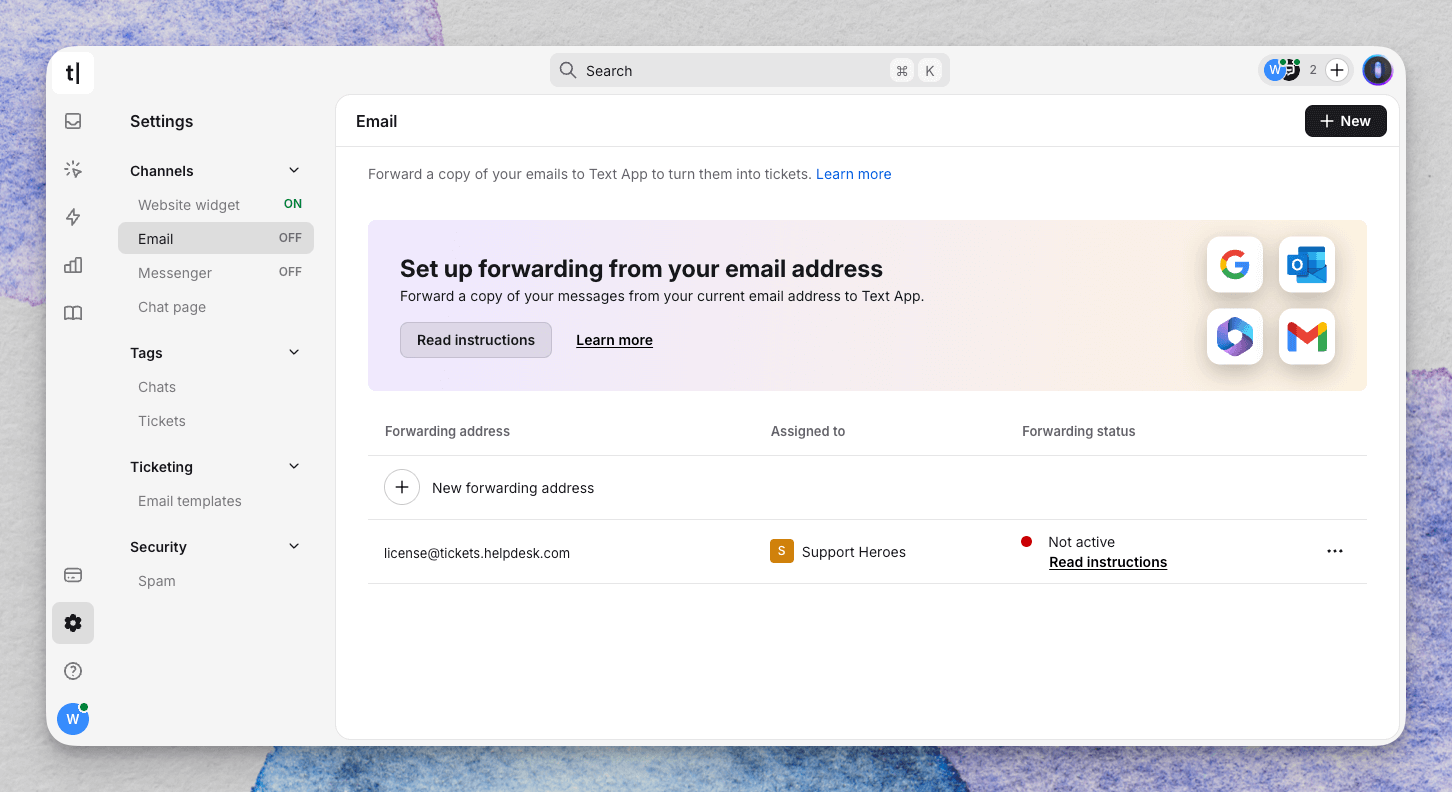
This continuity matters most at high-stakes touchpoints. When a customer hesitates during onboarding, asks a clarifying question before purchasing, or reaches out after something didn’t work as expected, how quickly and accurately that moment is handled shapes trust more than any polished landing page.
What is customer journey mapping?
Customer journey mapping is the process of documenting how customers experience your business over time, across channels, and through decisions. Instead of focusing on what teams intend to deliver, a journey map shows what customers actually go through, including confusion, delays, reassurance moments, and trust-building interactions.
A customer journey map helps companies understand the customer experience by revealing behaviors, emotions, pain points, and interactions throughout the entire journey.
The value of journey mapping isn’t the diagram itself. It’s the shared understanding it creates. When teams can see where customers hesitate, backtrack, or feel uncertain, they can improve experiences in ways that metrics alone rarely reveal. Customer journey maps visualize the stages of the customer experience, serving as tools to represent and understand each phase, identify pain points, and optimize interactions across different scenarios.
Strong journey maps combine behavioral data with human insight. They show not just what happens, but why it happens, and what customers need in each moment to move forward confidently. Creating customer journey maps is essential for designing seamless omnichannel experiences and planning for multiple touchpoints across different communication channels.
Customer journey mapping helps you understand customer expectations and what attracts certain personas to buy your product. Customer journey mapping is important for understanding the complex process customers go through.
What journey mapping helps teams see
The table below highlights insights that typically emerge only when teams map the customer journey, rather than analyzing channels or stages in isolation. Most customer journey maps include common elements such as key touchpoints, customer emotions, and pain points, which help teams identify these insights.
| Insight revealed by mapping | What teams often miss without a map | Why it matters |
|---|---|---|
| Moments of hesitation | Customers who don’t convert but don’t leave | Reveals where reassurance is missing |
| Repeated questions | Issues that appear across channels | Points to unclear messaging or onboarding gaps |
| Emotional spikes | Frustration or relief during specific moments | Shows which interactions define trust |
| Channel handoffs | Context lost between touchpoints | Explains why customers feel forced to repeat themselves |
| Hidden drop-offs | Customers who stall instead of exiting | Identifies opportunities for proactive engagement |
| Overloaded stages | Too much information at once | Helps simplify decisions and reduce effort |
Customer journey mapping makes these patterns visible in one place. It shifts conversations from isolated fixes to systemic improvements that reduce friction across the entire experience.
When teams align around a shared journey view, improvements become more focused, more empathetic, and far more effective. Leveraging data and analytics allows businesses to understand behaviors, segment audiences, and measure satisfaction metrics such as CSAT and NPS.
The benefits of customer journey mapping
Customer journey mapping delivers a range of powerful benefits for businesses aiming to create a more efficient and satisfying customer experience. Building a customer journey map, a visual representation of the entire customer journey, allows teams to step into the customer’s shoes and see the experience from their point of view.
This process uncovers pain points, friction points, and opportunities to delight customers that might otherwise go unnoticed.
One of the most significant advantages is the ability to boost customer satisfaction. When you understand where customers struggle or hesitate, you can address those issues directly, making the journey smoother and more enjoyable. This, in turn, leads to higher customer retention, as satisfied customers are more likely to stay loyal and less likely to churn.
A well-crafted journey map also helps teams identify the root causes of customer churn and take proactive steps to prevent it. By visualizing the entire journey, businesses can spot gaps between customer expectations and actual experiences, then prioritize improvements that have the biggest impact on customer loyalty.
Additionally, journey mapping provides a shared language across teams, aligning marketing, sales, product, and support around a common set of customer goals. This alignment leads to more consistent experiences at every touchpoint, which customers remember long after individual interactions.
Ultimately, customer journey mapping is about more than just documentation; it’s a strategic tool for driving business growth. By focusing on the entire customer journey, businesses can increase customer satisfaction, reduce pain points, and turn more customers into brand advocates.
How to create a customer journey map (without overcomplicating it)?
Creating a customer journey map doesn’t require complex frameworks or perfect data. The goal isn’t to capture every possible path. It’s to understand one real experience well enough to improve it. The process of creating a customer journey map involves designing a visual representation of customer interactions, needs, and pain points to drive actionable insights.
Start by narrowing the scope. Choose a single customer persona and one clear goal, such as completing a first purchase or resolving an issue. Broad maps quickly become abstract and hard to act on. Focus creates clarity. When you create customer personas, you can tailor the map to meet the unique requirements of different customer segments, ensuring the journey reflects real-world diversity.
Ground the map in real input. Support conversations, customer surveys, reviews, and behavioral data all reveal how customers actually move through the journey. Pay close attention to moments where customers ask follow-up questions, hesitate, or repeat themselves. Those are strong signals of friction.
As you outline the journey, map both actions and emotions. A step that appears successful in analytics may still feel frustrating from the customer’s perspective. Emotional context often explains why customers stall or disengage. Using a buyer journey map helps visualize the entire experience, highlighting key touchpoints and opportunities for improvement.
Involve multiple teams early. Marketing, product, sales, and support each see different parts of the journey. Bringing those perspectives together reduces blind spots and builds shared ownership. Creating a service blueprint can further help by mapping internal processes, backstage operations, and departmental touchpoints to identify bottlenecks and enhance the overall experience.
To keep the process simple, follow these core steps:
- Define one persona and one clear goal for the journey
- Collect real data from surveys, support conversations, and analytics
- Map the key stages and touchpoints the customer moves through
- Note customer questions, emotions, and points of hesitation
- Identify friction, gaps, and moments of reassurance
- Highlight opportunities to simplify or improve the experience
- Use customer journey map templates to streamline the process. Starting with a template can save time and reduce analysis paralysis
A good customer journey map provides comprehensive insights into customer behaviors, touchpoints, and motivations, making it easier to drive meaningful improvements.
Finally, treat the journey map as a living document. Customer behavior evolves, channels change, and expectations shift. Revisiting the map regularly ensures it stays relevant and useful. Free customer journey map templates are widely available online, making it easy to get started without cost or complexity.
Journey mapping works best when it leads to action. If it helps teams prioritize improvements and reduce friction, it’s doing its job. The ultimate goal is to design an efficient customer journey and a more efficient customer journey by identifying opportunities to optimize processes and reduce friction at every touchpoint.
Improving the customer journey requires cross-departmental effort focused on financial outcomes, and establishing cross-functional councils can help align on a shared vision and break down data silos.
Customer journey map template (what to include?)
A customer journey map template gives teams a shared structure for capturing how customers experience the brand. The best templates don’t aim to document everything. They focus on the details that explain why customers move forward, hesitate, or drop off.
Different teams use different templates depending on what they want to improve. Below are several common journey map templates, each suited to a specific goal.
Basic stage-based template
This is the simplest and most widely used format. It’s ideal for teams creating their first journey map or aligning stakeholders around a shared view.
It typically includes:
- Journey stages
- Customer goals at each stage
- Key actions and touchpoints
- Questions or concerns
- Emotional state
This template works well when the objective is clarity and alignment rather than deep optimization.
Touchpoint-focused template
This template zooms in on interactions instead of stages. It’s useful when teams suspect friction comes from disconnected channels or inconsistent communication.
It focuses on:
- Each customer touchpoint across channels
- What information does the customer receive
- Whether context carries over between interactions
- Where customers repeat themselves
Support and operations teams often prefer this format because it clearly highlights handoff issues. The customer service team, in particular, benefits from journey mapping as it clarifies their role in the overall customer experience and helps them prioritize efforts to address issues more effectively.
Empowering employees through training and autonomy enables the quick resolution of customer issues.
Emotion and friction template
Some journeys fail not because of missing steps, but because of how those steps feel. This template emphasizes emotional highs and lows. By using a 'day in the life' approach, the template can visualize the customer's daily routines, thoughts, and emotions, helping to identify unmet needs and optimize touchpoints.
It captures:
- Customer emotions at each moment
- Triggers for frustration or relief
- Confidence vs. doubt signals
- Moments that build or erode trust
This format is especially useful for improving retention, onboarding, and support experiences. Deploying autonomous AI agents can also manage multi-step workflows without human intervention, further enhancing the customer journey.
Problem-solution template
This template is designed to connect customer pain points directly to actions teams can take. By mapping the customer journey in this way, organizations can enable customer success through strategic planning and cross-functional collaboration.
It includes:
- Customer problem at each stage
- Evidence (quotes, feedback, behavior)
- Current experience
- Desired experience
- Proposed improvement
Product and CX teams often use this version to prioritize the roadmap and process changes. Predictive engagement can also be incorporated, using AI to anticipate customer needs before they are expressed.
Comparison of common templates
| Template type | Best used for | Key benefit |
|---|---|---|
| Stage-based | High-level understanding | Easy to create and share |
| Touchpoint-focused | Channel alignment | Exposes context gaps |
| Emotion-driven | Experience quality | Reveals hidden friction |
| Problem-solution | Action planning | Turns insight into change |
Most teams end up using multiple templates over time. What matters is consistency. Using the same structure repeatedly makes patterns easier to spot and progress easier to track.
A good journey map template doesn’t just describe the customer journey; it also guides it. It helps teams decide what to fix next, and why it matters. Creating an effective customer journey map is essential, as it integrates comprehensive data, scenario analysis, and touchpoint identification to truly understand customer behavior, emotions, and pain points.
Satisfied customers can become promoters who share positive experiences through online reviews and social media.
Best practices for customer journey mapping
To get the most value from your customer journey mapping process, it’s essential to follow proven best practices. These steps ensure your journey map is not only accurate but also actionable and relevant as customer needs evolve.
- Start with a clear purpose and scope. Define which customer segment, journey stages, and key touchpoints you want to map. This focus helps create a customer journey that’s specific and meaningful.
- Gather comprehensive customer data. Use a mix of solicited and unsolicited data, such as customer feedback forms, surveys, support conversations, and behavioral analytics, to inform your mapping process. This approach provides a deeper understanding of customer behavior and pain points.
- Prioritize key touchpoints and pain points. Identify the moments that matter most in the journey, as well as areas where customers encounter friction. Focusing on these points leads to more effective customer journey maps and actionable insights.
- Create a clear visual representation. Use journey map templates or customer journey mapping tools to build a map that’s easy to understand and navigate. A good visual makes it simple for teams to spot patterns and opportunities.
- Incorporate customer feedback and surveys. Regularly survey customers and collect feedback to ensure your map reflects real experiences, not just assumptions.
- Review and update regularly. Customer expectations and behaviors change, so revisit your journey map often to keep it relevant and effective.
- Use multiple customer journey maps. Different customer segments or products may require several customer journey maps to capture unique experiences and needs.
- Leverage mapping tools and templates. These resources streamline the mapping process and help maintain consistency across teams and projects.
- Drive business decisions with your journey map. Use the insights gained to inform improvements in marketing, sales, product, and customer service, always aiming to increase customer satisfaction and retention.
When following these best practices, you’ll create customer journey maps that deliver valuable insights, help you understand your target audience, and guide your business toward more efficient, customer-centric outcomes.
From the current state to the future state
A customer journey map becomes truly useful when it moves beyond documenting what exists today and starts shaping what should happen next. This is where current-state and future-state mapping come into play.
The current-state journey shows how customers experience your brand right now. It captures real behavior, real friction, and real gaps between expectations and delivery. This view creates a shared baseline. Teams can see where customers hesitate, where effort piles up, and where trust is quietly lost.
This is where tools like Text App add practical value to the mapping process. Capturing live conversations, support history, and cross-channel context in one place allows teams to ground current-state maps in what customers actually experience, not what teams assume happens. Instead of relying solely on analytics or post-hoc analysis, journey insights are informed by real questions, moments of hesitation, and reassurance-seeking behavior as it unfolds.
The future-state journey builds on those insights. It describes what the experience should look like once friction is removed and expectations are met more consistently. The goal is to visualize the ideal customer journey, mapping out the optimal experience at each touchpoint to improve engagement, satisfaction, and retention. This isn’t about designing a perfect or idealized journey. It’s about setting a realistic direction for improvement.
How technology and AI are changing customer journeys
Technology has reshaped how customer journeys unfold, but AI has accelerated that shift in ways many teams are still adapting to. Customers now arrive informed, opinionated, and often halfway to a decision before they interact with a brand directly.
AI-powered search, self-service tools, and automation have moved large parts of the journey earlier and faster. Customers expect immediate answers, consistent context, and minimal effort across channels. Waiting, repeating information, or navigating disconnected systems feels outdated.
This shift has changed where trust is built. It no longer forms only during sales conversations or support calls. Trust develops earlier through clarity, reliability, and experiences that feel aware of past interactions.
Several changes stand out in how modern journeys work today:
- Customers gather answers from an AI search before visiting a website
- Self-service content now replaces many first-touch interactions
- Context continuity across channels has become an expectation, not a bonus
- Proactive guidance can prevent friction before customers ask for help
- Automation shapes experience quality as much as human interaction
AI also enables more proactive experiences. Instead of reacting to problems after they occur, teams can anticipate needs, surface relevant information, and guide customers before friction appears. When done well, this feels supportive and timely. When done poorly, it feels generic and disconnected.
Transparency plays a bigger role as AI becomes more visible. Customers want to know when automation is involved and how their data is used. Clear communication builds confidence, while ambiguity undermines trust quickly.
In modern customer journeys, technology works best when it reduces effort, preserves context, and supports better decisions. When AI serves those goals, the experience feels smoother, faster, and more human, even as it becomes increasingly digital.
Customer journeys are built in moments, not stages
The customer journey isn’t something you design once and move on from. It’s shaped every day by how clearly you communicate, how well you manage expectations, and how easily customers can move forward when they need help.
When teams understand the journey as customers experience it, including hesitation, reassurance, and trust, improvements become more focused and far more effective. Journey mapping turns scattered data into a shared understanding. It helps teams reduce friction, align across channels, and deliver experiences that feel consistent instead of stitched together.
As journeys become more dynamic and AI-driven, continuity matters more than ever. Customers expect context to follow them, answers to arrive quickly, and support to feel aware of where they are and what they need.
That’s where the Text App fits naturally. We help teams stay connected to the customer journey in real time by bringing conversations, support, and AI-assisted interactions into one shared workspace. Fewer handoffs. Less repetition. More clarity at the moments that matter.
If you want to turn customer journey insights into better conversations and smoother experiences, start by making those moments easier to manage.
Explore how the Text App helps teams support modern customer journeys, from first question to long-term loyalty.
FAQ
What is a customer journey map?
A customer journey map is a visual representation of how customers interact with a brand across stages, touchpoints, and emotions.
How often should you update a customer journey map?
Customer journey maps should be reviewed regularly as customer behavior, expectations, and channels change.
Are customer journeys still linear?
No. In 2026, customer journeys are fluid, with customers revisiting stages multiple times.
What data should you use for journey mapping?
The best maps combine surveys, analytics, and real customer conversations.
Which teams should be involved in journey mapping?
Effective journey mapping requires cross-functional input from marketing, sales, product, and customer support.
Get a summary with