

For months, the sales tracking story in Text had a quick answer for one segment and a much longer one for everyone else. Shopify merchants got AI Agent sales reporting, live cart events, sidebar order context, and the Wins counter, all turned on by default. Custom builds, headless stacks, and B2B checkouts got none of it.
Last week that changed. Text now has a platform-agnostic sales tracking method, built around a single API call. Drop it on the store's "Thank you" page and the rest of the selling experience turns on.
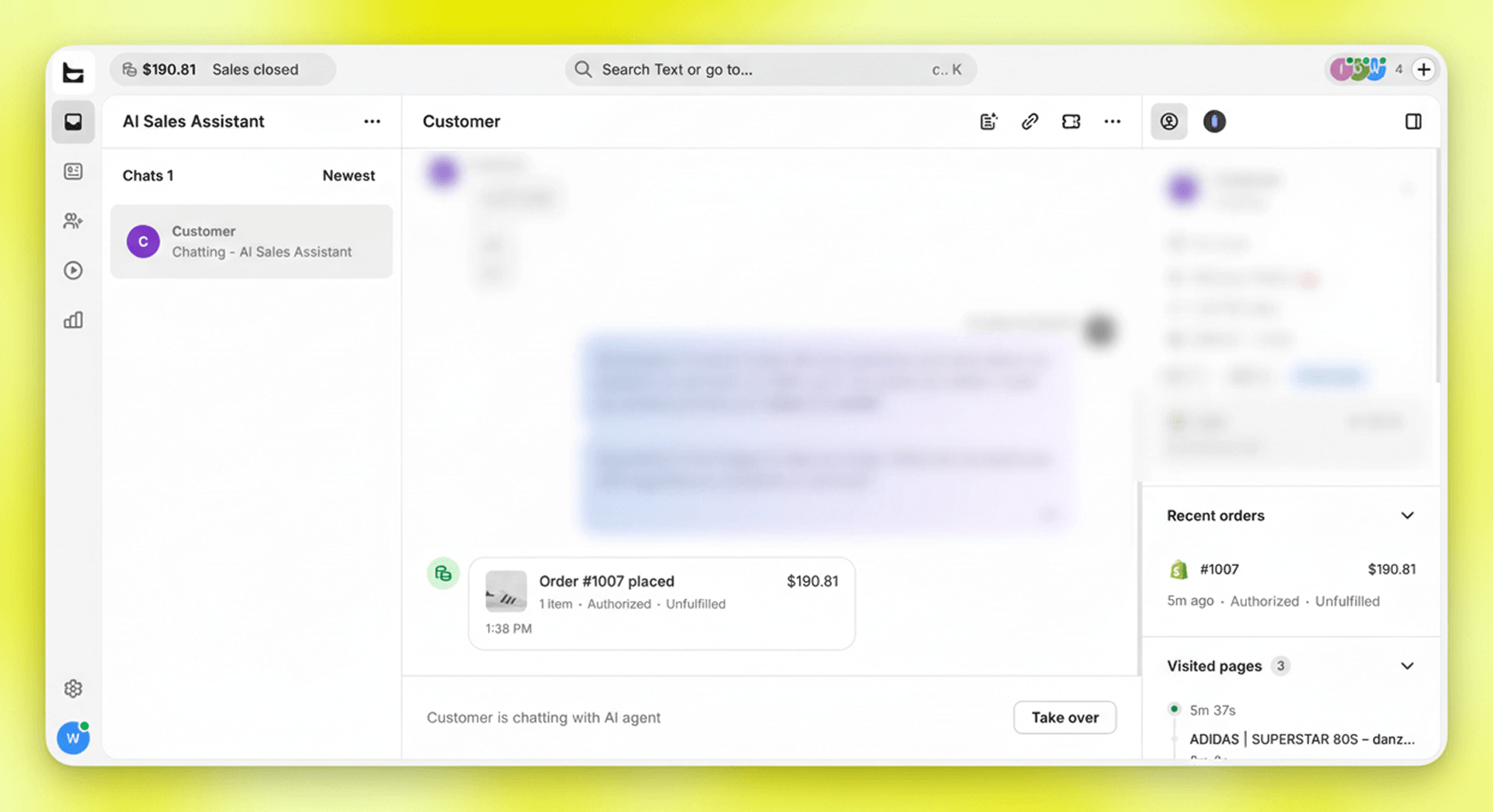
How merchants turn it on
One API call on the "Thank you" page, fired when an order completes. Text receives the event, counts the order, and attributes it to the conversation that drove it.
That is the minimum. A store that also wants in-chat cart visibility sends cart events, which trigger live notifications when a visitor adds or removes a product. An agent watches the cart shift in real time and can step in while the visitor is still on the page.
This is a developer install, not a one-click connector. Custom and headless stores typically have someone on the team who can wire it up in an afternoon. Once the call is in place, everything else works without further setup.
The API documentation lives here, and the HelpCenter guide is here.
What turns on once the call fires
Sales reporting. "All sales" and "AI Agent sales" views populate from the first order, so revenue attributed to the AI agent stops being a Shopify-only number.
In-chat notifications. Order placements and cart changes appear inside the conversation with the same UI Shopify accounts already know.
The Wins counter on the mobile dashboard, which shipped in May, counts these orders too. The team built the counter on a single source of truth, so custom stores show up next to Shopify ones with no special handling.
Why this matters
Two things, and both come back to revenue.
First, the addressable market for Text's selling motion just got bigger. The conversion lift from chatting visitors is documented at a 266% higher visit-to-order rate compared to browser-only visitors, but that proof only mattered for stores that could plug into the sales tracker. Headless storefronts and custom B2B checkouts were politely turned away from the selling story. They are back on the list.
Get a summary with