
Sylwia Kocur
Content Marketing Specialist
I joined Text to help introduce our products to companies looking for a reliable and forward-thinking partner in global communication. With experience as both a Product Expert and now a Content Writer, I understand what businesses need and help them discover how Text can support their goals.
An AI customer service agent reads what a customer wants and acts on it, without waiting for a human to queue it up first. Text's AI Agent goes one step further: it treats that moment as a shot at revenue, not just a ticket to close.
This is the first in a series for Text partners, breaking down one module at a time so you can pitch and sell it with confidence. We're starting with AI Agent because it's the module most likely to change how a prospect sees their whole support stack in the first five minutes of a demo.
Why this matters right now
Everyone has AI. Sell and promote AI that actually does something. That's not just a slogan, it's the filter worth running every client conversation through, because your prospects have already heard three pitches this month that sounded almost identical to yours.
The market backs up why this fight is worth having. Gartner predicts that by 2029, agentic AI will autonomously resolve 80% of common customer service issues without any human intervention, cutting operational costs by roughly 30% along the way. Intercom's Fin, one of the best-known names in this category, reports an average resolution rate of 76% across more than 7,000 teams, and that number climbs about a point every month as the product improves. Decagon, another competitor worth knowing about, built something it calls Agent Operating Procedures, natural language instructions that compile into workflows so an AI agent can process refunds, verify identities, and resolve issues end-to-end instead of just answering questions.
None of that is bad news for you.
That's the exact gap Text was built to fill, and it's what makes this a genuinely different conversation than the one your prospect already had with three other vendors.
What an AI customer service agent actually is
Strip away the marketing, and an AI customer service agent is an autonomous software system, powered by natural language processing, that understands customer intent and takes action on it. That's the textbook version, and it's worth having ready when a client asks, because most of them are still picturing 2019-era bots: rigid decision trees, "I didn't understand that, please rephrase," a dead end after two exchanges.
What separates a genuinely useful AI customer service agent from a glorified FAQ page is what happens after it understands what someone wants. Most tools on the market stop at resolution. They answer the question, close the loop, and move on to the next chat.
Text's AI Agent treats that same moment as something bigger. A question about shipping isn't just a shipping question, it's a chance to notice hesitation, offer a nudge, and turn a support conversation into a sale. That's the whole premise behind how Text frames the category: customer service isn't a cost center to be minimized, it's a profit engine most businesses have left half-built.
Natural language processing is the part doing the heavy lifting underneath all of this. It's what lets the AI Agent get past the literal words in a message and toward what a customer is actually asking. "Do you still have the blue one in a medium" and "is the blue medium in stock" are different sentences asking the exact same thing, and a system built only to match keywords stumbles on one of them. NLP is also how the AI Agent reads tone. Frustration, urgency, and price sensitivity are all signals that shape how it responds and when it decides a human needs to step in instead.
It reads the room before anyone types a word
Here's the part that tends to land hardest with a prospect who's only ever thought of support as an expense line.
Traditional customer service software waits. A visitor has to type something, hit send, and sit there while a queue works through the backlog. Text's AI Agent doesn't wait around for that first message. It tracks visitor behavior as it happens: pages viewed, products compared, time spent hesitating on a checkout page. When those signals cross a threshold that usually predicts a bounce, the AI Agent reaches out first. No customer had to ask for help. The agent noticed they needed it.
Think about what that means for a client's actual traffic. Most visitors who show clear buying signals never say a word to anyone. They compare two products, sit on a pricing page for four minutes, add something to a cart, and leave. A traditional support setup never sees any of that, because nothing happened that generated a ticket. Text's AI Agent treats that silence as the opportunity it is.
This is the mechanism behind customers who engage with an AI Agent converting at rates up to 266% higher than those who don't. That's not a stat about answering questions a little faster. It's a stat about catching someone at the exact moment they're deciding whether to buy or leave, and giving them a reason to stay.
Damian Tawrel, an AI Agent Manager at Text, described the design philosophy behind this in one line worth memorizing: "We reimagined AI agents as systems that don't just answer questions but create real business outcomes". Keep that sentence ready for any prospect who asks how this is different from the chatbot they already tried and quietly abandoned.

The skills that do the actual selling
AI Agent skills are where the theory turns into revenue. Each skill is a small, purpose-built behavior that fires when a specific signal shows up mid-conversation. You don't need an engineering team to set them up, and that alone is worth mentioning in a pitch, but the skills themselves are what a client is really paying for.
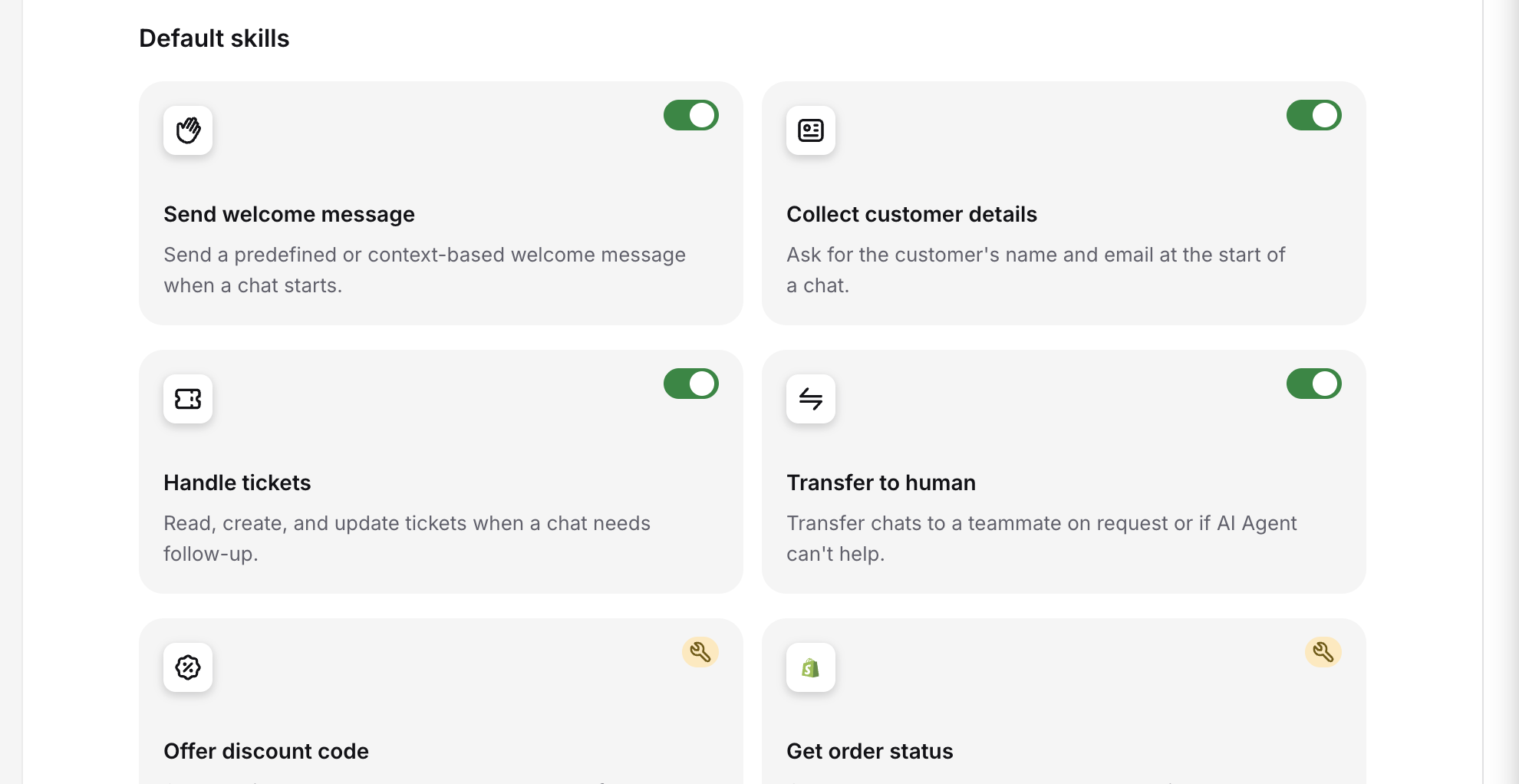
A handful worth knowing by name:
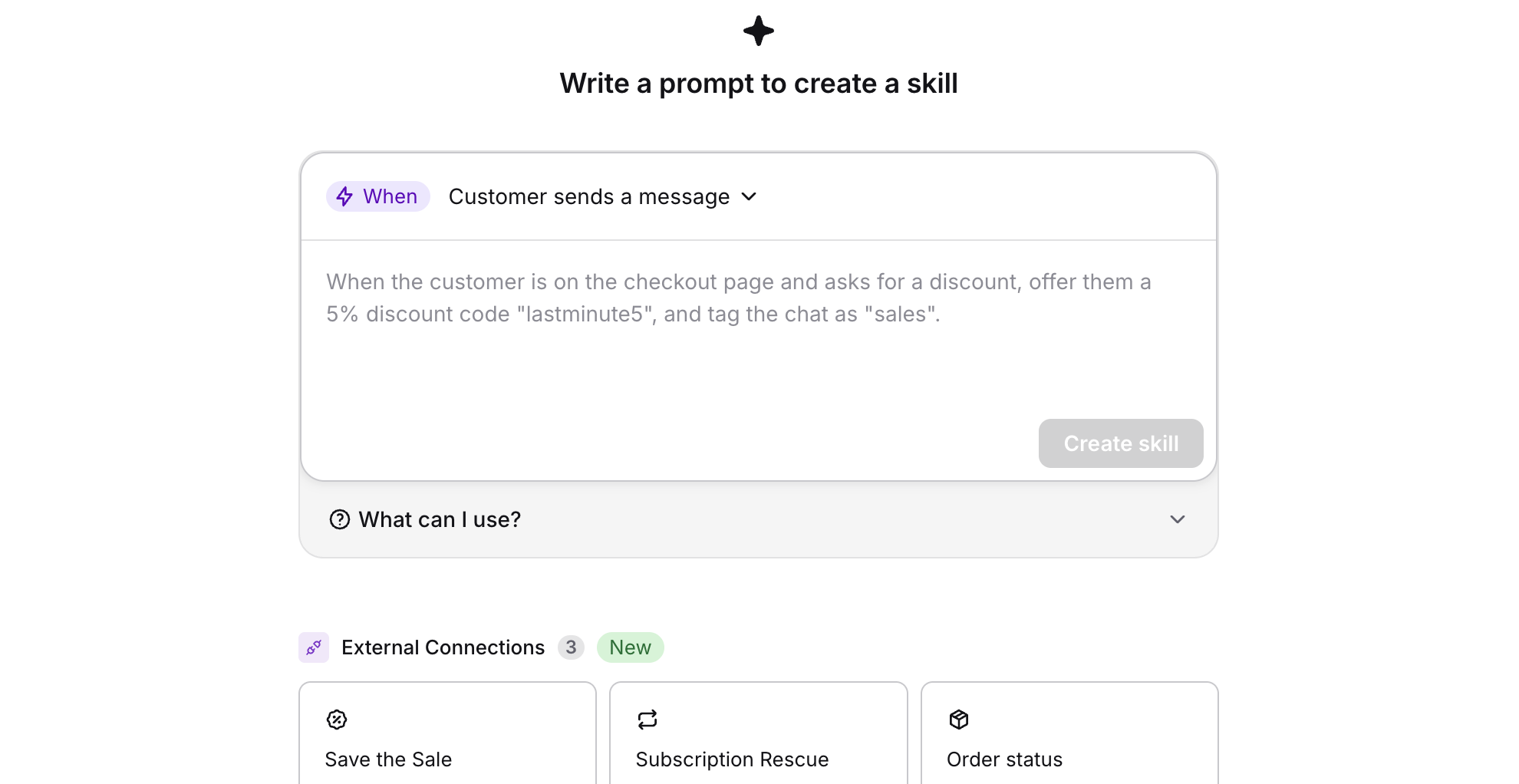
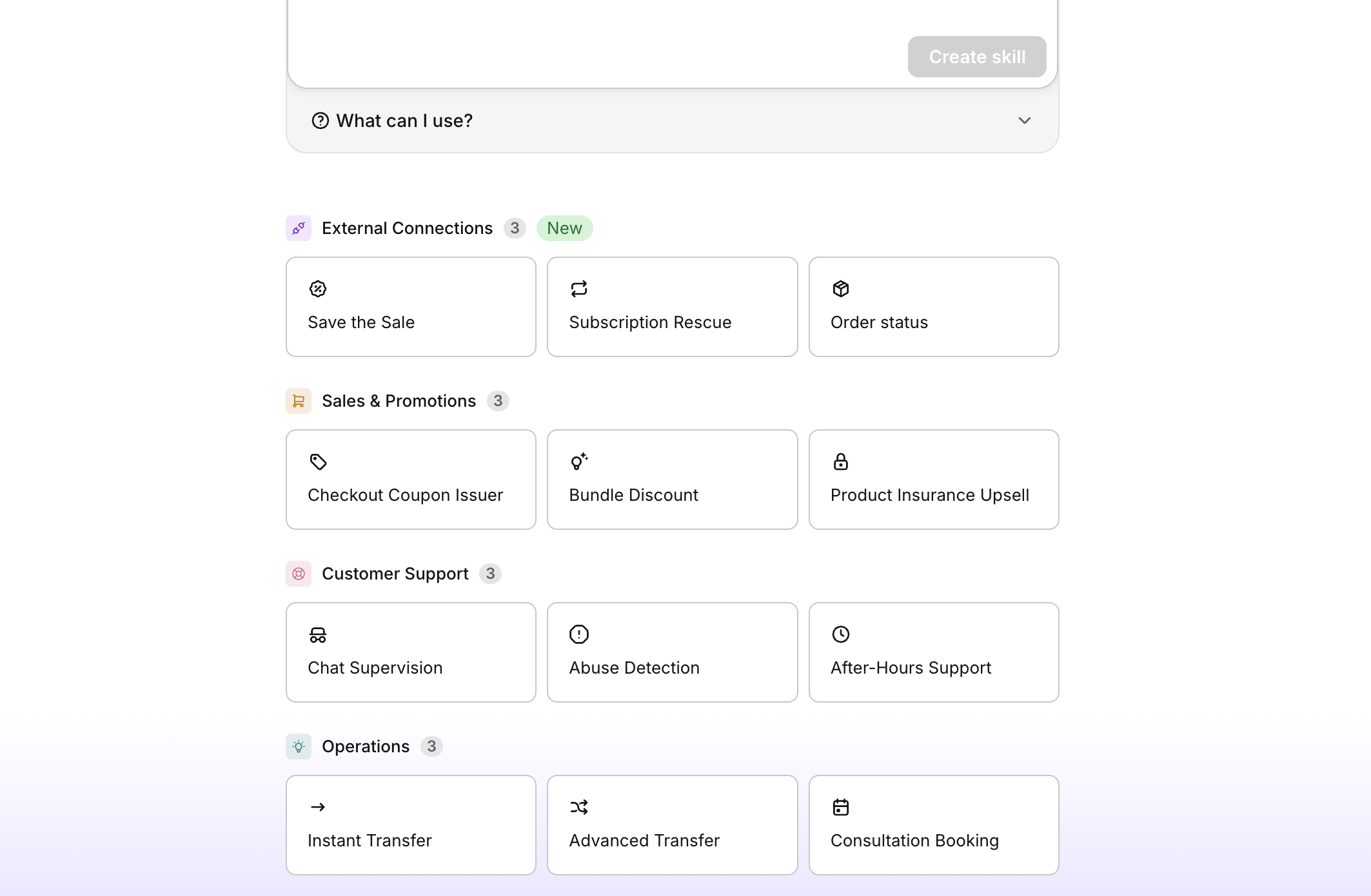
Save the Sale. Fires when a customer asks for a discount, mentions a competitor's price, or shows any sign of abandoning checkout. The AI Agent offers a retention deal on the spot by calling a coupon service via a webhook, with no manager approval required.
Subscription Rescue. Triggers the moment a customer mentions canceling a subscription. It pulls a targeted retention offer through a webhook, presents it, and creates a ticket so the team stays looped in.
Bundle Discount and Checkout Coupon Issuer. Both nudge customers toward a bigger basket, whether that's a percentage off for buying two items in a category or a five percent code offered right at the checkout page.
Product Insurance Upsell. Recommends an extended warranty the moment a customer views a relevant product, tags the conversation for reporting, and can loop in a sales rep when there's real interest.
Order status. Handled through webhook or API, so a customer gets a real answer about their shipment instead of a generic "please check your email" response.
Abuse detection, after-hours support, and instant transfer. These keep the AI Agent from wasting time on bad-faith conversations, cover the hours nobody wants to staff with a live team, and route a Spanish-speaking customer straight to a dedicated Spanish-speaking team without them ever having to repeat themselves in the wrong language first.
Chat supervision, advanced transfer, and consultation booking. Useful for higher-touch sales motions, from looping a teammate into a chat as a quiet supervisor to booking a full product demo when a customer asks more than one substantive question.
Every one of these skills can be customized to a client's exact products, discount codes, escalation rules, and tone of voice. That's the difference between a canned automation platform and something that actually fits the business you're selling into. Skills aren't a feature list to read off a slide, they're the thing that makes AI Agent behave like an experienced member of the team rather than a script running on autopilot.
And when the client needs something tailored just for them? You can create a skill in a few clicks just for them. Another way to bring more expertise into the client's world.
Multiple agents for multiple problems
Most clients don't run a single storefront serving a single customer type. They run several brands, regions, or product lines, each with its own quirks, promotions, and support policies. Text's AI Agent handles that reality by letting a client run a dedicated agent per brand, per website, per region, or per use case. Each one trains on its own content, follows its own escalation rules, and behaves appropriately for the customers it's actually talking to.
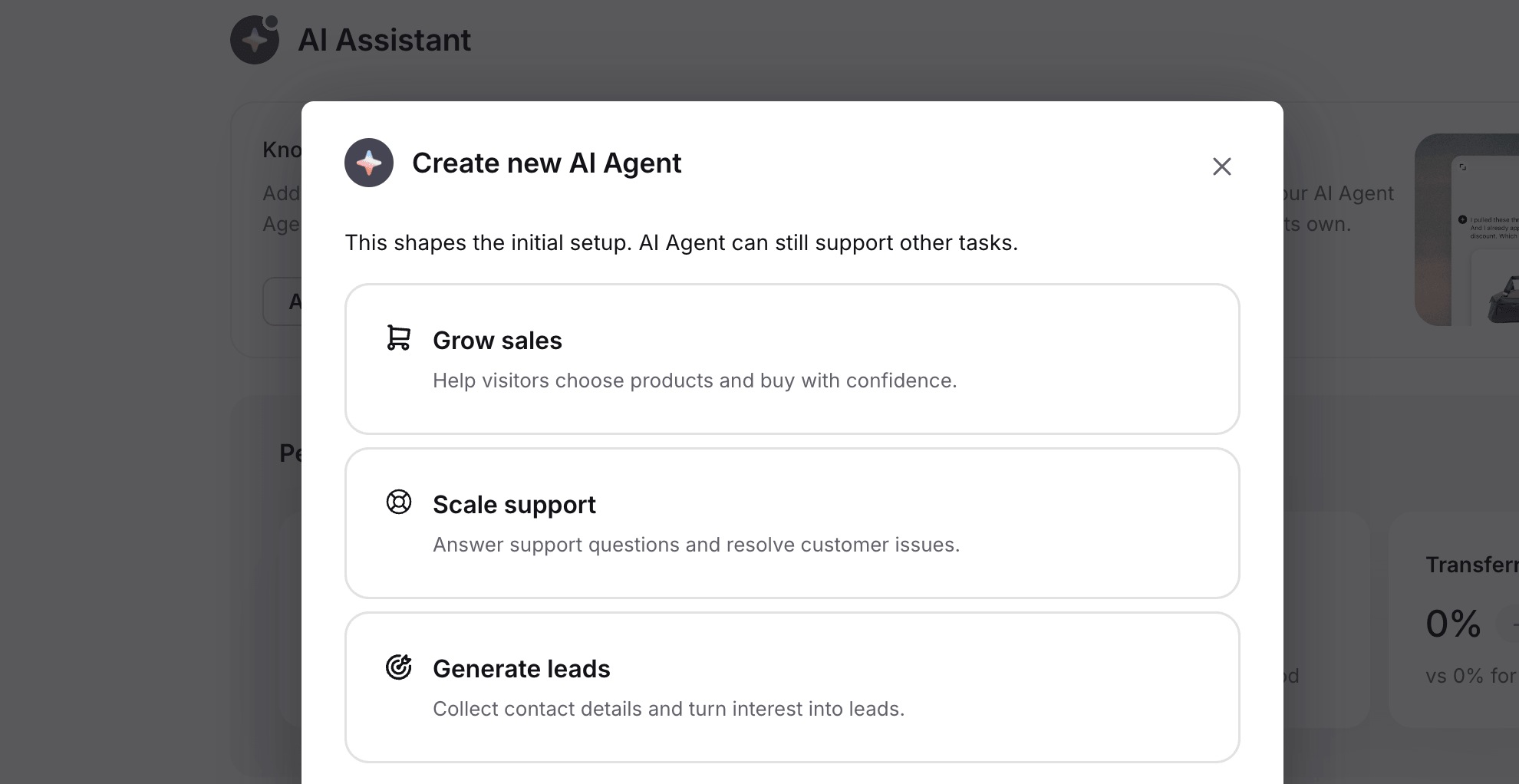
This matters for your pitch in a very concrete way. A client running three regional storefronts doesn't need convincing to buy three AI Agents; they need to understand that running one generic agent across all three would mean losing the nuance that makes automation genuinely useful in the first place. A customer in Germany expects a different tone, different return policies, and a different sense of urgency than a customer in Singapore. One-size-fits-all AI usually ends up fitting no one.
When a conversation needs a specialist, whether that's a support-heavy query in the middle of a sales conversation or a request that only a regional agent has the context to answer, it gets routed there automatically. The customer never notices the switch happened behind the scenes. That's a meaningfully different experience than being bounced between departments the way customers often are with legacy phone trees or first-generation chatbots.
Train once, sell all day
The training story is one of the easiest parts of this pitch to deliver, because it removes the single biggest objection every prospect raises before they've even asked it out loud: how much work is this going to be for my team?
The AI Agent trains itself on what a client already has. Their website, product catalog, help center articles, FAQs, and policies become its knowledge base automatically. Nobody has to write scripts from scratch or build a decision tree by hand, and nobody has to maintain a separate content library just to keep the bot current. Add new content whenever it's ready, and the agent updates with it.
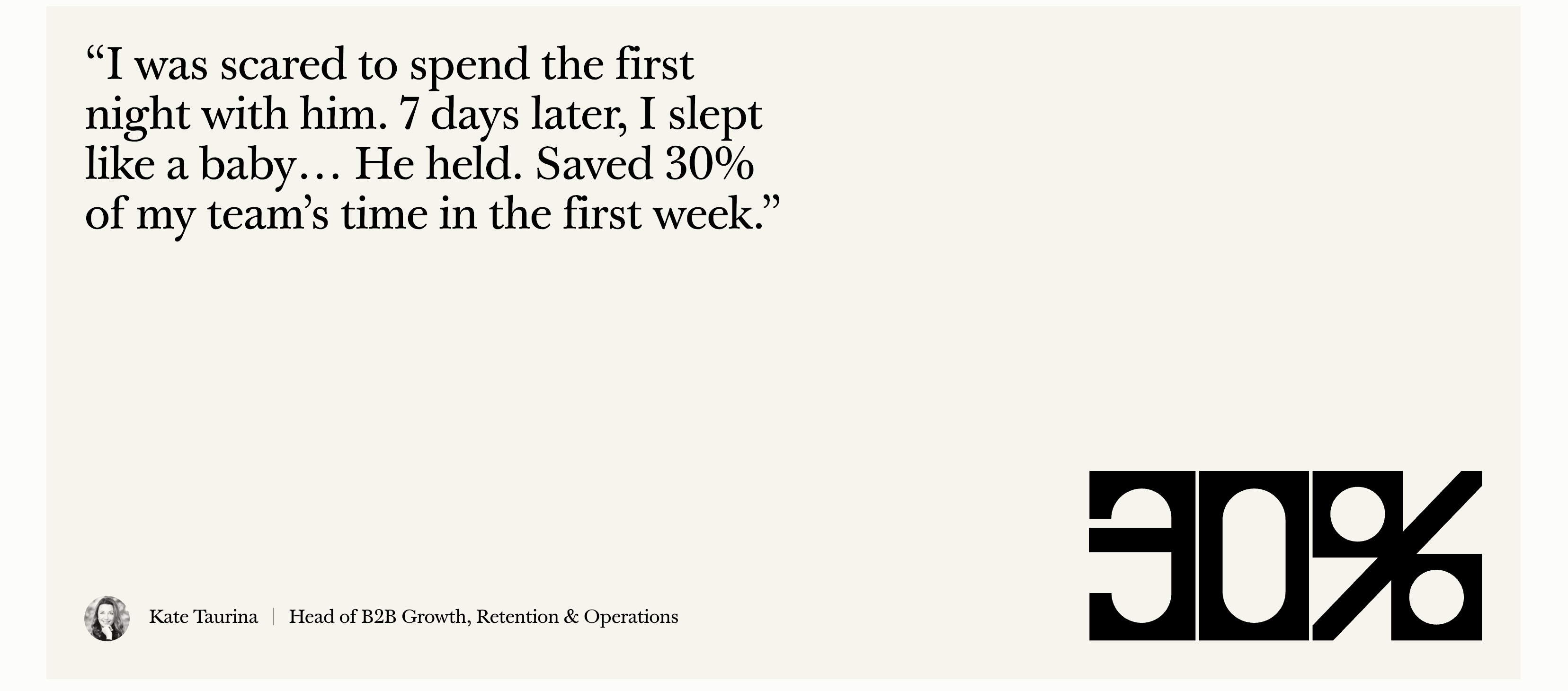
Kate Taurina, Head of B2B Growth, Retention & Operations at Dyninno Technologies, launched AI Agent for her support team in a single afternoon. Her honest reaction afterward, worth quoting because it's exactly the anxiety most of your clients will feel before go-live: she woke up at three in the morning, worried something had gone wrong. What actually happened was nothing dramatic, just a few answers to fine-tune, and by the end of week one, her team had saved 30% of their time. That's not a hypothetical projection; that's a real, named customer on Text's own case study roster.
Clients still stay firmly in control throughout all of this. They set the escalation rules, decide which topics the AI Agent handles alone, and can review every action it takes at any time. Tone and behavior adjust on the fly, without waiting for a development sprint or filing an internal ticket.
Where the knowledge actually lives
A question worth answering before a client even asks it: where does the AI Agent get its answers from, and what happens when the business changes?
The knowledge base isn't a separate thing that a client has to build and maintain on the side. It's the same content already powering their website, their help center, and their internal documentation, pulled in and kept current automatically. That single decision solves two problems at once:
It means a client's existing knowledge management effort, all the FAQs, policy pages, and product documentation someone already wrote, doesn't get thrown away and rebuilt from scratch.
And it means the AI Agent's answers stay accurate as the underlying business changes, rather than drifting out of date the way a hand-built script tends to, the moment nobody remembers to update it.
This is also where customer data starts doing real work rather than just sitting in a dashboard nobody checks. Account details, order history, and prior interactions all feed into how the AI Agent responds to a specific person, not just to a generic category of question. Two customers asking "where's my order" get genuinely different answers, because one of them is a first-time buyer and the other has a subscription with a delivery scheduled for tomorrow. That's the difference between a system that looks up information and one that understands the person it's talking to.
For clients worried about accuracy before launch, there's a built-in testing step. Before an AI Agent goes live, a team can run it through its paces, firing every tough question they can think of, so they can rest easy that it handles even the difficult cases exactly the way they want.
Handoffs that don't drop the thread
One thing that kills trust in AI customer service faster than almost anything else is a handoff that loses context. A customer explains their problem to a bot, gets escalated, and then has to explain the exact same thing all over again to a human being. Text's AI Agent is built specifically to avoid that failure.
When a conversation needs a person, the human agent arrives with the full conversation history, any actions the AI has already attempted, and the relevant customer account details already loaded, so nobody repeats themselves. The experience stays smooth at the exact moment automation ends, and a person picks up the thread.
This same logic runs in the other direction, too. When a human handles the early part of a conversation and wants to hand routine follow-up back to AI, that handoff carries context as well, so repetitive requests get automated without losing the thread of what's already been discussed. And for more complex operations, a conversation can route automatically to a specialized AI Agent built for that exact use case, again without the customer ever noticing the switch happened.
This is worth framing to a client as a genuine partnership between AI and their existing team, not a replacement for it. AI handles the volume. The team steps in exactly where a human makes the real difference, whether that's judgment, empathy, or a decision that carries weight. Neither side gets in the other's way, and every action from both sides shows up in the same reporting, so nobody's guessing where the credit belongs.
Every dollar accounted for, every channel covered
A question you'll get from almost every operations lead: how do we actually know this is working, beyond a good feeling after a demo? Text answers that with reporting built to show revenue, not just activity.
Every chat gets accounted for in real time. Earned sales, leads captured, customers retained, the whole team's output, both AI and human, gets measured in the same dashboard. A manager can watch exactly where AI is handling a conversation on its own and where the team is stepping in, which means nobody has to guess where credit belongs at the end of the month. You don't just see activity, you see revenue, broken down by conversation.
.png)
This matters for support operations in a way that's easy to undersell. Most customer service platforms report on ticket volume, response time, and resolution rate, all useful, all still fundamentally cost-side metrics. A support leader reporting those numbers up the chain is stuck justifying a budget. A support leader reporting revenue generated by the same team is having a completely different conversation with their CFO, and that shift in framing is worth walking a prospect through directly, because it changes how their own service teams get funded internally.
Channel coverage matters just as much as the reporting layer sitting on top of it. Website chat, email, and messaging apps all run through one place, so nobody on a client's team is jumping between five different tools to piece together a single customer's history. And because tone, standards, and communication rules stay consistent across every interaction, in up to 46 languages, a customer in one market gets the same brand experience as a customer anywhere else, without a client needing a separate playbook for every region.
Built for enterprise trust, not just startup speed
Bigger clients, and especially anyone in a regulated industry, will eventually ask about security before they ask about anything else. It's worth having this answer ready rather than promising to follow up later, because a hesitant enterprise buyer who senses you don't know the compliance story will start doubting everything else you said.
Text meets SOC 2 Type 2 standards and complies with GDPR, CCPA, and PCI DSS at the SAQ A level, alongside WCAG 2.2 accessibility standards and participation in the Data Privacy Framework.
None of that is exciting to say out loud in a pitch, but it's exactly the kind of detail that turns a legal or IT stakeholder from a blocker into a supporter.
This also connects back to a broader point worth making to any enterprise buyer directly: an AI agent that touches core business systems, whether that's account details, order history, or payment information, needs to be built with the same rigor as the systems it's connecting to. Text's AI Agent doesn't sit awkwardly next to a client's existing enterprise platforms; it's built to operate inside the same compliance boundary those systems already answer to.
Proof that holds up under a CFO's questions
Talking points are cheap. What actually sells an implementation rate conversation with a client's finance team is a case study with real numbers attached, and Text has a few worth knowing in detail.
Wembley Stadium is one of the strongest examples in the portfolio, and it's a genuinely useful story for any partner selling into hospitality, events, or ticketing. Hosting the world's biggest football finals, concerts, and NFL games meant inquiry volume that spiked to more than 8,000 questions on peak event days, more than phones, inbound forms, and a traditional ticketing system could handle.
After implementing AI Agent alongside Live chat, Wembley was handling up to 12,000 chats a month, generated $1.5M in additional revenue within eight months, and posted a 2335% return on investment. Their AI Agent collected visitor data and identified qualified leads in real time, handing them off to Live chat on the same platform so sales reps could engage immediately and close the deal, rather than losing days to a slower manual process.Funded Trading Plus is the other one worth memorizing, especially for a client worried about quality slipping the moment volume spikes. When a major industry disruption sent their daily inquiries up 1500% overnight, their combination of AI Agent, Help desk, and Live chat held a 93% CSAT rating across 125,000 annual chats and reduced overall support workload by 18%, all while competitors' ratings tanked during the same event. Their Chief Strategy Officer, Jamie Miller, credited the setup with helping the company keep an excellent rating on Trustpilot while rivals struggled through the exact same disruption.
Beyond individual case studies, Text's own example speaks volumes: more than 30,000 teams already using Text to turn conversations into revenue, an average conversion lift as high as 266%, and specific client outcomes like an 80% AI resolution rate at Stratco and a 25% lift in average order value at Sephora. These aren't projections pulled from a slide deck. They're what's already happening at brands your prospects have almost certainly heard of.
How this makes you money
Now to the part you actually opened the link for. Selling AI Agent well means selling it on ROI, not on price. Because revenue from AI-driven conversations is directly attributed and measurable, you have a much stronger case for pushing implementation rates tied to results, rather than settling for a flat fee that undervalues what you're actually delivering.
A few specific ways this plays out in your favor. Every additional brand, region, or website a client runs means a separate AI Agent, and a separate line item on their invoice. A client running multiple brands isn't a complication, it's a built-in upsell you didn't have to go looking for. Configuring and tuning skills isn't a one-time setup fee you bill once and forget about. It's an ongoing, billable service. Clients will want new skills as their catalog changes, new promotions launch, or new markets open up, and every one of those requests is a chance to invoice again rather than a favor you're doing for free.
The points covered above, revenue attribution, resolution rates, CSAT that holds steady under pressure, are your strongest card at renewal or expansion conversations. When a client's CFO asks why they should keep paying for this, you're not arguing from theory. You're pointing at the actual results from their own account.
AI Agent, with its per-brand and per-region pricing model, is one of the more reliable ways to move a client up, since a single multi-brand implementation can push a client's ARR past those thresholds faster than a single-site deployment ever could on its own.
Building beyond the pre-built skills
The pre-built skills cover most of what a client needs on day one, but the real long-term value for you as a partner sits in what gets built after that. Text lets teams build custom AI Agent workflows on top of the standard skill set, covering objection handling, lead qualification, cart recovery, ticket routing, escalation, and full booking flows, all shaped around a specific client's customer intent and business goals rather than a generic template.
This is where the phrase "custom ai agents" stops being a marketing term and starts being a genuine service line.
Deploying an AI Agent isn't a single event you bill once, it's closer to standing up a small piece of infrastructure that keeps needing attention as the client's catalog, promotions, and policies shift throughout the year.
For partners thinking about how to package this, the honest framing is that you're not just deploying an AI Agent, you're becoming the team that maintains and extends it. That ongoing relationship is worth more over a client's lifetime than the initial setup fee, and it's the reason configuring and tuning skills belongs on your invoice as a recurring service rather than a one-time cost you absorb to win the deal.
Objections you'll hear, and how to handle them
A few pushbacks come up often enough that it's worth having answers ready before you're in the room.
We tried a chatbot before and it annoyed our customers
This is almost always a story about a rigid, keyword-matching bot that couldn't understand context. Point back to the natural language processing foundation and the fact that AI Agent trains on the client's actual content rather than a generic script, then offer to run it through their toughest real customer questions before it ever goes live.
Our team is worried about losing their jobs to this
Reframe it honestly, because it's a legitimate concern worth taking seriously rather than dismissing. AI handles volume and the repetitive requests nobody enjoys answering for the hundredth time. The team gets freed up for the conversations that actually need a human, the ones involving judgment, empathy, or a genuinely difficult decision. Kate Taurina's own team didn't lose anyone; they got their time back for training, brainstorming, and thinking beyond the queue.
How do we know this won't say something wrong to a customer
Walk them through the control layer. Clients set the escalation rules, review every action the AI takes, and can adjust tone or behavior any time, with no engineering dependency required. Nothing runs unsupervised unless the client decides it should.
This sounds expensive for what it does
This is where the case studies do the heavy lifting. Wembley's 2335% ROI and Funded Trading Plus's 18% workload reduction aren't abstractions, they're what a comparable investment already returned for real businesses.
We already have a support platform, we don't want to rip it out
Nobody's asking them to. AI Agent runs across a client's existing channels rather than demanding a wholesale replacement, and skills like order status and abuse detection connect through webhook or API calls into systems the client already runs. The conversation isn't "start over," it's "connect what you already have to something that acts on it instead of just displaying it."
How is this different from the AI features already built into our current tool
This is the one worth slowing down for, because it's the objection that actually matters most. Plenty of platforms have added an AI layer that answers questions faster or drafts a reply for an agent to approve. Ask what happens after that answer gets delivered. In most tools, the conversation ends there. In Text, that same moment is evaluated for buying intent, hesitation, or cancellation risk, and the AI Agent acts on whatever it finds. Faster answers and a better sales outcome aren't the same feature, even when they both get marketed under the label "AI."
A quick checklist before your next pitch
Before walking into a client conversation about AI Agent, it helps to run through a short mental checklist.
Do you know which of their pages or products would generate the most valuable hesitation signals? A cart page and a pricing page behave very differently, and knowing which one matters most to a specific client sharpens the whole pitch.
Have you identified whether they need one AI Agent or several? If they run more than one brand, region, or major product line, that's an upsell conversation worth raising up front rather than after the first contract is already signed.
Can you name at least one skill, by name, that solves a problem this specific client already told you about? A generic pitch about "AI automation" loses every time to a specific pitch about Save the Sale solving the exact cart abandonment problem they mentioned on your last call.
And do you have your renewal story ready before you need it? Revenue attribution and resolution data aren't just closing tools for the first sale, they're the reason a client renews at a higher tier instead of shopping around when the contract comes up again.
What comes next in this series
AI Agent is the piece most likely to change how a prospect sees their entire support stack, which is exactly why we started here.
Keep this piece around for your next few calls rather than treating it as a one-time read. The skills list, the case study numbers, and the objection answers above are meant to be reused, adapted to whichever client is in front of you, and refined with whatever you learn from actually pitching this in the field. The partners who do best with AI Agent aren't the ones who memorized every stat, they're the ones who know which two or three numbers matter most for the specific business they're talking to.
For now, the pitch is simple enough to say out loud on your next call. Everyone has AI, but not everyone's AI actually turns a conversation into a sale before a human ever has to step in. Text's does, and now you know exactly how to show it.