
Oliwia Skindzier
Content Marketing Specialist
Every topic has a human story hiding inside it, even the technical ones. I dig it out and tell it simply: AI, customer service, and communication tech, turned into blog posts, whitepapers, case studies, and content that people actually want to finish reading.
TL;DR Conversational AI is three layers of software. One reads what you typed, one figures out what you meant, one decides what to do about it. Get them right and the system feels like it’s reading your mind. Get them wrong and the customer closes the tab.
Every third LinkedIn post is someone who became an AI expert overnight. Then an ad drops into the feed: this vendor’s conversational AI saves teams $80,000 a year. The button says “Ask our AI anything.” So I did.
I asked what any ecommerce business would ask. Does this integrate with Shopify? It told me to describe what I was looking for, then served the same three “did you mean…?” prompts on a loop. A company selling AI couldn’t answer a basic question about its own product.
Second vendor, same question, ten seconds: yes, native Shopify integration is included, and here’s a quote if you want to talk to someone.
One read intent. The other matched keywords like it was 2012. That gap is why I spent a Friday night testing 11 platforms. They all have the long feature list now, so the only thing left to measure is which one carries a customer through the two seconds before they leave.
What is conversational AI, and how does it work?
Conversational AI is the branch of artificial intelligence that lets machines hold conversations with humans in plain language. No code, no buttons, no "press 1 to continue." Three layers do the work underneath. The easiest way to picture it is a translator.
Natural language processing, understanding, and generation — a translator in three steps
Step one: the translator has to hear what you're saying. That's natural language processing (NLP) — it turns your words into something a machine can process.
Step two: the translator has to understand what you actually mean. Not just the words, but the context, the intent, sometimes the mood. That's natural language understanding (NLU).
Step three: the translator replies in a way that sounds like a person, not an instruction manual. That's natural language generation (NLG).
Three steps, one translator, one conversation. The better each step is, the less you feel like you're talking to a machine.
Underneath those three steps sit large language models (the same kind that power ChatGPT and Claude), machine learning, and increasingly agentic AI. Generative AI handles the complicated situations and personalizes responses for the specific customer in front of it. Automatic speech recognition lets the same translator work just as well whether you speak or type. Supervised learning improves AI accuracy over time — the system learns from real customer conversations and, week by week, sounds less like a robot.
From AI chatbots to conversational AI agents
This is the leap that matters.
An old chatbot is a receptionist who tells you: "Password reset? Go to page X." A conversational AI agent is a receptionist who resets that password for you and asks whether you want to switch on two-factor while you're at it.
One knows. The other does. That's the whole difference.
Agentic AI is the shift underneath. Your old AI chatbot answered the question. A modern conversational AI agent completes the task — reaches into enterprise systems, checks the data, makes the change, business processes run end to end without you and without human intervention. The difference between an FAQ in disguise and a coworker who happens to be software.
Why your conversational AI platform choice is a revenue decision
Most companies buy conversational AI to save on costs. That's true — and it's the cheaper half of the truth.
Someone walks onto your site. They have money, they have intent, they have one question. They click the chat. If the answer arrives in 5 seconds, they buy. If it arrives in 5 minutes, they buy somewhere else. This isn't hypothetical. 82% of consumers expect an immediate response when they reach out to a brand through live chat. Satisfaction peaks when the first reply lands within 5 to 10 seconds. Miss that window and the customer's gone — 1 in 5 walks away from a product over slow support. Conversational AI answers in seconds, around the clock. Which is why AI-powered chatbots are now the front line for repetitive questions — order status, returns, account problems.
But that's only half the story.
The same speed that saves a sale can also create one. A customer asking about sizing, delivery, or stock is signaling buying intent. A platform that answers instantly walks them to checkout instead of letting them drift away. The numbers back it up. Live chat lifts conversion by about 40% and revenue per chat hour by 48%. Conversational AI that's set up properly raises support-team sales by 14%.
Then there's the operational case. Gartner has projected that conversational AI could cut contact center costs by $80 billion. Support workers using conversational AI are 14% more productive — AI takes the routine, the human takes what's left. Proactive engagement adds another lever: companies using it see a 30% lift in sales, a 20% lift in customer satisfaction, and recover up to 30% of hesitant buyers who would otherwise leave the site without a word.
And one more thing: value depends on fit. A conversational AI agent that can't reach into your enterprise systems can talk, but it can't act. And an AI that can't act is a very expensive parrot.
How we compared these conversational AI tools
We didn't count features. We looked at five things, the same five for every platform:
Natural language understanding. How well it reads intent, not just keywords.
Chat and voice coverage. Whether it handles both or specializes in one.
Integration capabilities. How deeply it reaches into CRMs, help desks, and enterprise systems.
Who operates it. A low code platform for business users, or an engineering build.
Security and governance. Enterprise grade security for regulated customer data.
The best conversational AI platforms at a glance
Platform | Best suited for | Distinctive strength |
|---|---|---|
Text | Chat-led service to revenue | AI agents tuned to spot buying signals |
Google Dialogflow CX | Complex IVR and structured flows | State-machine architecture for complex interactions |
Gorgias | Shopify-native ecommerce support | Native Shopify order actions |
Moveworks | Internal and employee support | Connects to ITSM and HR systems for IT helpdesk |
Intercom (Fin) | Product-led customer support | Outcome-based AI agent pricing |
Amazon Lex | AWS-native voice agents | Speech recognition plus AWS integration |
IBM watsonx Assistant | Regulated enterprises | Enterprise grade security and governance |
Cognigy | Enterprise contact centers | Low code platform for voice channels at scale |
Ada | No-code automated resolution | Fast launch with minimal human intervention |
Kore.ai | Banking and telecom assistants | Multilingual virtual assistants and analytics |
Yellow.ai | Global multilingual support | Voice agents across many human languages |
Ranked with our top overall pick first. Positioning verified June 2026.
The 11 best conversational AI platforms in detail
1. Text
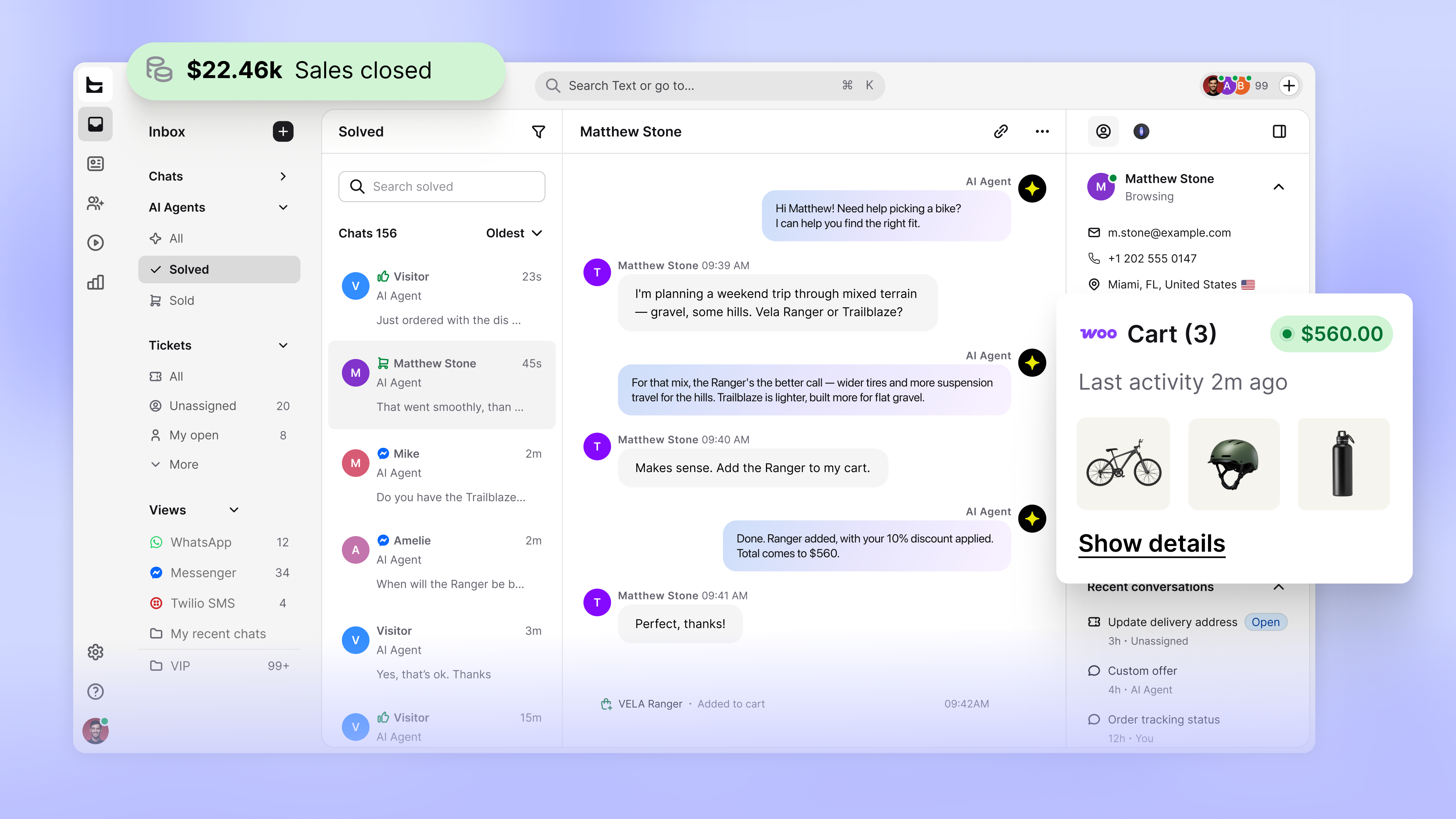
Text is an AI-first conversational AI platform that brings AI chatbots, conversational AI agents, and human agents into one workspace. Its agents are tuned to read customer behavior in real time and recognize buying intent, which reflects how the company positions customer service: as a revenue channel, not a cost center.
It connects to a wide range of enterprise systems across ecommerce, CRM, and team tools, including Shopify, Salesforce, HubSpot, and Slack — so agents resolve complex questions without bouncing the customer to another tool.
Where most platforms compete on deflection, Text competes on conversion. Its AI agents resolve routine customer inquiries on their own — order status, returns, account questions — and bring in a human only when a conversation genuinely needs one. Features like real-time tracking, Custom Skills, and Workflows are built specifically to capture buying signals inside support conversations, rather than just clearing tickets faster. As an AI-first tool, it relies on solid knowledge content to ground its agents, and offers a 14-day trial across every feature.
Best for: chat-led customer support teams that want AI agents focused on turning customer interactions into revenue.
Watch out for: no permanent free tier.
Want to try it? Start a free 14-day trial of Text and switch it on for whichever channels you run today.
2. Google Dialogflow CX
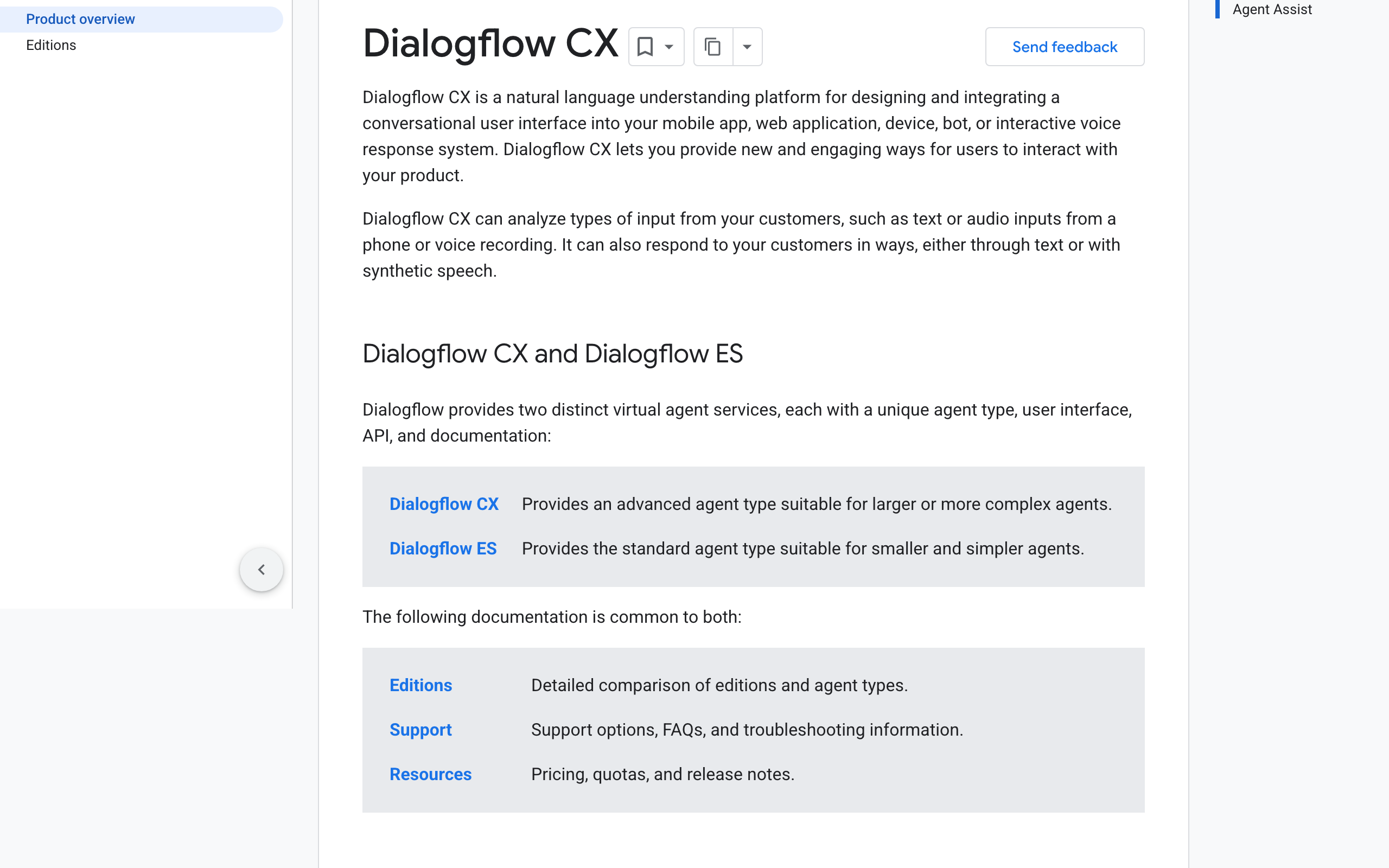
Google Dialogflow CX is a conversational AI platform built on Google Cloud, powered by state-machine architecture for complex user interfaces. That model gives precise control over long, branching conversations — account servicing, multi-step phone calls, anything that needs to remember step seven by the time you reach step nine. It draws on Google's natural language processing and automatic speech recognition, and scales to high volumes of customer conversations without breaking a sweat.
The state-machine is the differentiator. Where simpler AI chatbots lose the thread in conditional flows, Dialogflow CX keeps structured control. The trade-off is that it's a developer's tool more than a business user's. Getting human-like interactions out of it takes engineering effort. Expect to build, not configure.
Best for: complex IVR and structured voice agents on Google Cloud.
Watch out for: the engineering hours required to reach polished, human-like interactions.
3. Gorgias
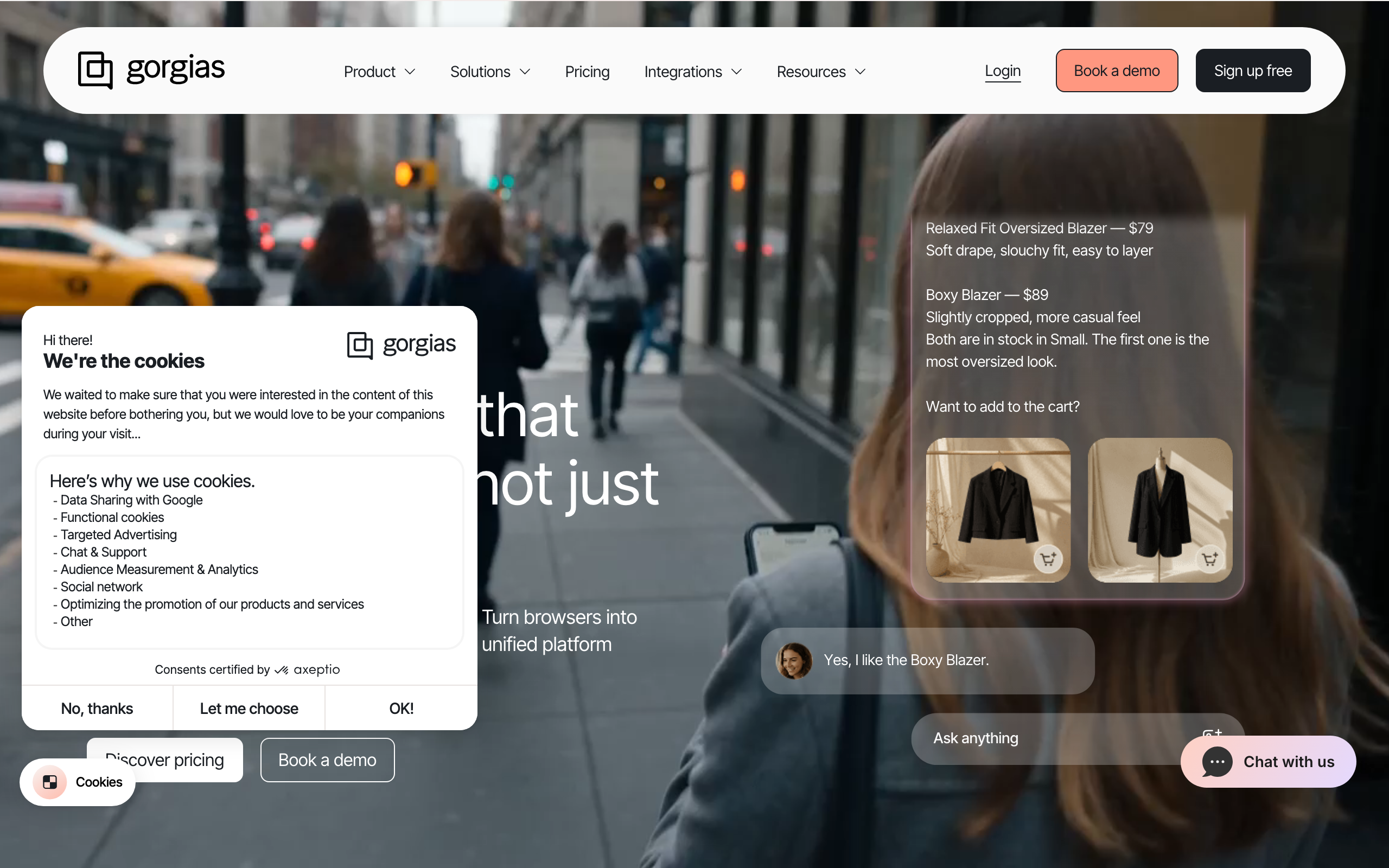
Gorgias is a conversational AI platform built specifically for ecommerce, with Shopify as its home turf. It's Shopify's only Premier Partner for CX, and it's the support layer behind roughly 40% of the platform's top 1,500 stores. The AI Agent handles the questions that keep DTC teams up at night — order status, returns, refunds — right inside the same sidebar where an agent already sees the order, the cart, and the customer's history.
The native Shopify actions are what set it apart. Most conversational AI platforms tell a customer what to do next; Gorgias's AI Agent can cancel the order, issue the refund, or edit it, without anyone opening the Shopify admin. That depth thins out fast once you leave Shopify — the helpdesk itself works with BigCommerce, Magento, and WooCommerce, but the AI automation stays Shopify-only. Pick it for a different platform, and you're waiting on parity that hasn't arrived yet.
Best for: Shopify-native DTC brands running high volumes of WISMO and returns.
Watch out for: AI Agent features are Shopify-only — other platforms get the ticketing, not the automation.
4. Moveworks
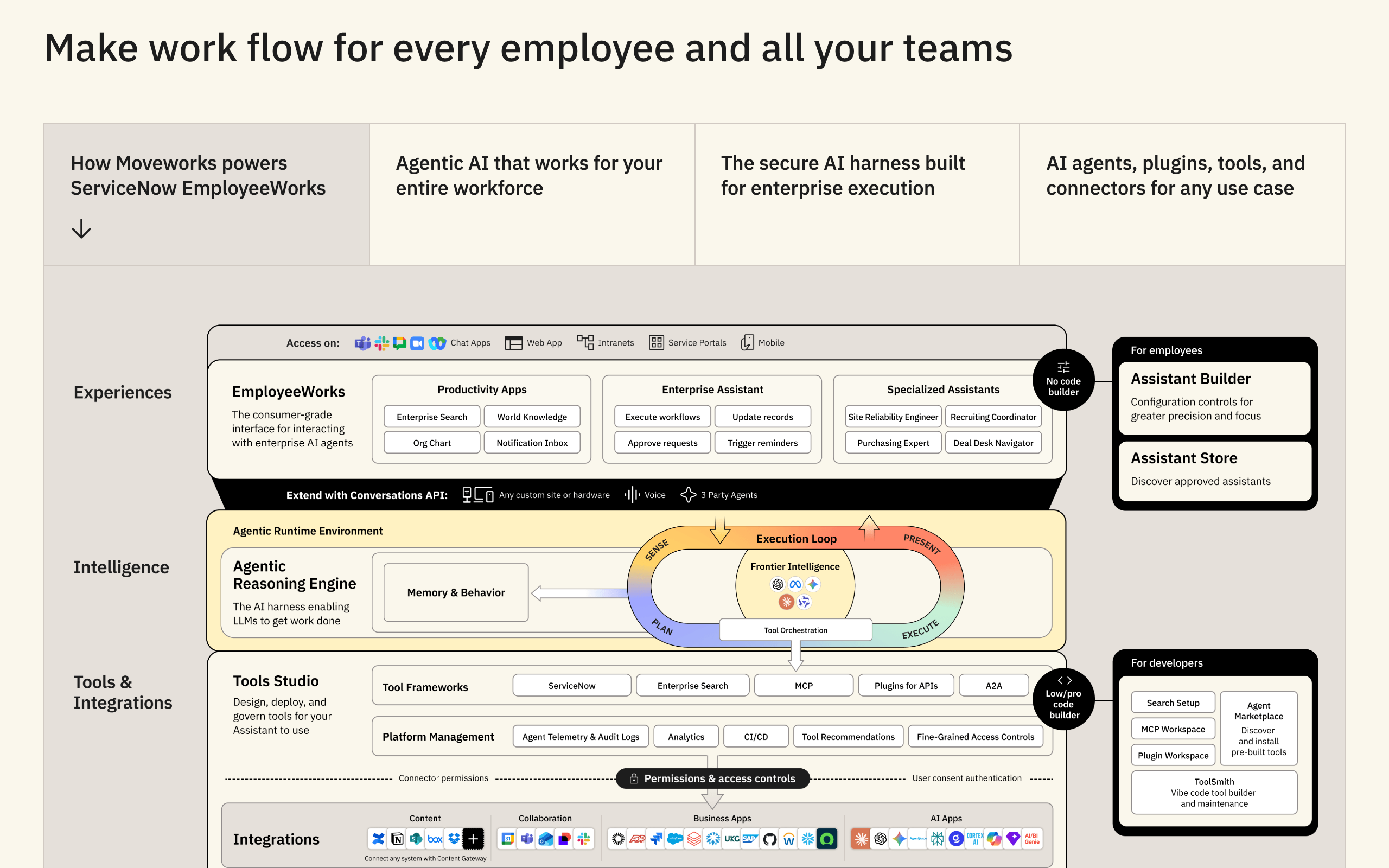
Moveworks is a conversational AI platform aimed at employees, not customers. It connects to IT service management platforms and HR systems, which is what internal conversational AI needs in order to resolve employee requests instead of merely routing them. When an employee asks to reset a password or check the status of a ticket, Moveworks completes the task rather than handing it back with a link.
Integration depth is its core advantage. Most conversational AI companies focus outward; Moveworks is purpose-built for the inbox employees actually live in. It provisions access, answers policy questions, and resolves IT helpdesk and HR service requests with minimal human intervention. It's a specialist, which means it's not the tool you'd pick for customer-facing sales conversations.
Best for: IT helpdesk, employee support, and internal service requests at enterprise scale.
Watch out for: limited fit for outward, customer-facing use cases.
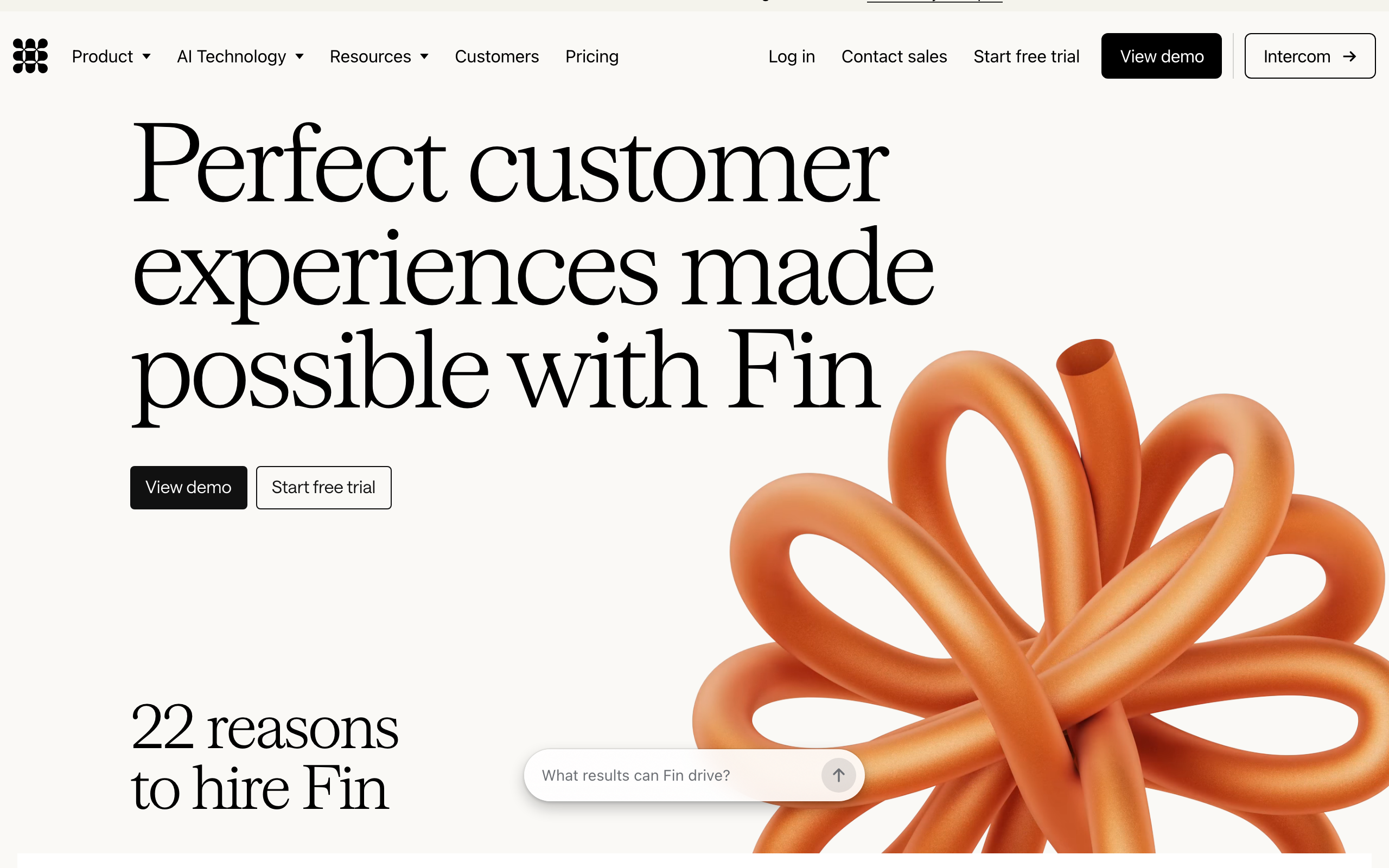
5. Intercom (Fin)
Intercom rebuilt itself around its Fin AI agent. It's strongest as an in-app and website support tool, where Fin answers questions and completes routine customer interactions inside the chat experience users already know. It uses generative AI and large language models for natural language understanding, and offers a broad set of integrations for CRM and ecommerce connections. Pricing is outcome-based, which means you pay when Fin resolves something rather than per seat — an honest pricing model when the tool actually works.
The clearest limitation is channel breadth. Intercom is built first and foremost for chat and messaging, so its native voice support is thinner than platforms designed for phone calls and contact center workloads. Teams that need ai voice agents or a true contact-center setup tend to pair it with another tool. It fits product-led and SaaS support better than voice-heavy or highly complex enterprise operations.
Best for: product-led and SaaS teams that want strong chat-based AI resolution inside their app and website.
Watch out for: limited native voice support compared with phone-first platforms.
6. Amazon Lex
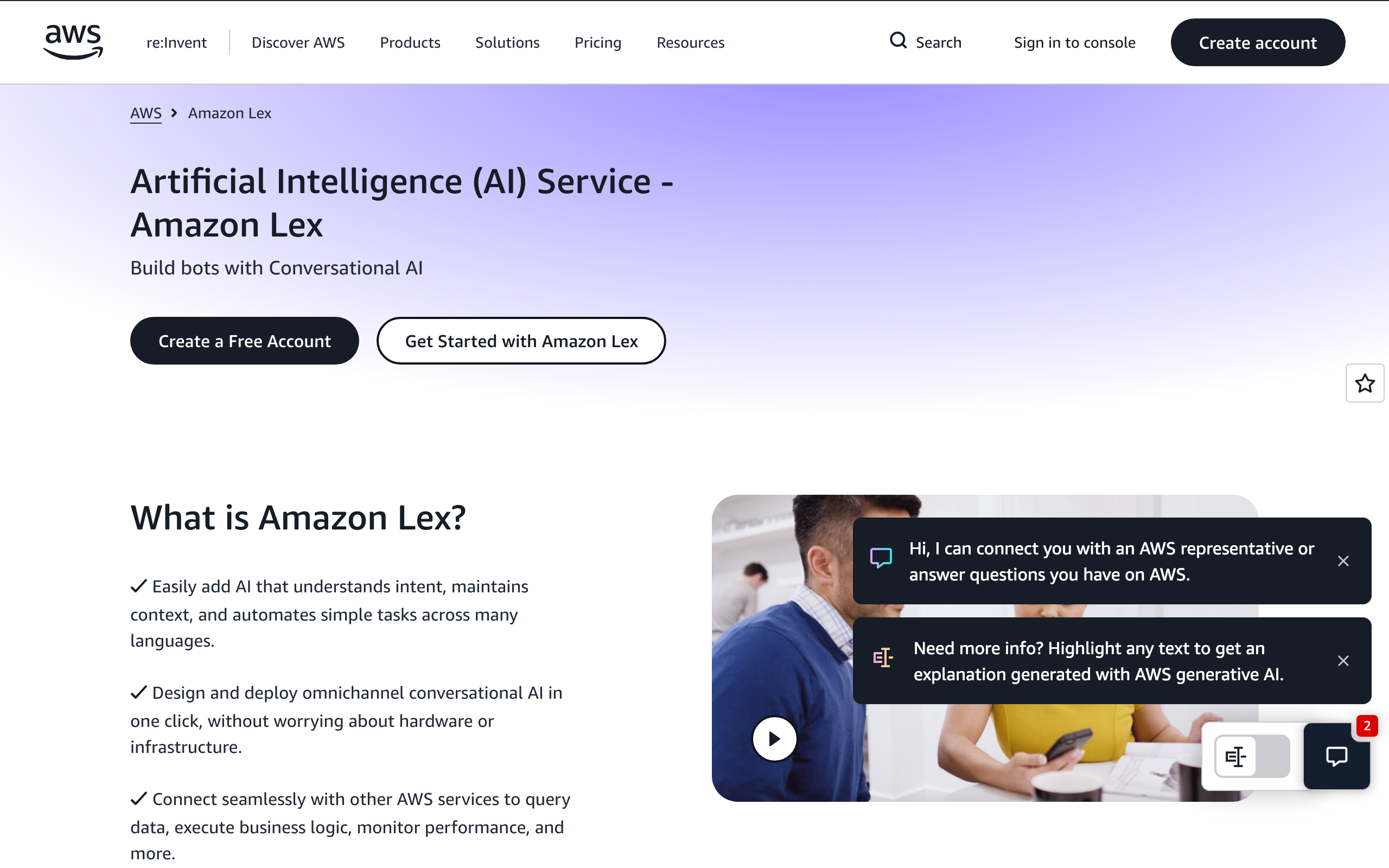
Amazon Lex is the conversational AI engine behind Alexa, offered to builders. It brings automatic speech recognition and natural language understanding to voice channels and AI chatbots, and slots naturally into the AWS ecosystem alongside Lambda and Connect. For teams already on AWS who need AI voice agents for customer support calls, it's a logical starting point and the pay-as-you-go pricing keeps entry costs low.
Lex is infrastructure rather than a finished product. You build the conversational experiences, the analytics, and the human-agent handoff yourself. Lego bricks, not the finished house. Engineers will run it; business users generally won't.
Best for: AWS-native teams building voice agents and AI chatbots with speech recognition.
Watch out for: the build effort, since it ships as components rather than a complete product.
7. IBM watsonx Assistant
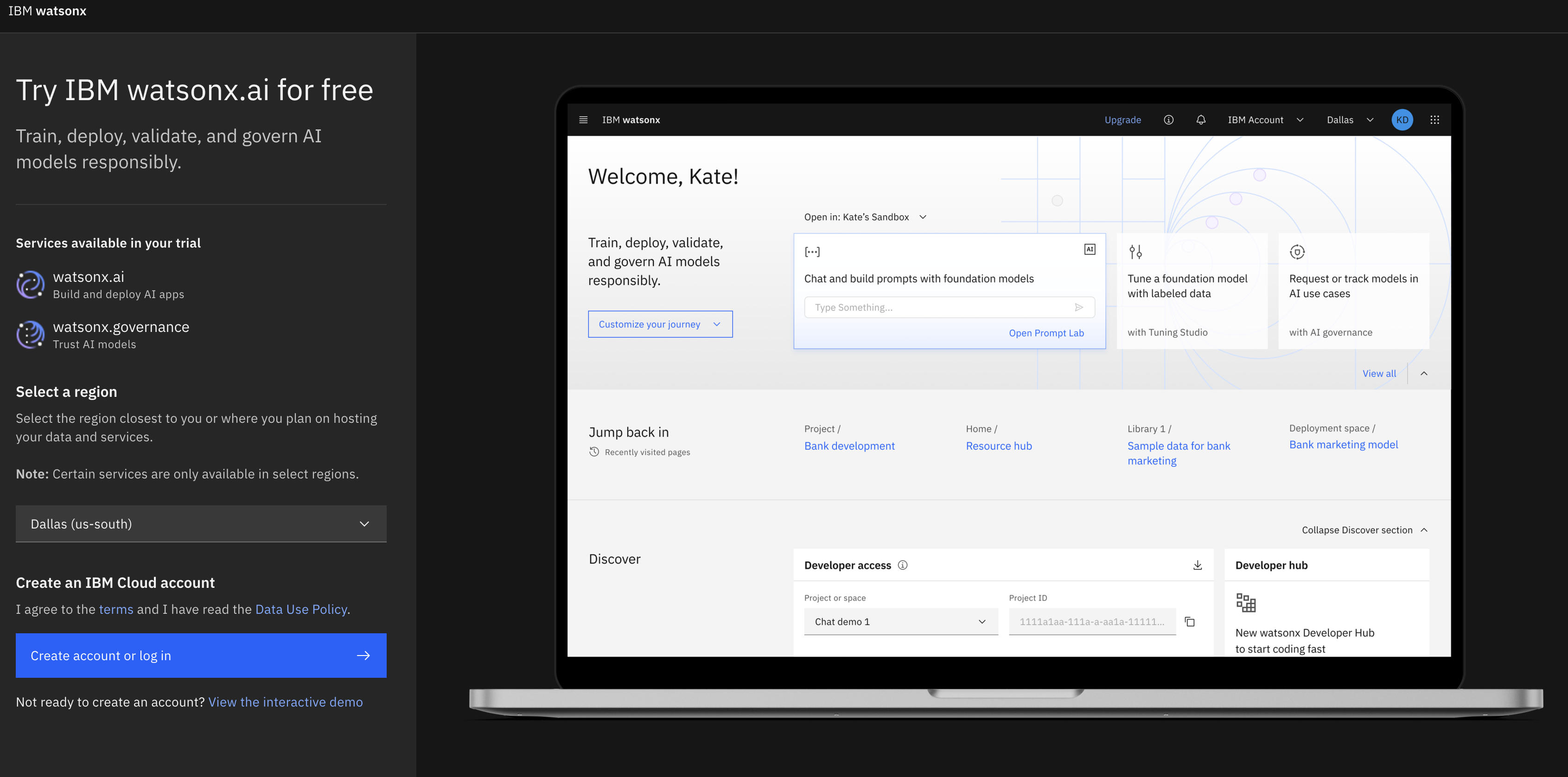
IBM watsonx Assistant is built for organizations where compliance is not optional — banks, insurers, healthcare providers, government. It offers strong natural language understanding, flexible deployment, and the enterprise grade security and auditability that regulated industries actually require. It integrates with enterprise systems and large language models while keeping enterprise data under tight control.
The watsonx lineage gives it credibility on AI accuracy and governance that newer conversational AI companies cannot match yet. The trade-off is implementation weight. It's heavier to deploy and less plug-and-play than a low code platform, which is the expected cost of meeting strict security and data-residency requirements. The audit trail comes free; the implementation does not.
Best for: regulated enterprises that need governance and data control first.
Watch out for: a longer, heavier implementation.
8. Cognigy
Cognigy is a low code platform aimed at the enterprise contact center, with strong support for voice channels and phone calls alongside chat. Business users build conversational AI agents in a visual editor, and the platform handles high volumes of customer interactions across messaging channels and voice without funneling everything through engineering.
Its sweet spot is voice-heavy operations modernizing legacy IVR — replacing the press-1-for-billing tree with a virtual agent that can actually understand what the caller wants. Cognigy connects to CRMs, help desks, and contact center infrastructure, and its conversational analytics give managers visibility into what's happening inside customer conversations rather than just call duration. It's modernizing the contact center without burning it down.
Best for: enterprise contact centers wanting low-code voice and chat at scale.
Watch out for: enterprise pricing and setup that demand dedicated resources, with more capability and complexity than smaller teams need.

9. Ada
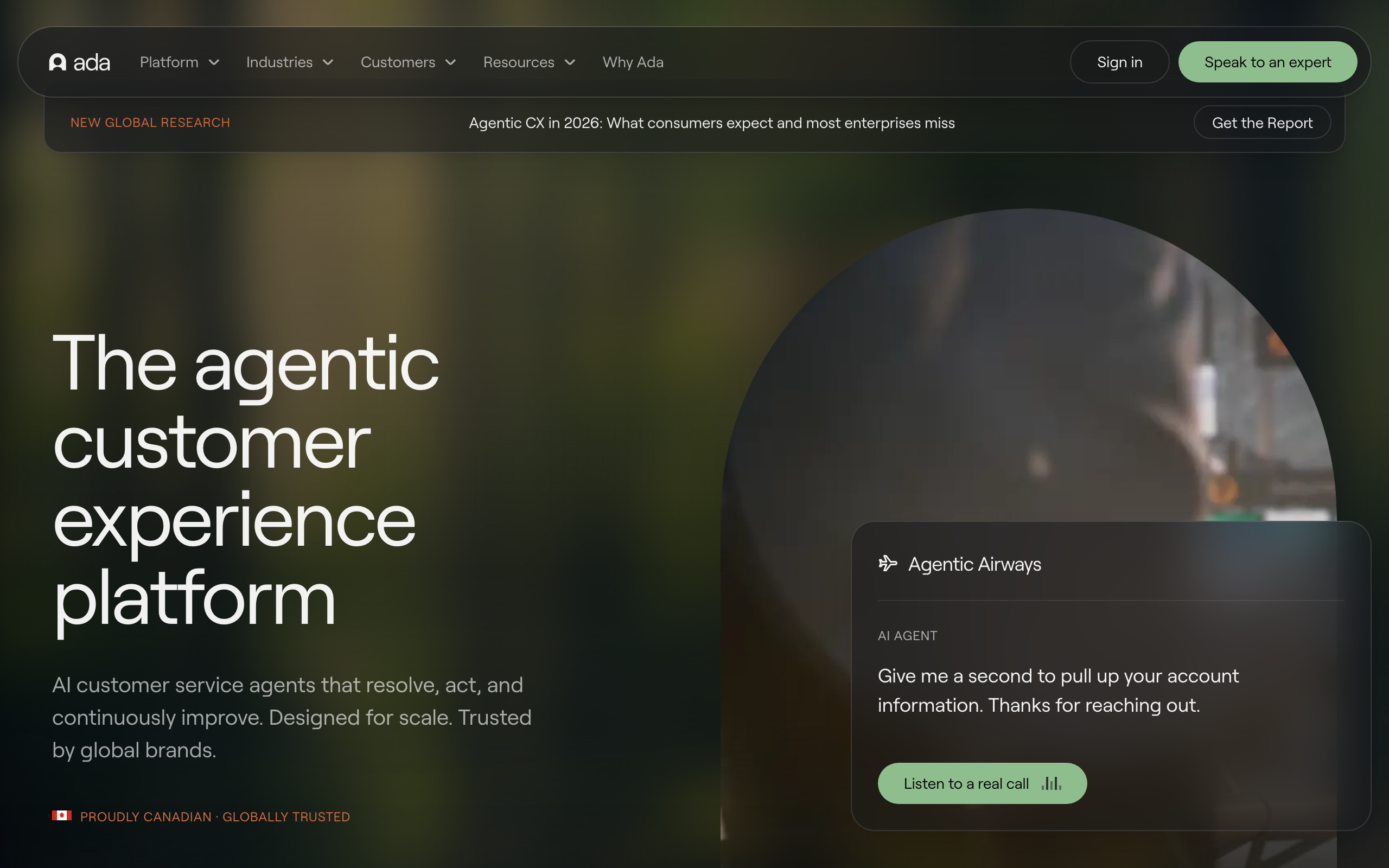
Ada is a no-code conversational AI platform focused on automated resolution, handling customer inquiries end to end with minimal human intervention. Business users launch AI chatbots quickly and wire them to enterprise systems without engineering support. It's built to maximize deflection on the routine — password resets, order lookups, simple returns — while routing the trickier conversations to human agents with full context.
Its strengths are speed to value and accessibility. You don't need engineers to create conversational experiences, which is the whole pitch. Ada uses generative AI and large language models to personalize responses based on customer intent across the customer journey. The ceiling shows when you need deep custom logic or true voice-first depth, where specialist platforms pull ahead.
Best for: teams wanting fast, no-code customer engagement and resolution.
Watch out for: limited depth for complex logic or voice-first needs.
10. Kore.ai
Kore.ai is a full enterprise conversational AI platform with a strong presence in banking and telecom. It offers multilingual virtual assistants, voice agents, and a development environment for building conversational AI agents that complete tasks across enterprise systems. Its conversational analytics surface customer intent patterns and AI accuracy metrics that help teams improve over time.
Kore.ai handles chat and voice, scales to large volumes of user interactions, and supports the regulated, high-volume customer support that banks and carriers run. It's comprehensive, which is both the strength and the cost. Implementation is an enterprise project, not a quick switch-on.
Best for: banking, telecom, and enterprises needing multilingual assistants with deep analytics.
Watch out for: an enterprise-scale implementation effort.
11. Yellow.ai
Yellow.ai's main selling point is breadth of language coverage. It runs AI-powered digital workers across a wide range of human languages and messaging channels, which is its clearest fit for businesses serving many markets at once — i.e. if your support team speaks more languages than your homepage. It uses generative AI and large language models to handle customer interactions and connects to CRMs and enterprise systems to execute business processes.
As a broad enterprise platform, Yellow.ai is an implementation commitment rather than a quick setup. Standing it up across multiple channels and markets involves integration work, training, and ongoing maintenance. Pricing is enterprise-oriented and typically quote-based. Teams whose needs are concentrated in one or two channels may find a more focused tool simpler to deploy and easier to administer.
Best for: global teams needing conversational AI across many human languages and channels.
Watch out for: an enterprise-scale rollout, quote-based pricing, and the setup and upkeep a broad deployment requires.

How to choose the right conversational AI platform
You're hiring conversational AI for a specific job. Like a job interview, you check five things. Each one answers a single gating question.
Which channels do your customers actually use?
Most of your support volume lands on one channel, maybe two. Find out which, before you buy anything.
If 80% of conversations come in by phone — pick voice-first. If 80% come in by chat — pick chat-first. Simple. Don't buy an "omnichannel" platform because it sounds modern. You end up paying for doors no one's knocking on. If chat is your main channel but sometimes someone wants video or screen-share — pick chat-first with those options built in, not omnichannel with chat bolted on.
How deep are the integrations?
This is where conversational AI projects quietly win or fall apart.
A conversational AI that can't reach your enterprise systems can talk, but it can't act. CRM, help desk, ITSM, HR, ecommerce — every integration it doesn't have is one more task the AI won't complete. A customer asks about order status, the AI can't reach the order system, the AI says "I'll check and get back to you" — and you've already lost your seconds-of-advantage edge.
Confirm the integrations on a demo, not on a slide. Ideally on your real data.
Who's going to run it day to day?
Two schools. Low code platform — business users build and tweak the AI themselves, no tickets filed to engineering. Developer-grade — more control, but you need engineers for every change.
Be honest with yourself. Who actually picks this up six months after launch, when a new scenario needs adding? Marketing? The support manager? Engineering? Pick the platform that whoever-that-is can actually run. Otherwise the AI stalls and no one's sure whose fault it is.
What are your security requirements?
If you handle regulated or sensitive data — enterprise grade security, governance, data residency — those aren't add-ons, they're gates. They go in the shortlist, not the final paperwork.
If you don't handle that kind of data — don't overpay for enterprise grade compliance you'll never use.
Trial on real traffic
The pricing page won't tell you how a platform behaves on your busiest day.
Run two or three on your real customer conversations for a few weeks. Watch three things:
Does the AI understand the question when a customer phrases it weirdly?
How clean is the handoff to a human agent when the AI hits its ceiling?
Does the customer come back, or run away?
The third one matters most.
Key features to look for in conversational AI tools
Whatever you pick, the strongest platforms have the same core pieces underneath. Different paint job.
Natural language understanding and generation
This is the engine. NLU reads what you mean. NLG replies in a way that sounds like a person. Together they decide whether the conversation feels like a sharp colleague — or a 2012 chatbot.
AI agents that complete tasks
The best conversational AI agents don't answer — they act. They resolve service requests, run business processes, do things in your enterprise systems without you. The best ones also know when to back off and hand off to a human, with the full context already attached.
Chat and voice coverage
Voice agents handle phone calls and customer support calls through automatic speech recognition. AI chatbots cover web, app, and messaging channels. Some bundle voice, video, and screen-sharing straight into the chat window. More surface, not necessarily more value.
What matters is depth on the one channel your customers actually live on. Not breadth. A strong platform on one channel beats an average one on five.
Integration capabilities
Integrations decide whether AI can act or only talk. CRM, help desk, ITSM, HR, ecommerce — the deeper the wiring, the fewer conversations end with "I'll check and get back to you." Conversational AI platforms simplify access to enterprise knowledge only when they're wired into where that knowledge actually lives.
Conversational analytics
Conversational analytics don't show you the count of conversations — they show you the patterns. Where the customer gets stuck. Where the AI loses the thread. Where escalation comes too late. The best platforms turn raw customer conversations into insight a team can actually act on — not dashboards no one opens.
Frequently asked questions
Which conversational AI platform is the best?
None of them win every race. Moveworks leads on internal IT. Dialogflow CX on complex voice flows on Google Cloud. IBM watsonx on regulated enterprises. Text, Intercom, and Ada lead on customer-facing support, each with a different emphasis. Match the platform to your channels, integrations, and security needs. Don't look for one winner — look for the one that wins your race.
How does conversational AI work?
Three layers. NLP turns your words into data. NLU figures out what you mean. NLG replies like a person. Underneath are large language models, machine learning, and supervised learning, all improving AI accuracy week by week. Automatic speech recognition handles voice — voice agents work the same way as AI chatbots, they just listen instead of read.
What's the difference between AI chatbots and conversational AI agents?
Chatbots answer. Conversational AI agents act. An old chatbot tells you how to reset your password. An AI agent resets it for you and switches on 2FA while it's there. Generative AI and agentic AI have made that line real, not marketing.
Can conversational AI handle both chat and voice?
Many can, not all. It depends on what you actually need. Voice-first makes sense if your customers call. Chat-first if they type. Some chat-first platforms bundle voice, video, and screen-sharing into the same window — one more channel to manage, not automatically one you need. Don't buy "omnichannel" by reflex — buy what you actually use.
What can conversational AI save or earn?
On savings — Gartner has projected $80 billion in contact center cost cuts, and AI is taking on a growing share of routine work. On earnings — 14% more sales for support teams, plus the recovered sales that slow support would have lost. Platforms that do both deliver the strongest return.
Which integrations matter most?
CRM and help desk are the floor — without them the AI can't see the customer. For ecommerce, connections to Shopify, BigCommerce, and your payment and order systems are critical too — then the AI sees the cart, the status, the product, and can act, not just talk. Rule of thumb: every integration you don't have is one task the AI won't complete.
Is conversational AI worth it for small teams?
Often, yes — if you match the tool to the job. A 5-person team can deploy something useful in days, not months. AI-powered chatbots take the routine (24/7), the team takes the conversations that need a person. Support workers using conversational AI are 14% more productive. Start with low-code or no-code, scale up as volume grows.
The bottom line
Back to those two chats from a Friday evening. One platform read intent, suggested the size, swapped it in my cart, and closed the sale. The other looped through "did you mean…?" until I closed the tab. Same shopper. Same minute. Different conversational AI underneath.
The best conversational AI platform is the one that fits the job you're hiring it for. An ITSM specialist, if your customers are employees. A state-machine architecture, if your channel is complex voice. Enterprise grade security by default, if your data is regulated data. Every platform on this list wins a different race.
Everything else comes down to two questions, whichever platform you pick. How well does that translator read intent? And how deeply does it reach into your enterprise systems? The first decides whether the customer feels like they're talking to a sharp colleague or a robot. The second decides whether the AI completes the task or just talks about it.
The rest is accent. An AI agent that only talks — a very expensive parrot. Lego bricks you have to build a house out of — sometimes that's exactly what you need. A 2012 chatbot dressed up as conversational AI — more often than you'd care to admit.
Shortlist two or three. Trial them on real conversations. Let the busiest day of the week show you which one fits.
The pricing page won't. The customer will.